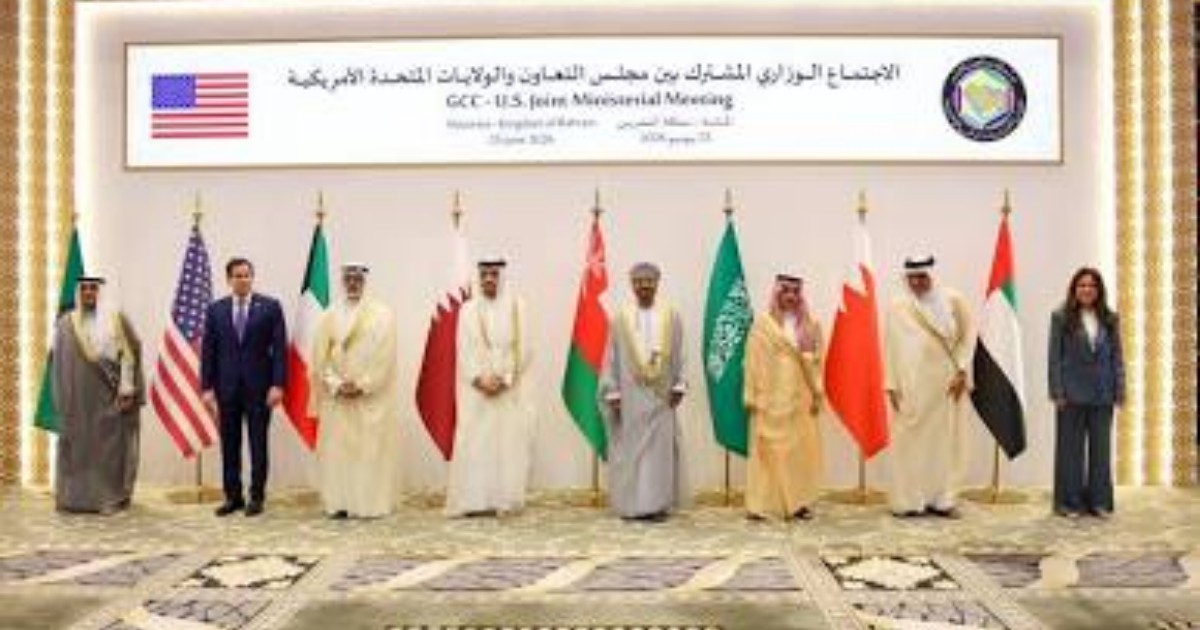
Iran has condemned a joint statement issued by the United States and the Gulf Cooperation Council as interventionist, irresponsible, and provocative, Al Jazeera reported on Friday. The Iranian Foreign Ministry released an official statement rejecting the communique from the GCC-US ministerial meeting held in Manama, Bahrain, on June 25. Tehran accused Washington and its Gulf allies of trying to impose political and economic pressure on the Islamic Republic following the recent military conflict involving the United States and Israel. The ministry stated that the joint declaration distorted regional realities and merely repeated hostility toward Iran`s sovereignty.
The joint US-GCC statement followed high-level talks co-chaired by US Secretary of State Marco Rubio and Bahraini Foreign Minister Abdullatif bin Rashid Al Zayani, with participation from the foreign ministers of Saudi Arabia, Kuwait, Qatar, Oman, and the United Arab Emirates. While the ministers initially welcomed the June 17 memorandum of understanding signed between Washington and Tehran, they explicitly tied any future economic engagement or trade with Iran to strict and reversible conditions. The joint communique further claimed that lasting regional peace and security would require addressing Iran`s advanced ballistic missiles, drone capabilities, and regional allied groups.
In response, the Iranian Foreign Ministry dismissed Washington`s claims of an enduring commitment to Gulf security as simple rhetoric and a distortion of facts. Tehran argued that the continuous United States military presence in the Middle East serves only as a major burden on regional nations and remains the primary source of division and insecurity. The ministry pointed out that Washington used military bases and facilities stationed within regional countries to execute acts of aggression against Iran between February 28 and April 8, 2026. Iran urged its neighbors to honor international law and good neighborliness by preventing third parties from utilizing their territories for hostile military maneuvers.
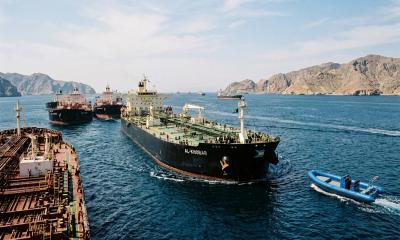
Regarding the strategic Strait of Hormuz, Tehran emphasized that the critical waterway lies entirely within the territorial waters of Iran and Oman. The Iranian government rejected the US-GCC opposition to shipping fees or transit tolls, clarifying that navigation management in the area will be governed specifically under paragraph 5 of the recently signed memorandum that ended the hostilities. According to reports from Al Jazeera and Middle East Eye, Iran maintains that it will not tolerate even the slightest compromise when it comes to defending its territorial integrity and defensive military installations.
What remains unclear is how this escalating verbal confrontation will impact the implementation of the fragile interim truce between Washington and Tehran mediated by Pakistan and Qatar. The Iranian statement strongly criticized the GCC for aligning with the United States and Israel in labeling Lebanese and Palestinian resistance groups as proxies, asserting that the occupying Israeli administration is the true destabilizing factor. Tehran concluded by urging Gulf states to abandon foreign-dependent security models and instead focus on building a collective framework based on mutual trust and regional diplomatic cooperation.