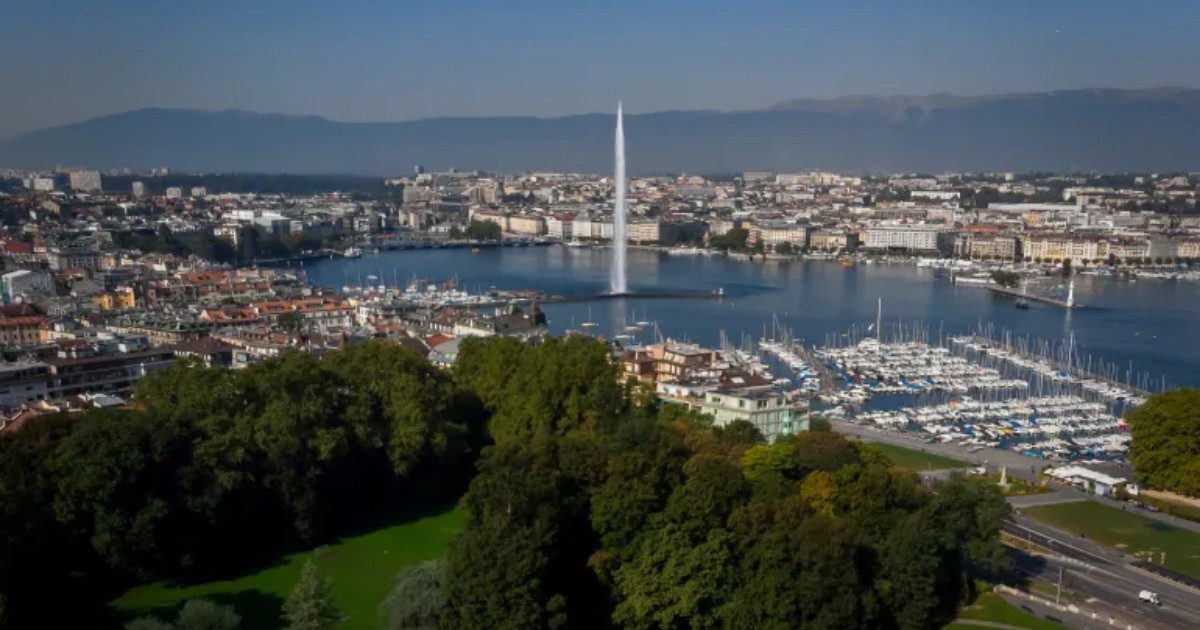
The United States and Iran are scheduled to sign a historic memorandum of understanding in Geneva on Friday to end their weeks-long war, Al Jazeera reported, as this historic US-Iran Geneva deal has become the focal point of global geopolitics. The crucial event will be hosted by Pakistan, which has played a prominent role in mediating between the two adversaries since the conflict erupted following US-Israeli airstrikes on Tehran on February 28. While it remains unclear which specific officials will represent the warring parties and the mediator at the ceremony, the selection of the venue has garnered global attention. Geneva, widely recognized as the global peace capital, has served as a central hub for international diplomatic breakthroughs and has hosted the signing of numerous monumental peace treaties throughout modern history. Ian Lesser, a distinguished fellow at the German Marshall Fund of the United States, told Al Jazeera that Switzerland`s historical neutrality, the active presence of the United Nations, and a discreet logistical environment make Geneva an ideal setting for such delicate international deals.
The background of this US-Iran Geneva deal shows that the war, which lasted for three months and 16 days, severely threatened the global energy structure and destabilized international markets. Intensive mediation efforts led by Pakistani Prime Minister Shehbaz Sharif and Field Marshal Asim Munir successfully secured a ceasefire agreement on June 14. This initial memorandum serves as a framework accord under which both sides have declared an immediate and permanent termination of military operations across all active fronts, including Lebanon. One of the most significant achievements of the deal is the toll-free reopening of the strategic Strait of Hormuz and the simultaneous lifting of the United States naval blockade on Iranian ports. US Vice President JD Vance confirmed that the framework was digitally signed on Sunday, paving the way for the formal in-person ceremony this coming Friday. What remains unclear, however, is the resolution of long-term disputes regarding Iran`s nuclear program, enriched uranium stockpiles, and comprehensive sanctions relief, which have been deferred to a 60-day negotiating window.
Reviewing the monumental peace agreements previously signed in Geneva, the original Geneva Convention stands out as the bedrock of international humanitarian law. Initiated by Swiss businessman Henry Dunant and drafted by the International Committee of the Red Cross, the first convention was held on August 22, 1864, to regulate the treatment of wounded soldiers. Following the immense devastation of World War II, 63 nations expanded these foundational humanitarian rules on August 12, 1949, signing four comprehensive new treaties. The first Geneva Convention protects wounded and sick soldiers in the field, alongside medical and religious personnel serving in conflict zones. The second treaty extends these essential protections to wounded, sick, and shipwrecked members of armed forces at sea, ensuring the safety of hospital ships and naval medical units. The third convention establishes strict guidelines for the humane treatment of prisoners of war, mandating their prompt release and repatriation after active hostilities cease. The fourth treaty offers vital protections to civilian populations caught in international and non-international armed conflicts, safeguarding their core human rights under foreign occupation.
Another major milestone in the city`s diplomatic history is the 1954 Geneva Accords, which provided the framework for ending hostilities in the First Indochina War. The conflict had been fought since December 1946 between French colonial forces and the Viet Minh independence league. Signed on July 20 and 21, 1954, by representatives of France, Great Britain, the United States, the Soviet Union, China, Laos, Cambodia, and Vietnam, the accords successfully brought an end to French colonial rule. Although it granted independence to the region, the agreement temporarily divided Vietnam at the 17th parallel into a communist-led northern zone and a French-backed southern zone. The accords called for nationwide reunification elections in July 1956, but the failure to implement them eventually contributed to deeper political polarization and subsequent military escalation in Southeast Asia.
Geneva has also repeatedly served as a neutral ground for managing volatile Middle Eastern conflicts, notably hosting the 1974 Israel-Syria Disengagement Accord. Brokered by the United States on May 31, 1974, the agreement brought a decisive end to the active military hostilities that followed the 1973 Yom Kippur War. In October 1973, Egyptian and Syrian forces had launched a coordinated surprise assault on Israeli positions in the Sinai and Golan Heights to reclaim territories lost during the 1967 conflict. While the disengagement pact was not a formal permanent peace treaty, it successfully established a strict zone of separation between the Israeli and Syrian militaries and facilitated the reciprocal release of prisoners of war. To maintain the fragile peace, the United Nations Disengagement Observer Force was stationed within a designated buffer zone, a mechanism that effectively prevented direct military clashes between the two nations for decades.
This regional diplomatic framework was expanded on September 4, 1975, with the signing of the Sinai II Agreement in Geneva between Egypt and Israel under the mediation of US Secretary of State Henry Kissinger. According to official United States government archives, this interim pact constituted a vital first step toward a durable and just peace in the region following the Yom Kippur War. Under the terms of the accord, both nations pledged not to resort to the threat or use of force and to scrupulously observe the ceasefire across land, sea, and air. Israel agreed to withdraw its military forces from the strategic Mitla and Gidi passes in the Sinai Peninsula and return the critical oil fields of Abu Rudeis and Ras Sudar to Egyptian control. In addition, the United Nations established a monitored buffer zone in the evacuated territory, and Egypt agreed to open the strategic Suez Canal to non-military Israeli cargo ships.
The city`s historical role as a diplomatic sanctuary was further cemented by the 1988 Geneva Accords, which were brokered by the United Nations to conclude the Soviet-Afghan War. Signed on April 14, 1988, by Afghanistan and Pakistan with the United States and the Soviet Union acting as international guarantors, the agreements mandated the complete withdrawal of Soviet troops. The accords also established legal frameworks for the voluntary and safe repatriation of millions of Afghan refugees who had fled across borders during the years of intense fighting. Shortly thereafter, in November 1991, Croatia, Serbia, and Yugoslavia signed a critical ceasefire known as the Vance Plan in Geneva to address the Croatian War of Independence. Negotiated by US Envoy Cyrus Vance, the agreement demanded an immediate halt to hostilities, the lifting of blockades on military barracks, and the orderly withdrawal of Yugoslav forces from Croatian territory.
Finally, in December 2003, Israeli and Palestinian public figures launched a comprehensive blueprint for a two-state solution known as the Geneva Accord or Geneva Initiative. Developed with the active backing of the Swiss government, the proposal sought to resolve the core issues of the conflict, including Jerusalem`s status and refugee repatriation. The plan suggested dividing Jerusalem to give Palestinians control over the Al-Aqsa Mosque compound while granting Israel control over the Western Wall, making the city a shared capital. It also included provisions for removing most Jewish settlements in the occupied West Bank and Gaza while annexing specific border settlements to Israel. Although this historic initiative was never officially adopted by either the Israeli or Palestinian governments, it remains a notable reference point for conflict resolution. The current US-Iran Geneva deal faces similar challenges, as the long-term status of Iran`s nuclear program remains heavily contested and Israel`s exclusion leaves the durability of the Lebanese ceasefire uncertain.