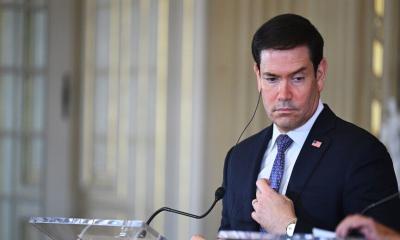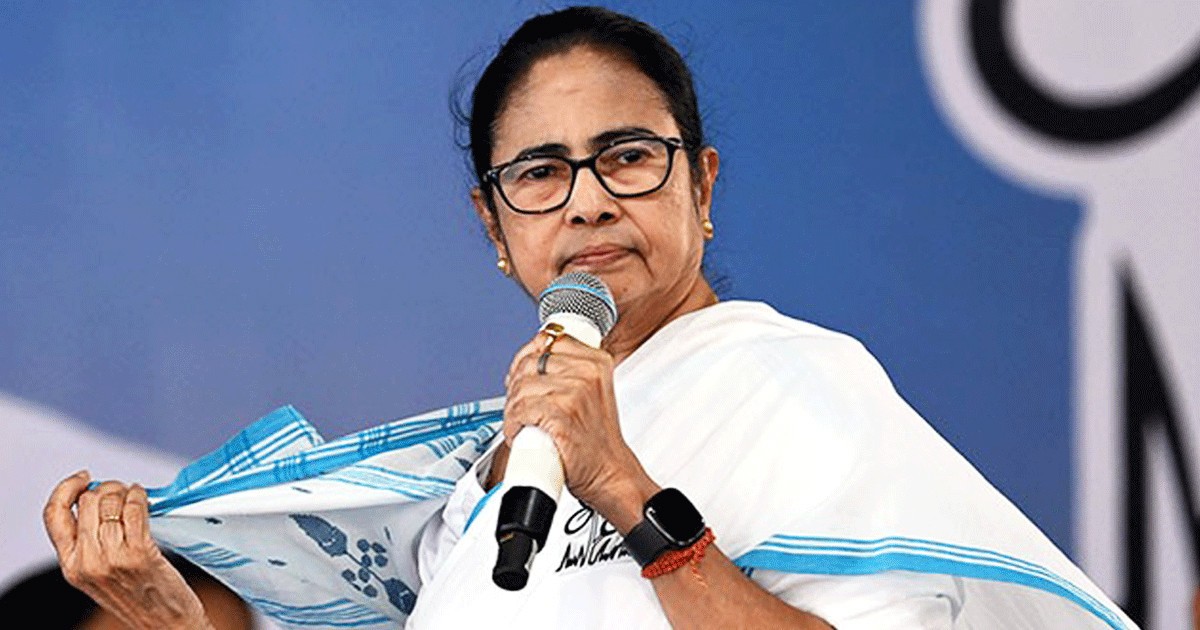
Less than a month after experiencing a catastrophic rout in the state assembly elections, the All India Trinamool Congress is facing an unprecedented internal rebellion that threatens its survival. The political faction, which governed the state of West Bengal for nearly fifteen years, is exhibiting severe structural cracks as elected representatives challenge the central leadership. The crisis escalated dramatically following the abrupt expulsion of two newly elected legislators, Ritabrata Banerjee and Sandipan Saha, who publically exposed widespread forgery within internal parliamentary documents.
The developments indicate that a significant Trinamool Congress split may be actively underway.
The most glaring manifestation of this institutional breakdown occurred on Sunday when party supremo Mamata Banerjee convened an emergency organizational meeting for her 80 newly elected lawmakers. Demonstrating a complete collapse of internal party discipline, a staggering 60 legislators chose to boycott the session, leaving only 20 individuals in attendance. The massive absence has sent shockwaves through the regional administration, prompting the newly appointed Chief Minister and Bharatiya Janata Party leader, Suvendu Adhikari, to declare that the organization has effectively ceased to function as a viable political entity. Although Banerjee issued a public statement via social media asserting that the party remains unbreakable, the operational realities on the ground present a contradictory narrative.
The catalyst for this open defiance stems from a high-stakes controversy surrounding the official selection of the assembly`s opposition leader. According to legislative sources, an initial meeting was conducted at Banerjee`s Kalighat residence on May 6 to secure mandatory member signatures on a programmatic resolution document. When a secondary tracking session was called on May 19, multiple assembly members were absent, yet party administrators allegedly forged their signatures onto the official documents to manufacture the appearance of total consensus. Dissenting lawmakers revealed that leadership executives pressured them to backdate their signatures to May 6, utilizing systemic intimidation to suppress any structural objections. Ritabrata Banerjee later confirmed to journalists that the final document contained fraudulent entries for individuals who never physically attended the structural meetings.
Following a formal, written complaint submitted by the two expelled lawmakers directly to the Assembly Speaker, the party leadership immediately executed their ouster on charges of anti-party activities. The escalating scandal triggered a formal criminal investigation at Kolkata`s Hare Street police station, which was subsequently transferred to the Criminal Investigation Department, the elite investigative wing of the state police. As part of the ongoing probe, the CID issued an official summons to the party`s general secretary and Banerjee’s nephew, Abhishek Banerjee, ordering him to appear for structural interrogation. However, the younger Banerjee avoided the scheduled appearance on Monday, citing sudden physical illness to delay the deposition, a move that has further infuriated grassroots party workers who blame his centralized management style for the election disaster.
The widening administrative fracture has introduced a complex mathematical equation regarding the future governance of the state assembly. If the rebel faction manages to consolidate a larger percentage of disgruntled lawmakers, they could potentially mount a legitimate statutory claim for the official opposition status within the chamber. Highlighting this strategy, BJP leader Tapas Roy stated on social media that the organization is disintegrating rapidly, drawing direct parallels to the historic political collapses witnessed in Maharashtra. Roy asserted that a specialized block of nearly 50 dissenting legislators had already initiated closed-door communications with the legislative speaker to establish an independent political unit. Although the rebel leaders publically maintain they retain personal respect for Mamata Banerjee, they refuse to retract their official legal challenges against the party`s executive core.
Political analysts operating in Kolkata indicate that the organization lacks a defined, sustainable ideological framework, having functioned primarily as a personality-driven vehicle centered entirely on the individual popularity of Mamata Banerjee. The foundation of this centralized control was shattered during the assembly elections when Banerjee suffered a shocking personal defeat within her traditional urban stronghold of Bhawanipur. Under current anti-defection statutes, the rebel faction requires a two-thirds majority—amounting to at least 53 out of the original 80 legislators—to execute a legally protected separation without forfeiting their legislative seats. While the state leadership of the BJP has cautiously stated it will not immediately absorb external defectors, the fluid alignment of these lawmakers continues to keep the regional administration in a state of high volatility.