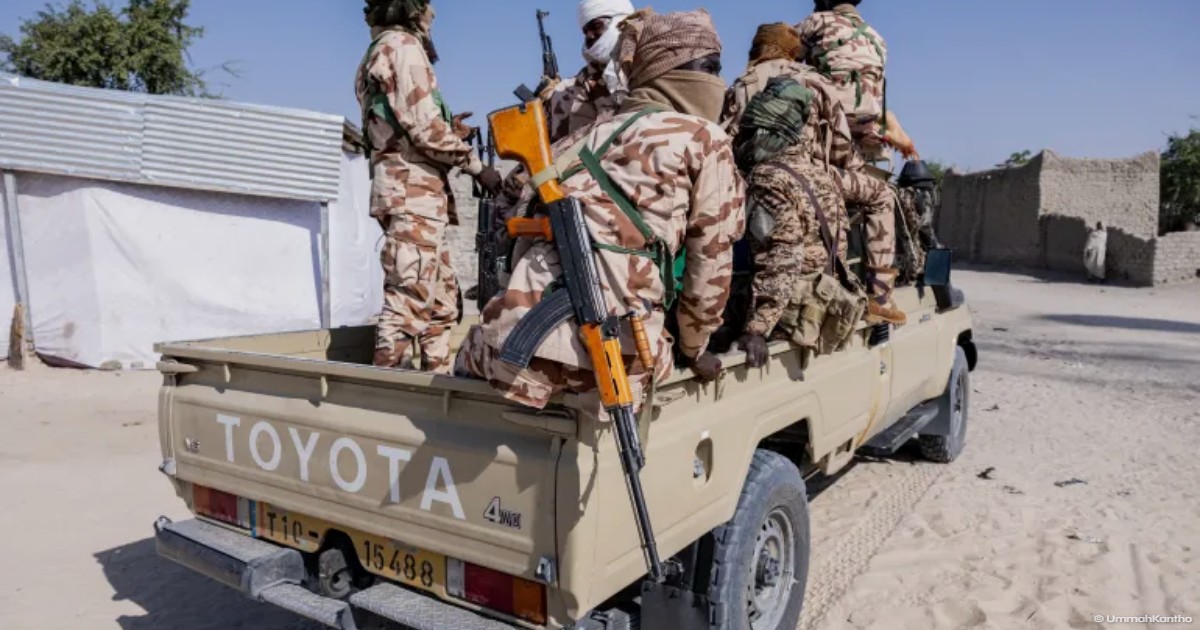
At least 23 Chadian soldiers have been killed and 26 others injured following a deadly assault by the armed group Boko Haram on a remote military outpost in the Lake Chad region. According to reports from Al Jazeera and other international news agencies, the attack occurred late Monday night and specifically targeted a military installation on the island of Barka Tolorom. The Nigeria-based armed group has historically maintained a strong, disruptive presence across the vast Lake Chad basin, a strategic and volatile area where the borders of Cameroon, Chad, Niger, and Nigeria intersect.
The Chadian military released a formal statement on Tuesday detailing the deadly confrontation. Authorities noted that while the military suffered heavy casualties, the forces on the ground ultimately managed to repel the assault. The army stated that a "significant number" of the attackers were killed during the intense firefight, though they did not provide an exact death toll for the armed group. The complex geography of the Lake Chad basin, characterized by numerous small islands and dense, difficult-to-navigate marshes, has long provided natural cover for various armed factions operating outside state control.
In the aftermath of the violence, Chadian President Mahamat Idriss Deby Itno took to social media to strongly condemn the assault. In a Facebook post published on Tuesday, he described the incident as a "cowardly attack" carried out by the "nebulous Boko Haram terrorist group." Extending his condolences to the bereaved families of the fallen soldiers, President Deby vowed to maintain the military`s current aggressive posture. "We will continue the fight with renewed determination until this threat is completely eradicated," he wrote, signaling that military operations in the region are likely to intensify in the coming weeks.
This latest clash is part of a broader, deeply entrenched cycle of violence in the region. Chadian forces have faced increasing pressure from Boko Haram fighters, with the security situation visibly deteriorating over the past year. The most recent major incident occurred in October 2024, when an attack in the same region claimed the lives of approximately 40 Chadian soldiers. That massive loss prompted President Deby to personally travel to the front lines to oversee a two-week counteroffensive aimed at clearing insurgent strongholds. Following the conclusion of that military campaign in February of the previous year, the Chadian army confidently declared that Boko Haram had "no more sanctuary on Chadian territory."
Monday`s attack, however, suggests that the group`s operational capabilities remain largely intact. According to security analysts cited by Al Jazeera, recent months have seen a noticeable surge in violence attributed to the JAS faction of Boko Haram. This specific faction has been responsible for a wave of kidnappings and targeted strikes on advanced army positions, particularly along the Nigerien portion of the lake`s shores. In parallel, the Lake Chad islands also serve as a tactical haven for the Islamic State in West Africa Province (ISWAP), a rival splinter group that further complicates the region`s already fragile security landscape.
The ongoing security crisis heavily compounds the severe domestic challenges facing Chad. The landlocked Central African nation has endured decades of chronic instability, characterized by recurring armed rebellions, factional clashes, and political coups. Despite possessing substantial oil reserves, the country suffers from prolonged economic stagnation and severe climate challenges. These factors combined have kept Chad firmly positioned among the poorest and most vulnerable nations on the African continent, making the human and economic cost of this continuous conflict even harder for the local population to bear.