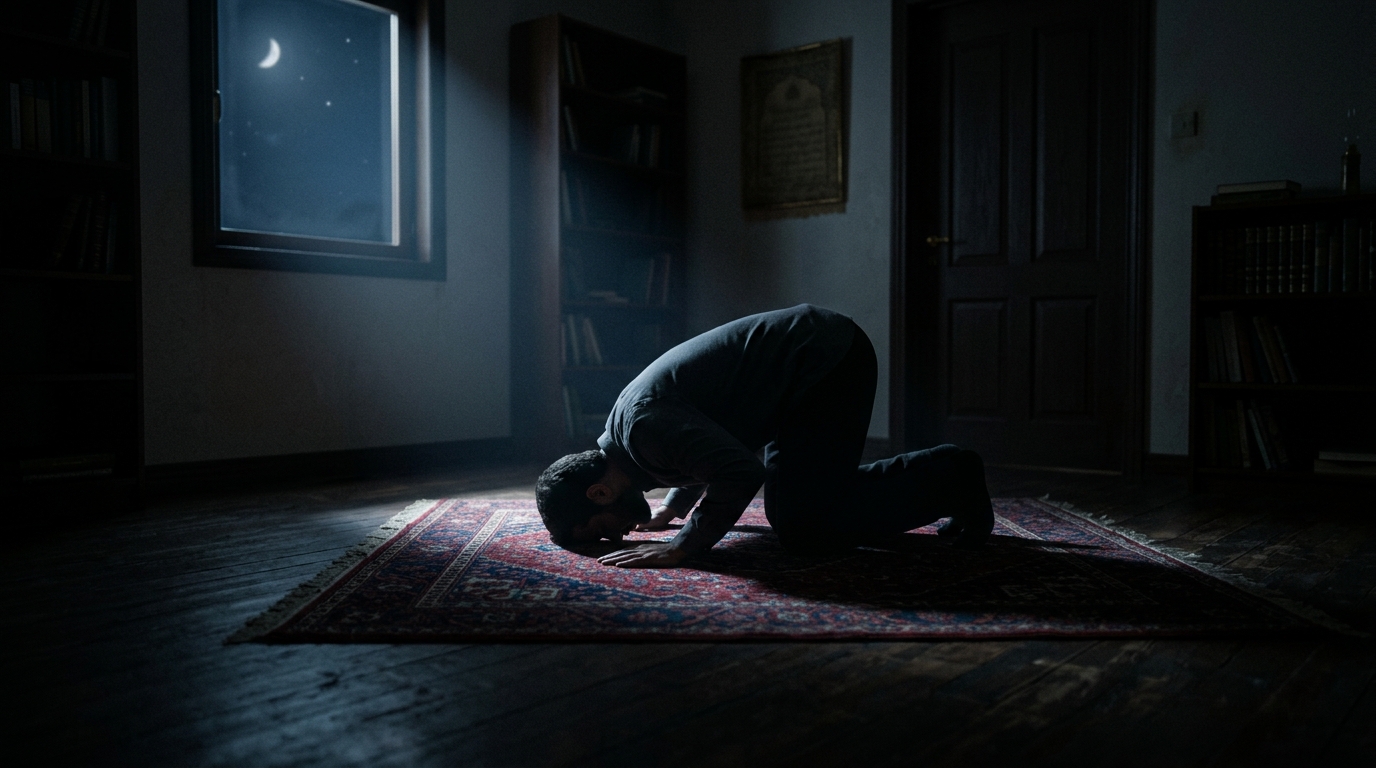
The stillness of the night forces a confrontation with reality that the busy hours of daylight easily mask. When the world powers down and the noise of daily obligations fades, the human soul is left in absolute solitude. It is within this quiet isolation that believers find the most direct, unfiltered connection to their Creator. The final third of the night is not merely a time for physical rest; it is an active spiritual frontier. When a person stands in prayer with the acute realization that this particular night could be their very last on earth, the mechanics of worship transform entirely. Ritual becomes a profound plea for salvation, and prostration becomes the ultimate act of surrender.
Islamic theology places immense significance on the latter part of the night. According to authentic prophetic traditions, this is the time when the Almighty`s mercy is most accessible. The Prophet Muhammad stated that Allah descends to the lowest heaven during the last third of every night, asking who is invoking Him so He may answer, and who is seeking His forgiveness so He may forgive them (Sahih Al-Bukhari, 1145). Standing before Al-Ahad (The One) and Al-Wahhab (The Supreme Bestower) under this cosmic promise shifts a person`s entire paradigm. It strips away the ego, the pride of worldly accomplishments, and the petty anxieties that consume the waking hours.
The inevitability of death is a central tenet of the human experience, yet it is easily ignored in the pursuit of wealth and status. Embracing the thought that any night might be the final one acts as a powerful psychological and spiritual anchor. A prayer offered under the shadow of mortality is fundamentally different from a routine obligation. The tears shed in the darkness are not performative; there is no audience to impress, no `Riya` (showing off) to contaminate the sincerity. It is just the fragile human being and the eternal Lord. In this state, the act of Sujud—lowering one`s forehead to the ground—becomes a physical manifestation of total vulnerability and trust in God`s decree.
In these crucial hours, Dhikr (the remembrance of Allah) serves as a lifeline for the anxious heart. The constant, mindful repetition of `La ilaha illallah` (There is no deity but Allah) is more than a phrase; it is a declaration of independence from worldly desires and a reaffirmation of divine supremacy. The Quran clearly outlines this reciprocal relationship, stating, "So remember Me; I will remember you" (Surah Al-Baqarah, 2:152). When a believer anchors their mind to this remembrance during what they treat as their final hours, the heavy burden of past mistakes begins to lift. Dhikr scrubs the spiritual slate clean, preparing the soul for whatever comes next.
This brings the concept of Tawbah (repentance) into sharp focus. Tawbah is not just an apology; it is a complete reorientation of the self. A genuine plea for forgiveness in the dead of night requires acknowledging one`s absolute dependence on divine mercy. When someone asks for their sins to be veiled and their shortcomings to be overlooked, they are preparing for the ultimate transition from this life to the hereafter. If that night truly turns out to be their last, this sincere repentance ensures they leave the world in a state of grace, holding a clean record and a heart attached to its Creator.
Furthermore, the prayers made in this state of deep realization are inherently expansive. A believer does not just pray for their own salvation. The silence of the night draws out supplications for aging parents, struggling relatives, and the wider community of faith. This selflessness is born from the understanding that human connections are temporary, but the spiritual bonds forged in sincere prayer transcend death. The ultimate desire shifts from material success to attaining Husn al-Khatimah (a good ending), securing a place in Jannatul Firdaus, and achieving the pleasure of God.
Operating with the mindset that every night is the final night changes how a person lives their days. It injects purpose into interactions, stops the tongue from backbiting, and diffuses anger. The fear of death is replaced by a tranquil preparation for the meeting with the Divine. By treating the midnight prayer as a final opportunity, believers ensure that whenever their time does come, they are found in a state of absolute submission, seeking nothing but the mercy of their Lord.