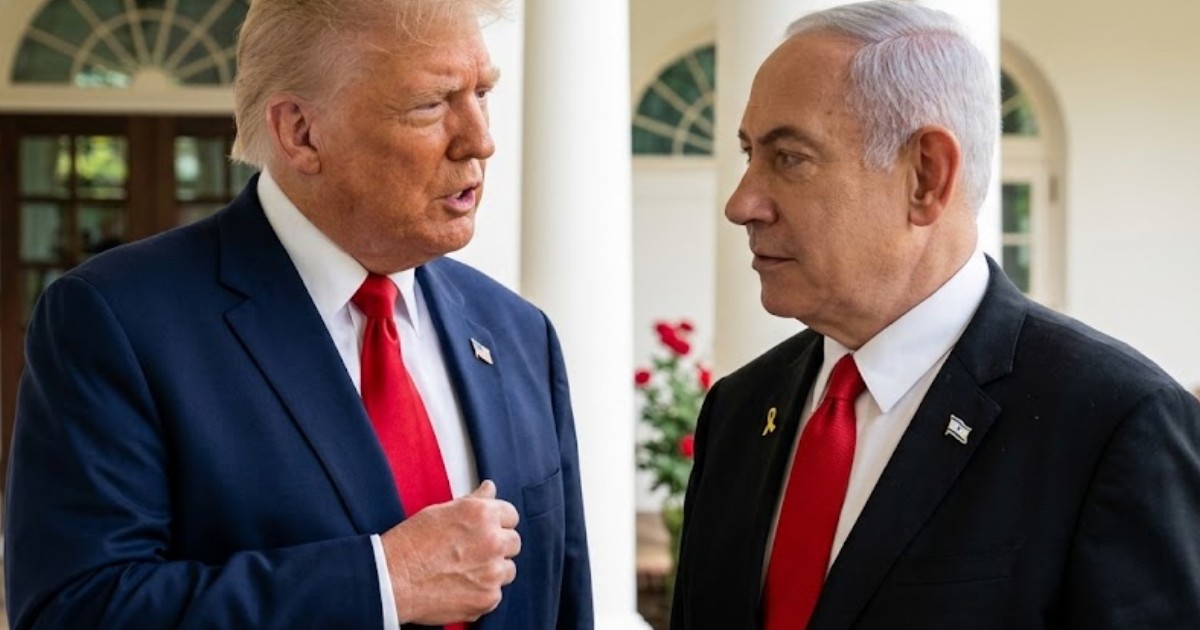
The United States’ 15-point peace plan for Gaza has been formally rejected by Israeli Prime Minister Benjamin Netanyahu, who vowed on Sunday that no military withdrawal will take place until the Palestinian militant group Hamas is fully and genuinely disarmed, according to Reuters and BBC News.
The proposed roadmap, developed by US President Donald Trump’s Board of Peace, aimed to secure the complete disarmament of Hamas and other armed groups in the region. In exchange, the agreement outlined a phased Israeli military pullout and the comprehensive reconstruction of the Gaza Strip.
Speaking at a cabinet meeting on Sunday, Netanyahu made his government`s position clear, stating that Israel outright rejects the 15-point document. He emphasized that the Israeli military will not carry out any withdrawal until Hamas is genuinely disarmed, adding that operations to thwart threats against Israeli citizens and forces will continue unabated.
Netanyahu dismissed any notion of a superficial surrender, stating that the disarmament process must not be a fictitious one. He insisted that the total removal of the group`s military capabilities remains a non-negotiable prerequisite for any Israeli withdrawal.
The Israeli prime minister acknowledged that he is in ongoing discussions with Washington regarding how to move forward. He noted that while some American ideas are acceptable to his government, others are completely rejected, and Israel knows how to stand its ground on these critical security matters.
On the Palestinian side, Hamas had previously indicated acceptance of the disarmament plan. However, the group strictly stipulated that handing over its heavy weapons is contingent upon Israel ending all forms of aggression. They also demanded a complete withdrawal of Israeli forces from the territory before any weapons are surrendered.
Netanyahu is currently facing immense pressure from his right-wing political base ahead of upcoming elections just months away. National Security Minister Itamar Ben Gvir and other far-right allies have strongly opposed the draft agreement, dismissing it as unacceptable and demanding a new cabinet vote to end the Gaza plan entirely. Given the political climate, analysts note it is highly unlikely that Netanyahu will offer any concessions.
The peace plan, which was initially announced in September of last year, saw renewed momentum last month. President Trump hailed the development as a monumental step toward lasting peace and security after the Board of Peace reached an agreement on the disarmament protocols.
Israel has continued to carry out strikes across Gaza despite agreeing to an initial ceasefire in the territory last October. The rejection of the 15-point document signals a significant blow to US-brokered diplomatic efforts. What remains unclear is how the US administration will respond to this direct rejection just months before the Israeli elections. For now, the future of the Gaza peace process rests in deep uncertainty as details are still emerging.