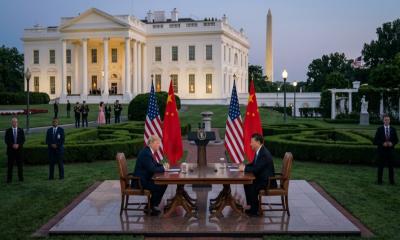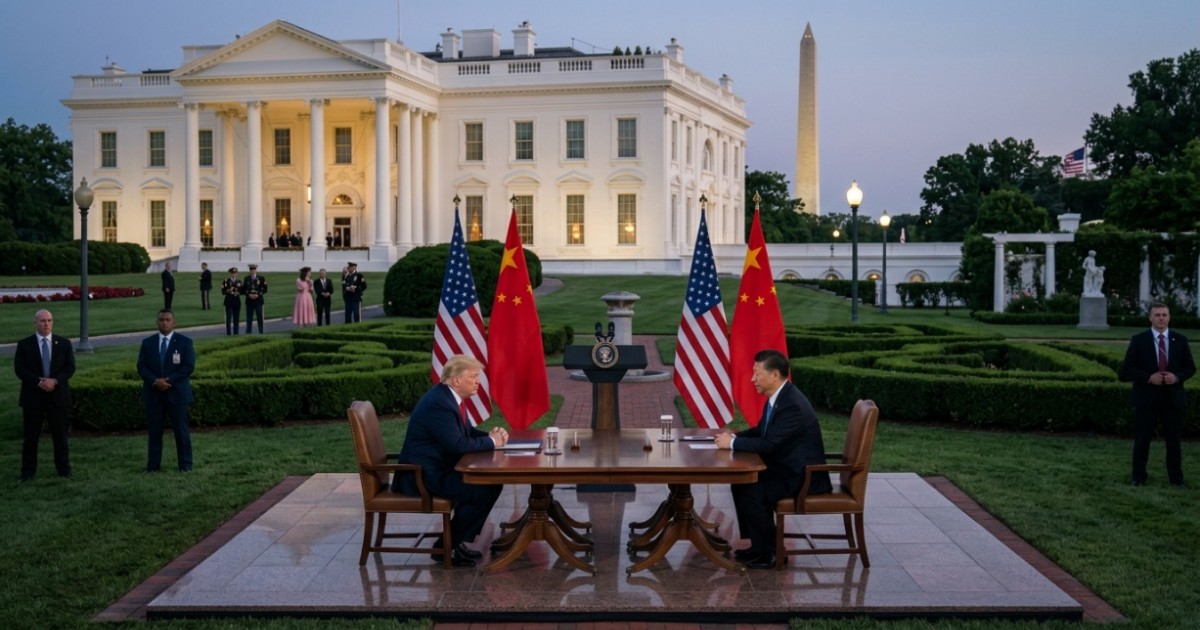
United States President Donald Trump welcomed Chinese President Xi Jinping to the White House on Thursday for a critical state visit aimed at managing intense geopolitical competition. Opening the bilateral discussions in Washington, Trump stated that the engagements held the potential to promote peace and prosperity for decades ahead. The high-profile summit marks an intensive effort by the world two largest economies to establish guardrails around contentious trade, technological, and territorial disputes.
The bilateral dialogue tackled several volatile international fronts.
Chinese state media reported that President Xi emphasized Beijing unyielding stance on territorial integrity, urging Trump to formally oppose Taiwanese independence and handle cross-strait questions with extreme prudence. Addressing Middle Eastern security, Xi signaled support for the United States and Iran to return to the provisions established in their June Memorandum of Understanding. That preliminary diplomatic framework had temporarily halted hostilities, reopened transit across the vital Strait of Hormuz, and paused naval blockades before escalating clashes unraveled the accord.
Foreign policy analysts cautioned against expecting major structural agreements from the talks.
Academic advisers observing bilateral exchanges noted that after a volatile start to relations, the gathering functioned primarily as a stabilizing summit designed to restore baseline communication channels rather than trade concessions. Concurrently, US First Lady Melania Trump and Chinese First Lady Peng Liyuan visited the Smithsonian National Museum of Asian Art, signaling standard diplomatic pageantry alongside closed-door strategic deliberations.