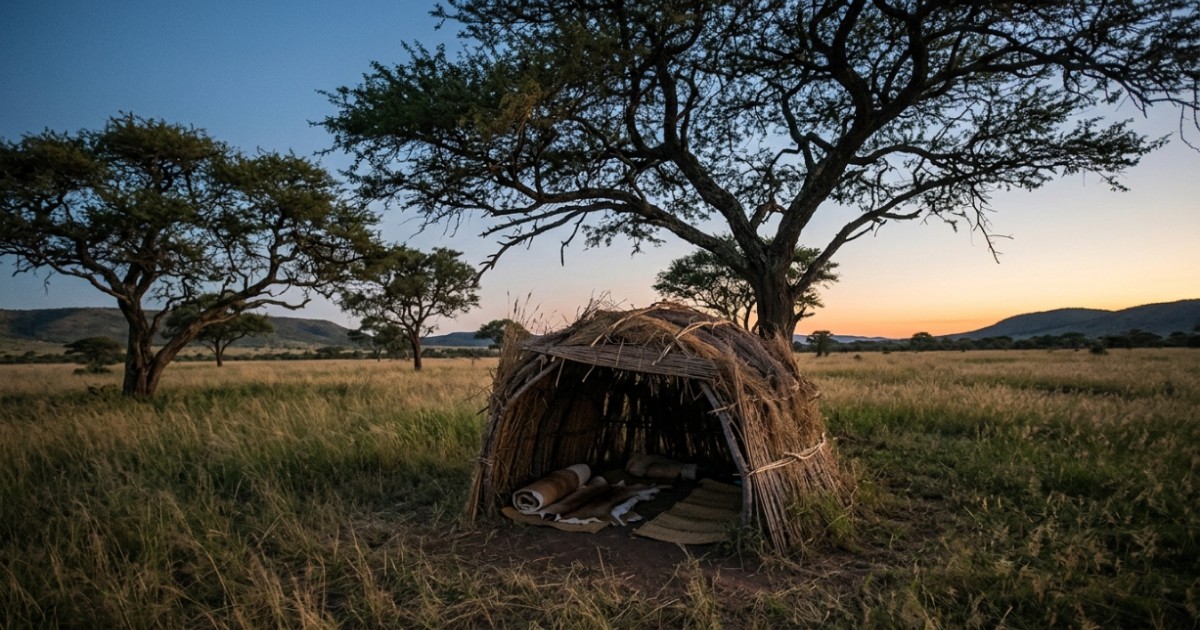
Traditional hunter-gatherer societies in Tanzania, Bolivia, and Namibia are reshaping modern medical understanding of sleep hygiene and insomnia, evolutionary researchers have confirmed. Field studies across the Hadza, Tsimane, and San communities demonstrate that chronic sleep disturbances remain virtually nonexistent in non-industrial settings. University of California, Los Angeles neuroscientist Jerome Siegel documented that despite sleeping fewer total hours and waking more frequently than urban populations, foragers experience consistent daytime alertness.
They do not recognize the concept of insomnia.
Researchers point to severe disruptions in modern living conditions where artificial climate controls interfere with biological clocks. David Samson, director of the Sleep and Human Evolution Laboratory at the University of Toronto, explained that daylight acts as the primary timekeeper for human physiology. Field tests show that individuals exposed to ample natural sunlight during working hours maintain resilient circadian rhythms that largely neutralize the disruptive effects of late-night digital screens. Furthermore, hunting-gathering groups synchronize their rest with ambient temperature declines rather than darkness alone, retiring hours after sunset as night air cools.
Modern households maintain artificial temperatures that disrupt this natural cooldown.
Communal interaction during evening hours provides another crucial physiological bridge to restorative rest. Anthropologist Alyssa Crittenden of the University of Nevada reported that twilight brings an immediate transition from utilitarian survival tasks to relaxed socialization around communal spaces. Termed the nighttime cooperative niche, this collective presence dispels the psychological isolation that frequently fuels insomnia in solitary urban households.
Scientists advise abandoning the modern fixation on achieving uniform, eight-hour sleep blocks every night. Evolutionary anthropologist Gandhi Yetish stressed that natural sleep fluctuates dynamically with seasonal variations and physical demands. Attempting to force an artificial standard onto human biology generates performance anxiety that directly undermines sleep quality.