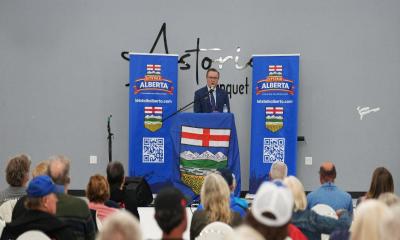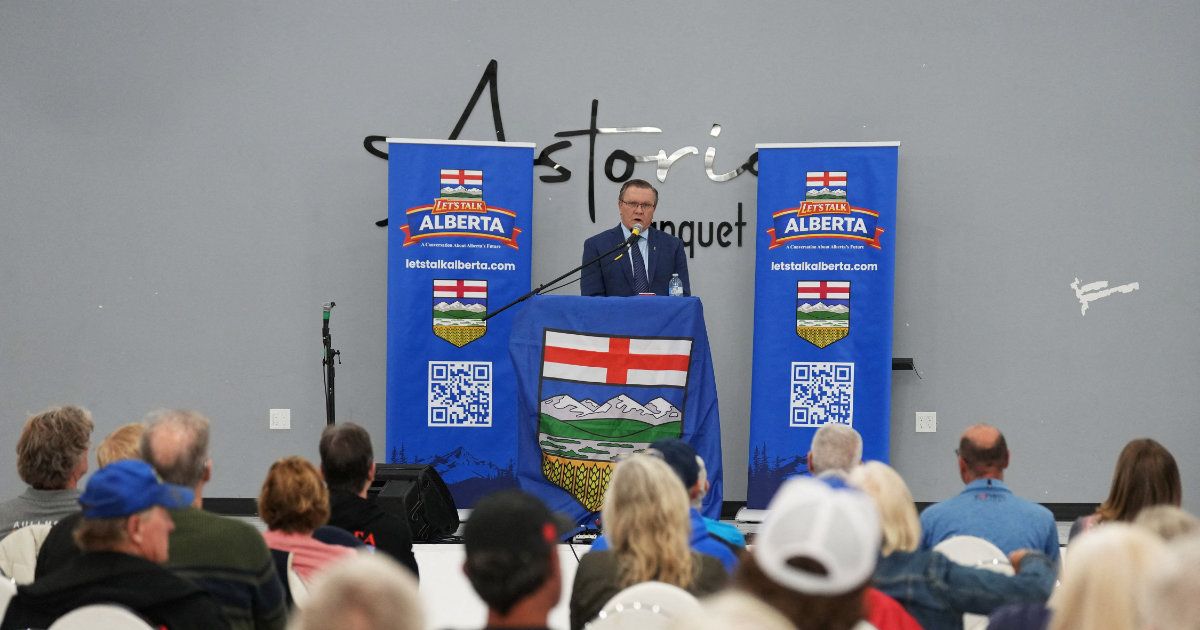
Voters in Alberta will decide on Monday whether the oil-rich province should begin the process of separating from Canada. The vote represents a major test for the country as it deals with hostility from the United States.
Polling shows that less than a quarter of the province’s five million residents support independence. However, Mitch Sylvestre, head of the separatist group Alberta Prosperity Project, disputed those figures during an interview on Tuesday.
Sylvestre said he would not be surprised if the referendum wins or receives at least forty percent of the vote. The vote presents a personal challenge for Prime Minister Mark Carney, who grew up in Alberta and returned there this week to campaign against secession.
Hostility from the United States, driven by President Donald Trump, has defined Carney’s tenure. Alberta’s petroleum industry sits at the centre of his economic strategy to strengthen the country and decrease reliance on the United States.
Carney has supported a new pipeline and additional projects to boost crude output. This approach marks a departure from his predecessor, Justin Trudeau, who faced strong criticism in Alberta over policies that critics argued suppressed oil growth.
In a Thanksgiving video address filmed at his former high school in Edmonton on Monday, Carney promoted the pipeline as an opportunity to build prosperity locally and nationally. He warned that the country cannot achieve these goals if it remains divided.
The central role of oil in the unity debate distinguishes Alberta’s secession push from other global movements. Separatist leaders express conservative concerns regarding immigration and individual liberty, but their primary grievances focus on the management of the oil sector.
Syracuse University professor Ryan Griffiths, an expert on global separatist movements, described the Alberta push as an outlier. He said that while secession efforts often involve economic motives, they typically feature a linguistic or nationalist element.
Griffiths stated that Alberta’s case for nationhood is harder to establish than movements in places like Catalonia, Scotland, or Quebec. Alberta Premier Danielle Smith pointed to past federal hostility toward the oil industry as a source of local frustration in remarks to the Canadian Broadcasting Corporation last week.
Smith stated she is voting against independence and praised Carney for being open to the oil sector. She explained that she called the nonbinding referendum to resolve internal divisions within the province.
Smith added that if a majority votes to leave, she will start the binding separation process, but if voters choose to stay, she will not permit another referendum. Meanwhile, reported contacts between Alberta separatists and United States allies have drawn intense scrutiny across the country.
US Treasury Secretary Scott Bessent has described Alberta as a natural partner for Washington, and separatist leaders have held meetings at the State Department. Sylvestre maintained that US interests do not influence their efforts currently, but stated he would work to ensure open trade with the United States if independence is achieved.