The United States has formally indicted 94-year-old former Cuban President Raúl Castro on murder charges, sparking widespread speculation about Washington’s ultimate strategy toward Havana. The charges stem from the 1996 shootdown of two civilian aircraft by Cuban fighter jets, an incident that has long fueled anger among Cuban exiles. Now, analysts are assessing three potential paths forward as the 66-year-old Communist government faces unprecedented economic strain.
The Trump administration is pursuing a maximum pressure campaign that has plunged Cuba into severe fuel and energy shortages. While President Donald Trump stated that an escalation might not be necessary, the White House maintains it will not tolerate a rogue state just 90 miles from American shores.
One distinct possibility is a direct US military operation to extract Castro. US commandos executed a lightning-fast raid in Venezuela this past January to capture President Nicolás Maduro. Before that, Operation Just Cause in 1989 saw thousands of US troops invade Panama to detain Manuel Noriega.
Florida Senator Rick Scott has openly advocated for taking a similar approach. He told reporters that the exact outcome that befell Maduro should apply to Raul Castro.
Adam Isacson, an expert with the Washington Office on Latin America, noted that from a strictly military standpoint, capturing Castro is plausible. While his symbolic status means he is heavily guarded, his advanced age might make extraction easier.
But removing Castro would likely leave the core power structure intact. He stepped down as president in 2018 and operates more as an influential figurehead today. Isacson suggested the move would be popular for domestic political reasons, primarily to humiliate the original revolutionaries, but its strategic value remains highly questionable.A second scenario involves a negotiated leadership change within Havana.
Trump recently indicated he is already dealing with figures inside Cuba who are seeking American help to resolve the crippling economic woes. CIA Director John Ratcliffe recently met with prominent Cuban officials, including Castro’s grandson, Raúl Guillermo Rodríguez Castro, and Interior Minister Lázaro Álvarez Casas.
Secretary of State Marco Rubio told reporters in Florida that Washington prefers a negotiated agreement. Such a deal would likely demand sweeping changes. These could include opening up the Cuban economy, inviting foreign investment, and expelling Russian or Chinese intelligence agencies from the island.
Michael Shifter, a professor of Latin American studies at Georgetown University, argued that the US wants to avoid complete instability in Cuba. Forcing an abrupt regime change carries enormous risks that the Trump administration might prefer to sidestep.
The third path relies on domestic turmoil and economic collapse. Cuba is currently suffering through its worst shortages in decades. The sustained blockade of energy imports could theoretically force the government to collapse without direct US military intervention.Yet, identifying a transitional leader remains complicated.
Shifter observed that power dynamics in Cuba are fundamentally different from those in Venezuela. The Cuban system lacks an obvious successor who could smoothly manage a transition favored by Washington.
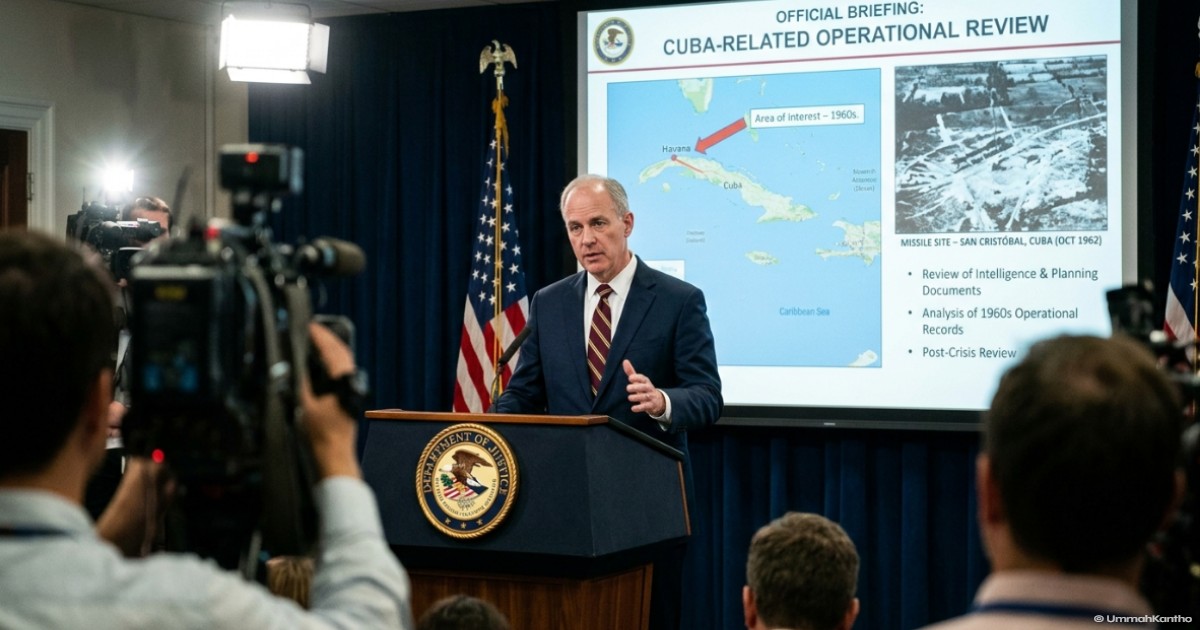
Acting Attorney General Todd Blanche emphasized that this marks the first time in nearly 70 years that a senior Cuban leader has faced US charges for the deaths of American citizens. Four men linked to the Brothers to the Rescue organization perished in the 1996 incident.
Cuban President Miguel Díaz-Canel has strongly condemned the indictment, dismissing it as a political maneuver devoid of any legal foundation.