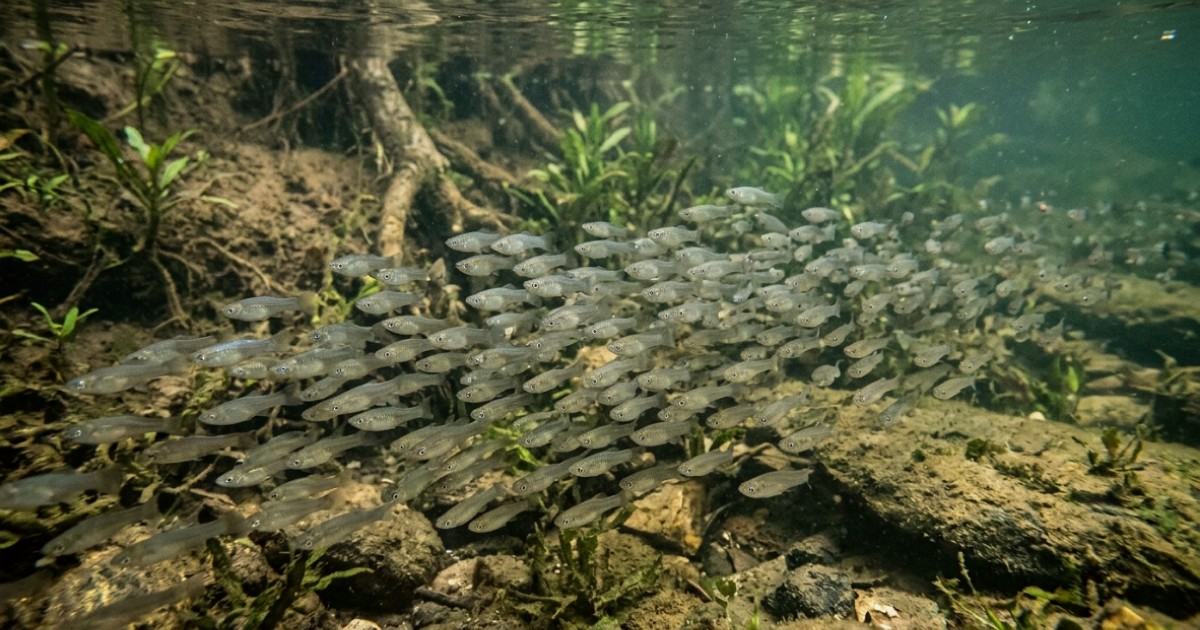
For nearly a century, evolutionary biologists have been puzzled by the Amazon molly, a small fish species found in the warm waters of Mexico and southern Texas. The fish has defied conventional evolutionary theory by surviving for approximately 100,000 years without the genetic contribution of males. While most species rely on sexual reproduction to maintain genetic diversity and health, the Amazon molly persists as an all-female lineage, producing daughters that are essentially clones of themselves.
The survival strategy of the Amazon molly involves a unique biological mechanism known as gynogenesis. In this process, the female mates with males of closely related species. However, she utilizes the male sperm only to trigger the development of her eggs. Once the process initiates, she discards the male DNA entirely. Consequently, the offspring receive no genetic material from the father, ensuring that every individual in the population remains a direct clone of the mother.
Conventional evolutionary wisdom posits that asexual species are evolutionary dead ends. According to the concept of Muller`s ratchet, organisms that do not reproduce sexually accumulate harmful mutations over generations. Without the genetic reshuffling provided by recombination, these errors eventually lead to the degradation of the genome and the eventual extinction of the species. Yet, the Amazon molly has not only survived but thrived for over 100,000 years.
Research led by scientists like Edward Ricemeyer from the Ludwig Maximilian University of Munich aims to determine how this species manages to avoid the genetic decay that theory suggests should have wiped it out long ago. While sexual reproduction is the dominant strategy across the tree of life due to its efficiency in exploring genetic possibilities, the Amazon molly demonstrates that alternative pathways exist. The resilience of this fish challenges the rigid understanding of why sex is necessary for long-term survival.
As scientists continue to study the genome of the Amazon molly, they hope to gain insights into how nature preserves genetic health in the absence of sexual recombination. The fish serves as a living testament to biological adaptability, proving that life can persist in ways that challenge existing paradigms. The existence of the Amazon molly reminds researchers that nature often finds complex, unconventional solutions to the fundamental biological challenge of keeping a species alive through the millennia.