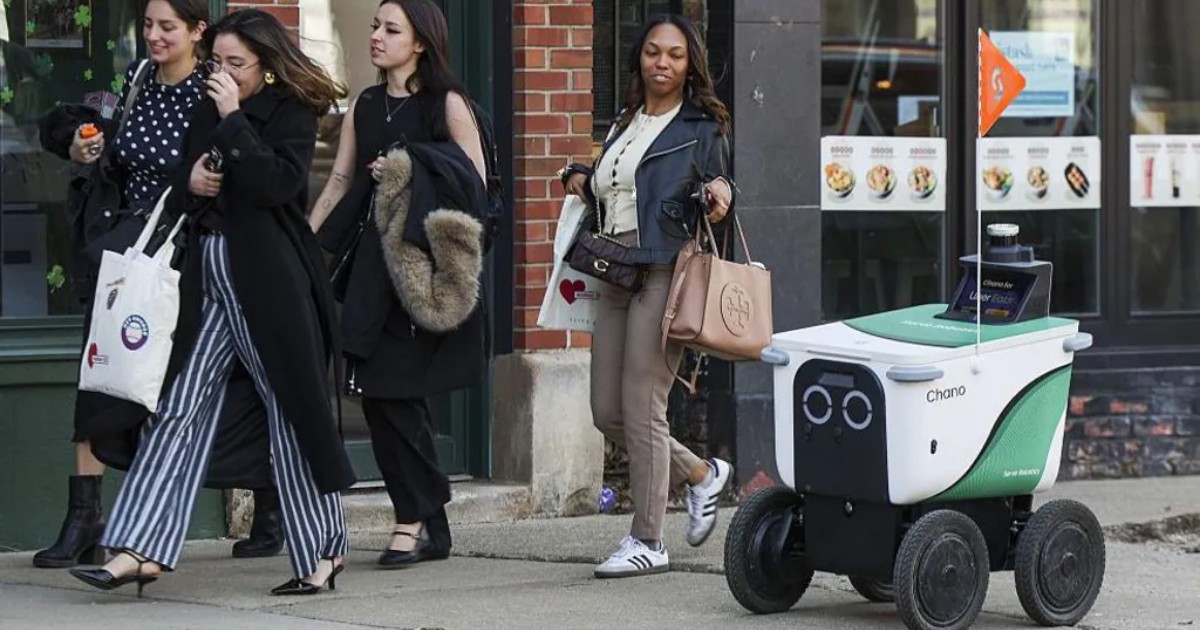
Autonomous delivery robots navigating urban sidewalks are facing severe bans and strict regulatory restrictions in several major cities across the world due to growing safety complaints from pedestrians, BBC News reported on Thursday. These automated urban delivery vehicles have increasingly appeared on pavements in countries such as the United States, the United Kingdom, Japan, South Korea, and Germany to transport groceries and fast food. Operating companies utilize specialized cameras, advanced sensors, and global positioning systems to help these machines map out their environments. However, members of the public and local municipalities are expressing rising dissatisfaction as these machines occupy pedestrian walkways and cause physical navigation challenges.
In the United States, Chicago resident John Roberts has launched a dedicated public campaign protesting the presence of delivery robots on public sidewalks. He is actively seeking a complete suspension of the automated vehicles until comprehensive safety evaluations are completed and transparent local guidelines are established. Roberts has successfully gathered approximately 4,400 signatures on an online petition calling for an immediate halt to their operations. He noted that while the technology initially seemed innovative and futuristic, it has created immense practical issues for families attempting to walk safely down their local streets without being forced into active traffic lanes to bypass the rolling machines.
This growing public friction has driven several prominent North American local authorities to implement legal blockades against autonomous urban delivery vehicles. The city administration of Toronto enacted a sweeping ban in 2021 that completely prohibited these robots from utilizing any public sidewalks. Similarly, officials in San Francisco have heavily limited the access of these machines, allowing them to operate only within less crowded and quieter neighborhoods. Additionally, Chicago city planners have recently restricted the automated machines from operating within two designated areas of the municipality following prolonged neighborhood complaints.
Local residents have filed multiple reports indicating that these machines frequently cause traffic blockages and disrupt emergency vehicles by behaving erratically at busy crosswalks. There have also been documented instances of minor collisions and physical injuries related to their sidewalk presence. For example, a pedestrian was recently struck by an erratic robot`s built-in safety flag, highlighting unexpected operational risks that endanger common citizens. The technology corporations managing the fleet maintain that their autonomous systems are completely capable of identifying obstacles and safely navigating complex urban environments while reducing overall carbon emissions. What remains unclear is whether these tech companies can successfully sustain their commercial sidewalk delivery model in the face of escalating legal bans and widespread public opposition to delivery robots.