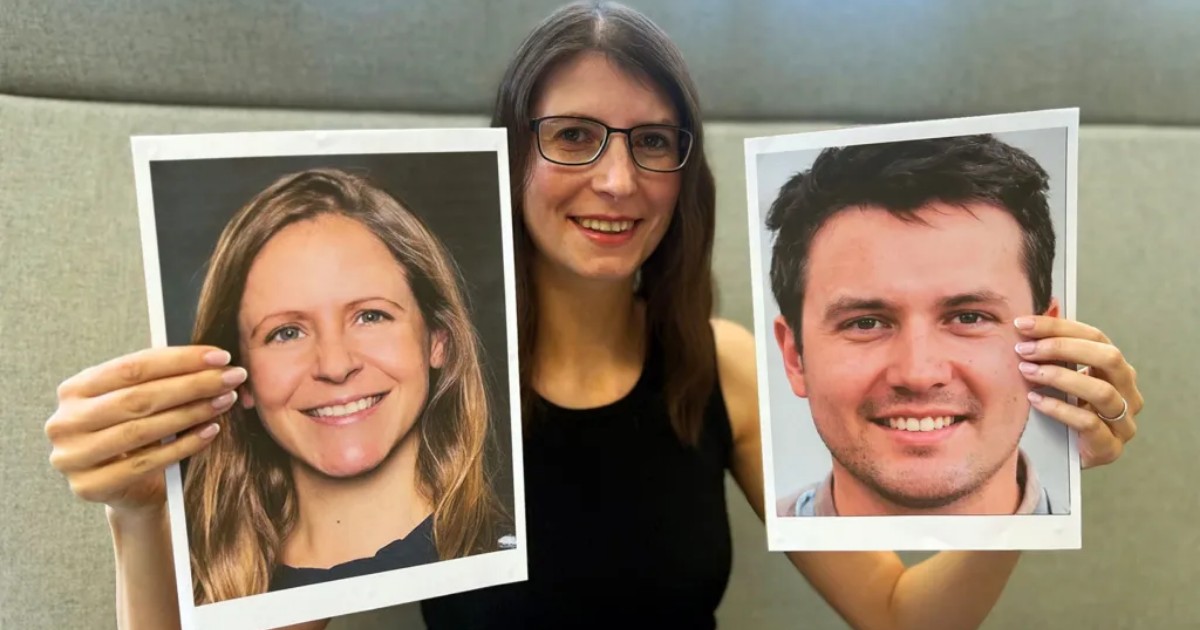
Researchers from the University of Aberdeen and the Australian National University have jointly developed a new training method that significantly improves the ability of humans to identify highly realistic AI deepfakes, BBC News confirmed. The international study demonstrated that drawing the attention of ordinary individuals to specific facial characteristics can dramatically enhance their capacity to recognize computer-generated imagery. As generative artificial intelligence becomes increasingly sophisticated, distinguishing between authentic photographs and machine-made fabrications has become remarkably difficult for the general public. While early iterations of the technology made obvious blunders like adding extra fingers or distorted accessories, modern AI models have largely eliminated these visual flaws.
Professor Amy Dawel, the director of the Australian National University Emotions and Faces Lab and lead author of the study, explained that the team utilized thousands of synthetic images generated by StyleGAN3 to conduct the experiments. StyleGAN3 is widely recognized as one of the most advanced and realistic face generators currently available to researchers and tech developers. The participants were evaluated both before and after undergoing a structured training session designed to sharpen their visual perception. Dr. Clare Sutherland, who spearheaded the United Kingdom branch of the research project at the University of Aberdeen, noted that the scientists initially developed a gut feeling for detecting fakes simply through repeated exposure, which inspired the formalized study.
The training curriculum focused on six distinct perceptual qualities of the human face including symmetry, proportionality, attractiveness, distinctiveness, expressiveness, and memorability. According to the published findings, artificial intelligence frequently struggles to replicate the subtle imperfections that define natural human appearance, such as a slightly drooping eyelid or an asymmetrical smile. The researchers noted that synthetic faces frequently appear overly attractive, emotionally unexpressive, and cluster toward a generic average that makes them less memorable to the human brain over time. Additionally, current AI models remain less proficient at recreating non-white, elderly, or very young faces because their underlying training datasets consist predominantly of young white individuals.
The experimental results revealed that a brief one-hour training session caused the accuracy scores of participants to double, rising from an initial average of 40 percent to an impressive 80 percent. A few exceptional individuals within the testing pool managed to achieve near-perfect scores of 100 percent accuracy after completing the curriculum. This cognitive improvement mirrors the fundamental mechanism of generative neural networks, which refine their output accuracy when exposed to vast amounts of training data over extended intervals. The study also addressed user confidence, discovering that structured instruction aligned self-assessment with actual performance, correcting the dangerous overconfidence frequently observed in untrained individuals.
What remains unclear is how effectively this specific training framework will scale against the billions of deepfakes circulating across global digital platforms and whether fraudsters will rapidly evolve their algorithms to bypass these newly identified perceptual markers. Nevertheless, the findings offer a vital defensive strategy against online misinformation and financial scams that rely on digital identity theft. Former psychological assessments have repeatedly indicated that the most confident internet users are often the most susceptible to falling for sophisticated visual manipulations. The research team hopes that integrating these perceptual checklists into public literacy campaigns will establish a resilient barrier against the weaponization of synthetic media.