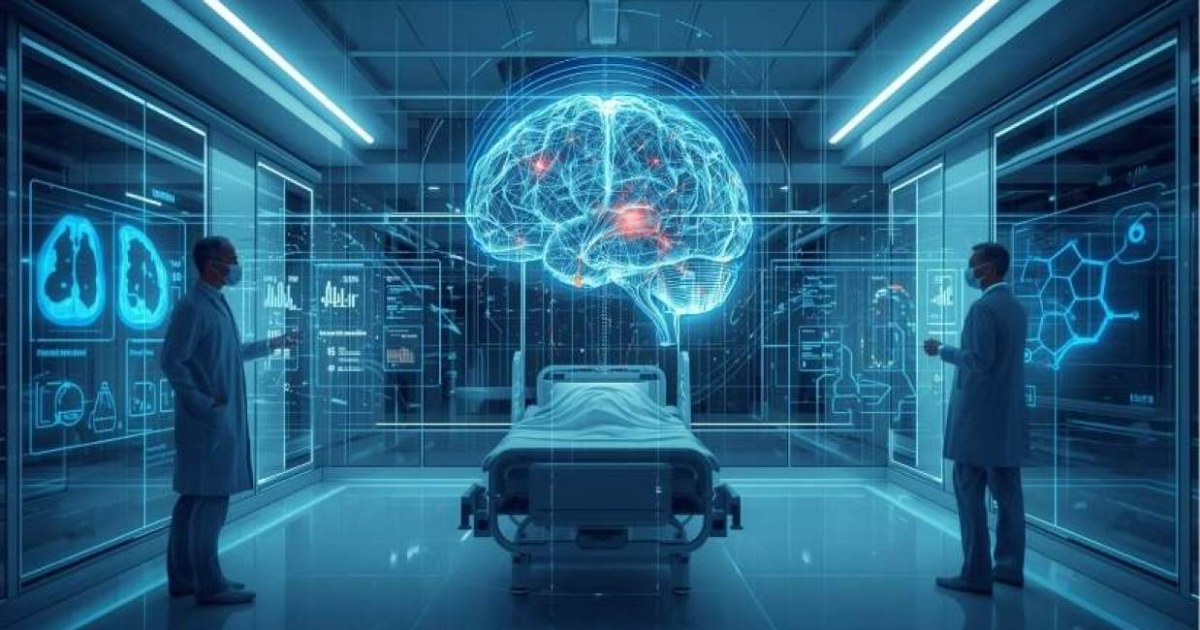
The global healthcare sector is undergoing a profound transformation as Artificial Intelligence (AI) takes a dominant role in medical practices. Moving beyond experimental stages, AI is now integrated into mainstream diagnostics, offering a new level of precision and speed. Recent research from Harvard Medical School has highlighted that advanced AI models are becoming significantly more proficient than human physicians in specific emergency scenarios. A study published in the journal Science analyzed 76 emergency cases and found that AI achieved a 67% accuracy rate in diagnosis, while human doctors averaged between 50% and 55%.
As of 2026, the market for AI in healthcare has expanded to approximately $15.4 billion, growing at a remarkable annual rate of 37%. This surge in investment is driven by the urgent need for more accurate diagnostic tools and the desire to reduce escalating healthcare costs. Experts suggest that AI is already playing a pivotal role in enhancing diagnostic accuracy and improving overall patient satisfaction. Many healthcare institutions implementing these systems have reported a 15% to 30% improvement in disease detection rates, alongside a 25% to 40% reduction in operational and diagnostic expenditures.
The most significant impact of AI is currently seen in diagnostic imaging. The technology`s ability to analyze X-rays, CT scans, and MRIs has reached a level where it often matches or exceeds the precision of experienced radiologists. In identifying conditions such as pneumonia, lung infections, or breast cancer, AI provides rapid results that facilitate immediate medical intervention. By reducing the time required for diagnosis, AI is literally saving lives in critical care units where every minute counts. Moreover, it can detect subtle anomalies in tissue that might be overlooked by the human eye during a routine screening.
Beyond diagnostics, AI is accelerating the process of drug discovery. Traditionally, developing a new pharmaceutical product can take between 10 to 15 years and billions of dollars in research. AI models are now capable of simulating how different chemical compounds interact, significantly narrowing down the candidates for clinical trials. This has not only reduced research and development costs but has also allowed for faster responses to emerging health crises. Furthermore, AI enables precision medicine by analyzing a patient`s genetic profile and medical history to create personalized treatment plans that maximize efficacy while minimizing side effects.
Despite these advancements, the integration of AI in healthcare faces substantial hurdles. Data privacy remains a primary concern as medical records contain highly sensitive information that must be protected from cyber threats. Additionally, the cost and technical complexity of merging AI with existing legacy hospital systems pose a challenge for many healthcare providers. However, industry leaders emphasize that AI is not intended to replace doctors. Instead, it serves as a powerful "co-pilot," assisting medical professionals in making complex decisions and freeing up their time for direct patient interaction. By 2030, analysts predict that AI will be a standard component in most hospitals worldwide.