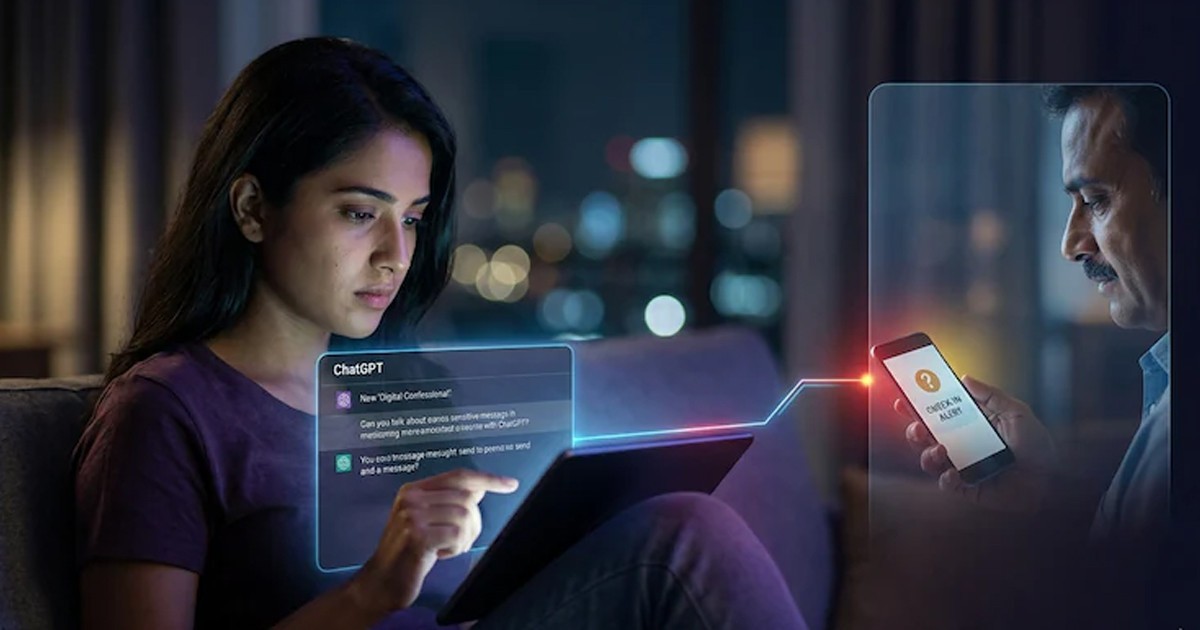
For millions of users worldwide, ChatGPT has transitioned from a mere productivity tool into a confidant for sharing deep personal thoughts and emotions. However, the perceived safety of this private digital space is undergoing a significant transformation. OpenAI has recently announced the rollout of a new feature called "Trusted Contact," designed to address the growing concern over the mental health of AI users. While the company frames this as a life-saving intervention, it has sparked a global debate regarding the boundaries of AI surveillance and individual privacy.
The mechanism behind the "Trusted Contact" feature follows a rigorous "Detect and Verify" model. According to official OpenAI documentation, the AI`s internal systems will monitor conversations for indicators of self-harm, suicidal ideation, or severe psychological distress. If a risk is flagged, a specialized human moderation team will review the interaction to validate the severity of the threat. If the risk is deemed imminent, the system will trigger an automated alert to a pre-selected contact designated by the user, such as a family member or close friend.
This move aims to bridge the gap between digital isolation and real-world support systems. However, mental health professionals have raised concerns about the algorithmic limitations of AI. Dr. Samir Parikh, Director of Mental Health at Fortis Healthcare, notes that human therapists use professional discretion to decide when to involve third parties, often requiring patient consent. There is a lingering question of whether an algorithm can accurately distinguish between a passing moment of frustration and a genuine life-threatening crisis without the nuance of human empathy.
From a technical standpoint, OpenAI has assured users that it will not share entire chat transcripts or specific private messages with the trusted contact. The notification will simply serve as a nudge for the contact to check on the user`s well-being. Despite these safeguards, privacy advocates argue that the fear of being monitored may lead to "self-censorship." If users feel their conversations are under constant scrutiny, they may stop being honest with the AI, which could inadvertently worsen their sense of isolation or prevent them from venting in a way they find therapeutic.
As society enters an era where software can potentially understand a person’s mental state faster than their closest relatives, the ethical implications are profound. Technology analysts point out that while a chatbot can detect a crisis and send an alert, it cannot provide the physical and emotional presence of a human being. The reliance on automated systems for mental health monitoring remains a contentious issue, balancing the urgent need for safety against the fundamental right to privacy. OpenAI expects to fully integrate this feature across all user accounts by the end of the second quarter of 2026.