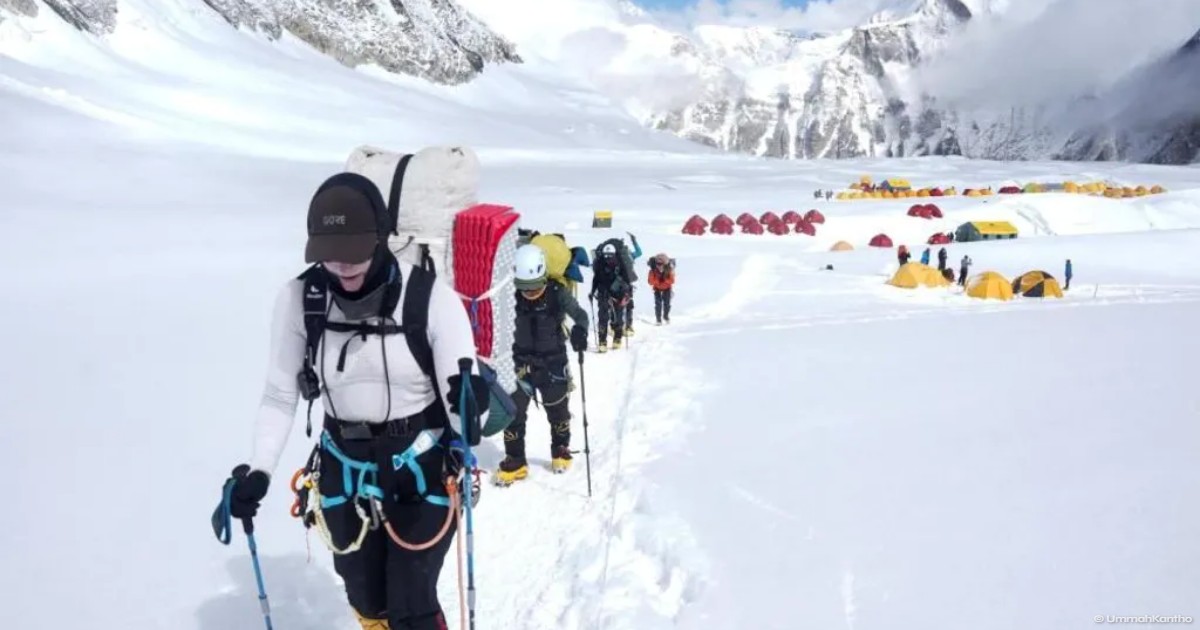
An elite team of Nepali climbers has successfully cleared a viable path to the summit of Mount Everest, overcoming a massive glacial blockage that had stalled expeditions for weeks. On Wednesday morning, the team fixed essential ropes and ladders past a dangerous, unstable chunk of ice known as a serac. This breakthrough allows hundreds of stranded mountaineers at Everest Base Camp to finally begin their final push toward the 8,849-meter (29,032ft) peak. According to reports from Reuters and the BBC, the blockage had previously cut off the only safe route, raising concerns about the feasibility of this year’s climbing season.
While the opening of the route is a relief, it has triggered widespread warnings about severe "traffic jams" on the world`s highest mountain. This year, the Nepali government has issued a record number of permits to foreign climbers, totaling nearly 500. Since each foreign climber is typically accompanied by at least one Nepali guide, approximately 1,000 individuals are expected to attempt the ascent within the next two weeks. Experts suggest that the delay caused by the ice blockage has significantly narrowed the climbing window, forcing a massive volume of people to move simultaneously during brief periods of favorable weather.
Prominent climber Purnima Shrestha, currently attempting her sixth Everest summit, expressed concern over the condensed schedule. She noted that the delays have added pressure on aspirants to complete their acclimatization and final ascent in a very short timeframe. The primary obstacle was a serac located between the Base Camp and the higher camps, which had made the traditional route impassable. An earlier attempt to fix ropes from Camp Four to the summit was thwarted by harsh weather conditions, further complicating the logistical timeline for expedition operators.
The situation is further exacerbated by the fact that China has closed the northern route from the Tibetan side to foreign climbers this season. Consequently, the southern route through Nepal has seen an unprecedented influx of mountaineers. To manage the risks associated with overcrowding, authorities at the Base Camp are attempting to coordinate with various expedition teams. Rishi Ram Bhandari, Secretary-General of the Expedition Operators Association of Nepal, stated that teams are working to space out their summit attempts to avoid dangerous bottlenecks near the peak, which have proved fatal in previous years.
The current season has already been marred by tragedy, with three confirmed deaths over the past two weeks during preparatory phases. Among the deceased is Bijay Ghimere, 35, the first mountaineer from Nepal’s Hindu Dalit community to scale Everest, who succumbed to altitude sickness. Additionally, 21-year-old Phura Gyaljen Sherpa died after falling into a crevasse near Camp 3, and 51-year-old guide Lakpa Dendi Sherpa passed away on May 3. These incidents highlight the extreme physical toll and inherent dangers of high-altitude mountaineering, even for seasoned professionals. As the summit push begins, officials estimate nearly 2,000 people are currently stationed at Base Camp, emphasizing the immense scale of this year`s operations.