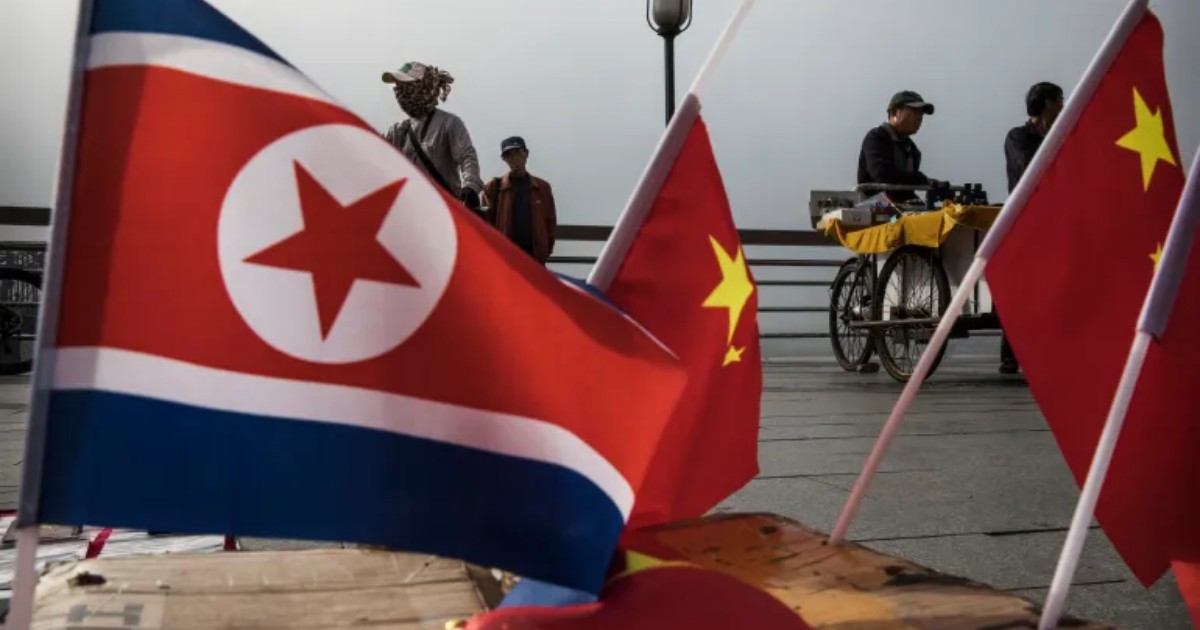
China and North Korea are observing the 65th anniversary of the Treaty of Friendship, Cooperation and Mutual Assistance, a foundational pact signed on July 11, 1961, by Chinese Premier Zhou Enlai and North Korean leader Kim Il Sung. Over six decades later, the treaty remains a cornerstone of the bilateral relationship, containing a pivotal mutual defense clause that mandates assistance if either nation faces an armed attack. As China’s only formal military alliance, the treaty underscores the enduring strategic importance Beijing places on its relationship with Pyongyang.
A three-day visit to Beijing by North Korean Premier Pak Thae Song this week highlighted the continued significance of the anniversary. However, the context of this alliance has evolved dramatically since its inception. While China has transformed into the world’s second-largest economy, North Korea has remained largely isolated and subject to extensive international sanctions. Despite the collapse of the Soviet Union, the end of the Cold War, and decades of regional tension concerning Pyongyang’s nuclear ambitions, the alliance has persisted.
The foundation of this relationship is deeply rooted in the Korean War, during which Beijing committed hundreds of thousands of troops to assist North Korean forces. This shared military history is central to the official narratives of both nations, with leaders frequently describing the friendship as being sealed in blood. Ideologically, both nations function as socialist one-party states that share a deep suspicion of Western influence. They frequently present a united front against what they describe as Washington’s attempts to use sanctions, alliances, and military pressure to contain nations that refuse to accept American authority.
Yet, shared ideology is only one facet of this complex dynamic. Beijing has increasingly embraced foreign investment, private enterprise, and integration into global trade networks, while Pyongyang remains largely insular. Beijing prioritizes predictability and stability, whereas Pyongyang often utilizes geopolitical instability as a tool for leverage. For Beijing, the primary motivation is not necessarily to bolster a stronger North Korea, but to ensure a stable one. A collapse of the North Korean government would likely trigger a massive influx of refugees across their 1,400km border and could lead to a unified Korean Peninsula aligned with the United States.
Consequently, North Korea functions as a strategic buffer zone between China and the US military presence in the region. This strategic necessity ensures that, despite the vast differences in their economic trajectories and international standing, neither side can afford to let the alliance fail. As regional tensions persist, the China-North Korea pact continues to serve as a critical component of East Asian geopolitics, balancing ideological solidarity with the cold reality of strategic survival.