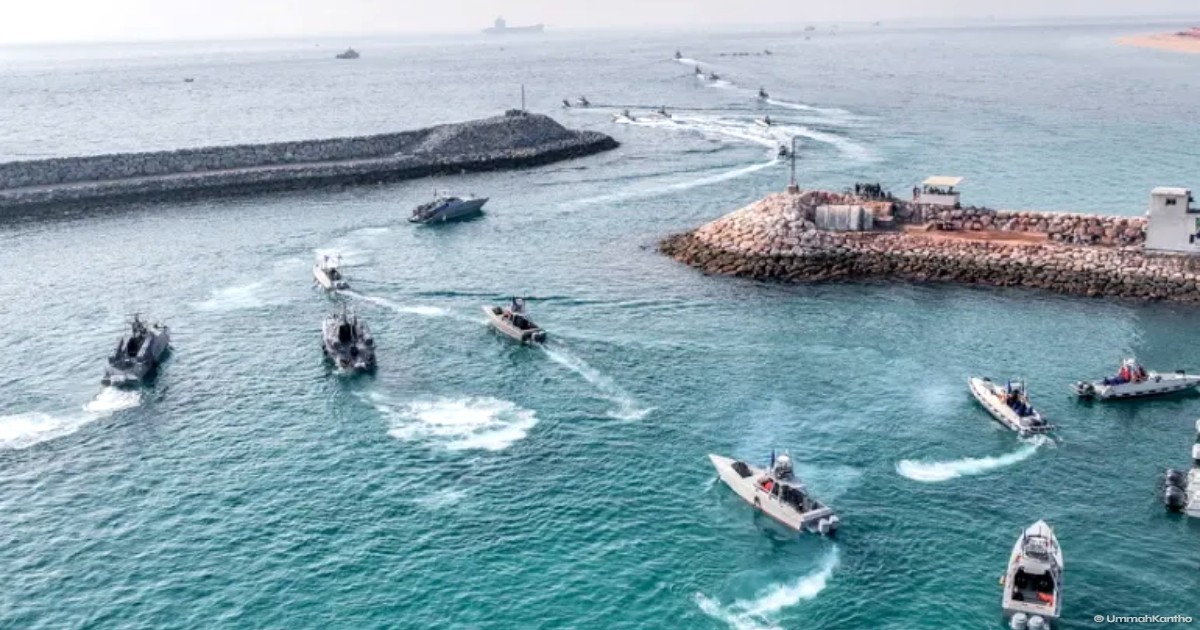
The Islamic Revolutionary Guard Corps (IRGC) of Iran has announced the seizure of a Barbados-flagged oil tanker, the Ocean Koi, following a specialized naval operation in the Gulf of Oman. According to Iranian state media reports released on Friday, the vessel was detained under allegations of attempting to disrupt the nation’s oil exports and compromising Iranian strategic interests. The IRGC released footage showing its maritime rangers boarding the vessel from speedboats and helicopters, a move that has further escalated regional maritime tensions.
A spokesperson for the armed forces, quoted by the Fars news agency, stated that the tanker was intercepted and directed toward Iran`s southern coastline. The Iranian government maintains that its navy will continue to powerfully defend national assets within its territorial waters and will not tolerate any perceived violations or aggressions from foreign vessels. Data from Marine Tracker confirms that the Ocean Koi is registered in Barbados, and its detention marks a significant flashpoint in the ongoing shadow war between Iran and Western-aligned interests.
The seizure coincides with a major shift in Iran’s naval strategy. Al Jazeera’s correspondent in Tehran noted that this action is part of a broader "new maritime regime" being implemented by the Islamic Republic. Iranian officials argue that the current war has fundamentally altered the strategic environment of the region, necessitating stricter control over the waterways that border their territory. This has led to the establishment of a new regulatory body known as the Persian Gulf Strait Authority, which aims to manage all traffic passing through the Strait of Hormuz.
Under these newly announced regulations, the Strait of Hormuz is no longer a path of free transit for ships that do not coordinate with Tehran. Any vessel intending to pass through the waterway—which typically handles about 20% of global oil supplies—must now seek full clearance from Iranian forces. This includes a requirement for shipping companies to send detailed documentation via email, specifying the ship’s country of origin, the nature of its cargo, and its final destination. Iranian authorities will then assess the information before granting passage.
In a move that is likely to stir international legal disputes, Iran has also announced that it will begin charging toll fees for passage through the strait. The Persian Gulf Strait Authority will be responsible for evaluating each ship and determining the appropriate fee. Iranian officials have characterized this as an exercise of their national sovereignty over the strategic chokepoint. They argue that without their direct approval and compliance with these new protocols, no vessels will be allowed to move in or out of the Gulf.
The detention of the Ocean Koi serves as a symbolic demonstration of this new enforcement policy. By taking control of a foreign-flagged vessel, Iran is sending a clear signal to the United States and its allies that it possesses the will and capacity to regulate one of the world’s most critical energy corridors. As global energy markets react to this news, the international community faces the challenge of responding to Iran`s assertion of a new maritime order that could redefine global shipping norms in the Middle East.