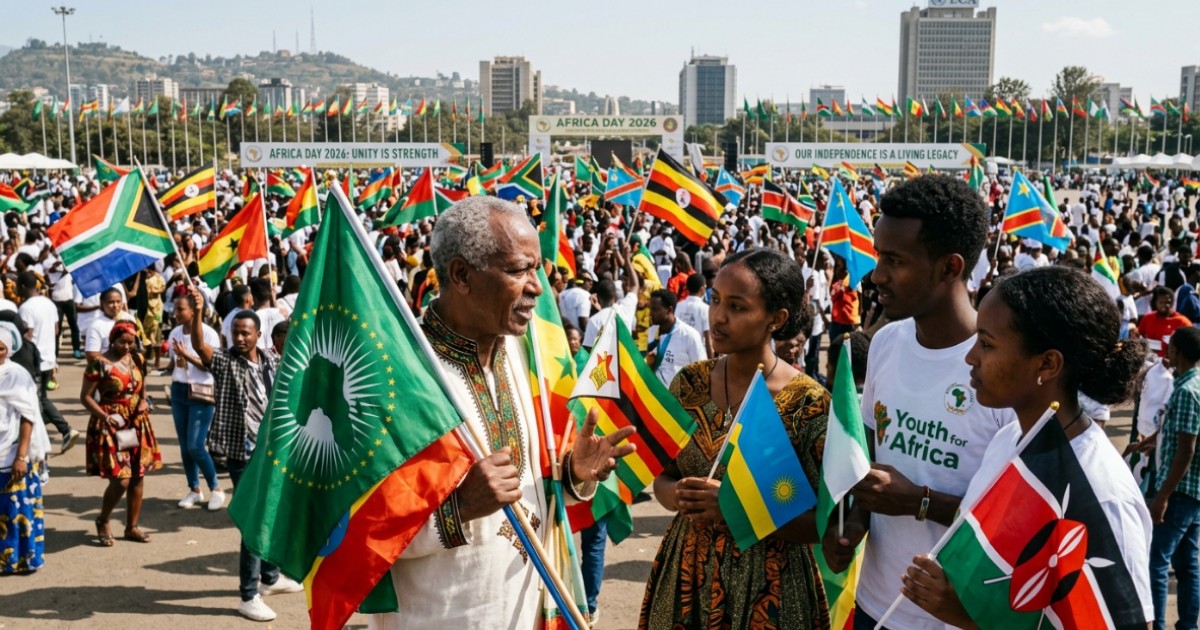
When African leaders gathered in Addis Ababa on May 25, 1963, to establish the Organisation of African Unity, they ignited a symbol of continental liberation that persists today. As Africa marks Africa Day 2026, sixty-three years later, the definition of liberation is shifting. What was once defined by flags, borders, and national anthems is now increasingly seen through the lens of economic control, digital autonomy, and global influence.It is a moment for reflection.
For the older generation, Africa Day remains an emotional milestone, a constant reminder of the hard-won victory against colonial rule. Mzee Josphat Kimanthi, a 74-year-old retired civil servant in Kenya, notes that political liberation is a foundation that cannot be taken for granted. However, there is a palpable sense that the promises of independence have failed to fully translate into current economic realities.
Rising debt burdens now define the policy landscape in many African nations. Governments are increasingly constrained by fiscal pressures, often dictated by international financial institutions. This environment limits independent decision-making, as nations juggle relations between Western powers, China, and emerging blocs like BRICS to secure investment and loans.True liberation remains an elusive goal.
Professor Paul Mbatia of the Multimedia University of Kenya argues that independence is hollow when a continent consumes what it does not produce. Digital technology, once heralded as an equalizer, has introduced a new layer of dependence. Ownership of data, infrastructure, and the underlying systems that drive the digital economy often rests with multinational corporations based outside Africa.
This digital extraction, as analysts call it, represents a new frontier of neocolonialism. Data processed on foreign servers and sold back to African markets creates a cycle of dependency. Real freedom in 2026, according to many policy experts, means owning the technology, protecting sovereign data, and building internal capacity to develop independent platforms.The youth are setting a new agenda.
More than 60 percent of the African population is under 25, and many find the traditional rhetoric of the 1960s disconnected from their daily struggles. For developers like Chinedu Nwosu in Lagos, liberation is not a historical narrative; it is a practical demand for accountability, an end to corruption, and the ability to build businesses without bureaucratic interference.
Africa Day 2026 has become less about performative celebration and more about re-evaluating the path ahead. The unfinished struggle now centers on economic self-reliance and digital governance. Until political independence translates into tangible improvements in daily life, the quest for true liberation will continue to evolve.As Kimanthi observed, the flags are ours, but the economic strings are still being pulled from the outside.