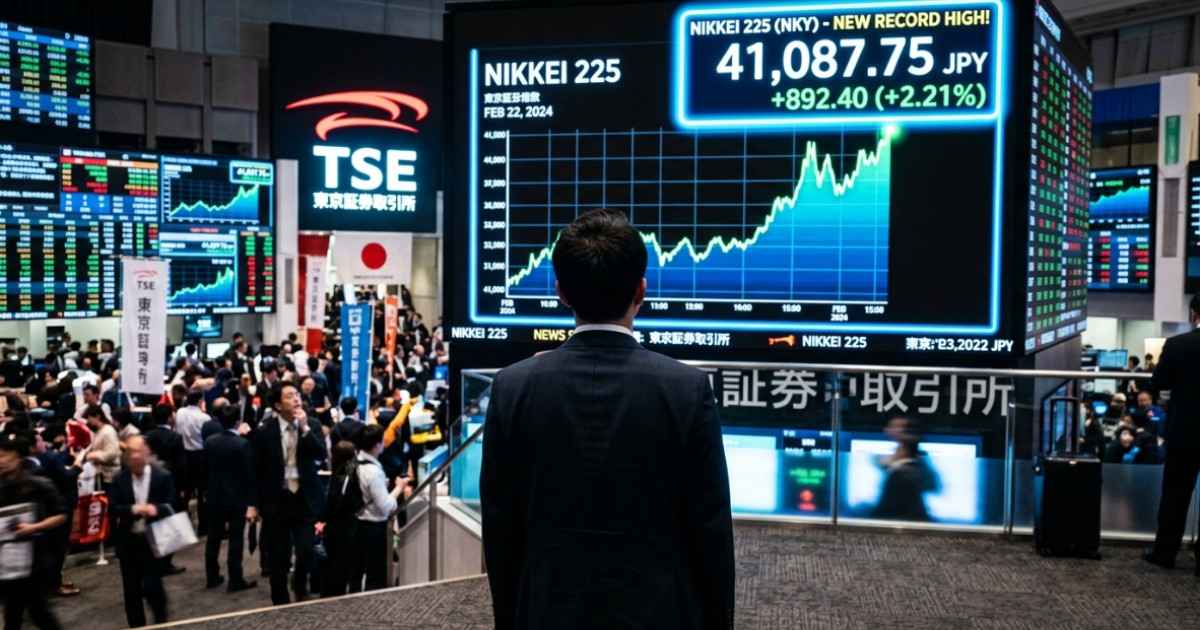
The global buying frenzy driven by artificial intelligence has propelled the Japan stock market to an unprecedented all-time high. On Wednesday, the benchmark Nikkei 225 index surged nearly 3 percent, closing above the historic 68,000 threshold for the very first time. This latest rally extends a phenomenal year for Japanese equities, which have recorded an impressive growth of nearly 33 percent so far in 2026.Investor enthusiasm surrounding the massive AI boom remains the primary catalyst fueling Asian equity markets.
Financial analysts note that the ferocious global demand for high-end microchips has triggered heavy rallies across regional tech hubs. While leading semiconductor companies in Taiwan and South Korea continue to post massive gains, Japanese markets are simultaneously benefiting from these tailwinds alongside a significantly weakened yen. Japanese domestic firms directly involved in the semiconductor supply chain spearheaded the day`s historic market gains. Tokyo Electron, the nation`s largest manufacturer of advanced semiconductor equipment, saw its stock price skyrocket by as much as 14 percent during early morning trading hours.
Advantest, a prominent global supplier of testing hardware to the chip industry, gained more than 5.5 percent over the session. Similarly, integrated circuit silicon wafer supplier Shin-Etsu Chemical witnessed a steady rise of roughly 4 percent. Conversely, technology conglomerate SoftBank, which maintains vast capital investments in AI models, processors, and data centers, saw its shares dip by about 3 percent despite overtaking automotive giant Toyota earlier in the week to become Japan`s largest company by market capitalization.
This insatiable worldwide appetite for AI infrastructure is driving parallel record-breaking expansions across multiple global matrixes.
Within the past month alone, three major memory chip manufacturers—South Korea’s SK Hynix and Samsung Electronics, alongside US-based Micron Technology—officially entered the elite corporate club of firms valued at $1 trillion or more. Only 17 companies globally have reached this staggering fiscal milestone, with all but five operating out of the United States. Despite rising internal concerns among some institutional investors regarding the long-term sustainability of such high valuations, major technology firms show zero intention of slowing down their infrastructure expenditure. Wall Street banking giant Goldman Sachs projects that major US tech enterprises will collectively invest approximately $800 billion into AI-related capital expenditures throughout 2026.
Silicon Valley titan Alphabet recently outlined its extensive long-term infrastructure investment strategies to the public. The Google parent company announced plans to sell roughly $80 billion worth of corporate shares to adequately finance its massive projected capital expenditures of up to $190 billion for the year.