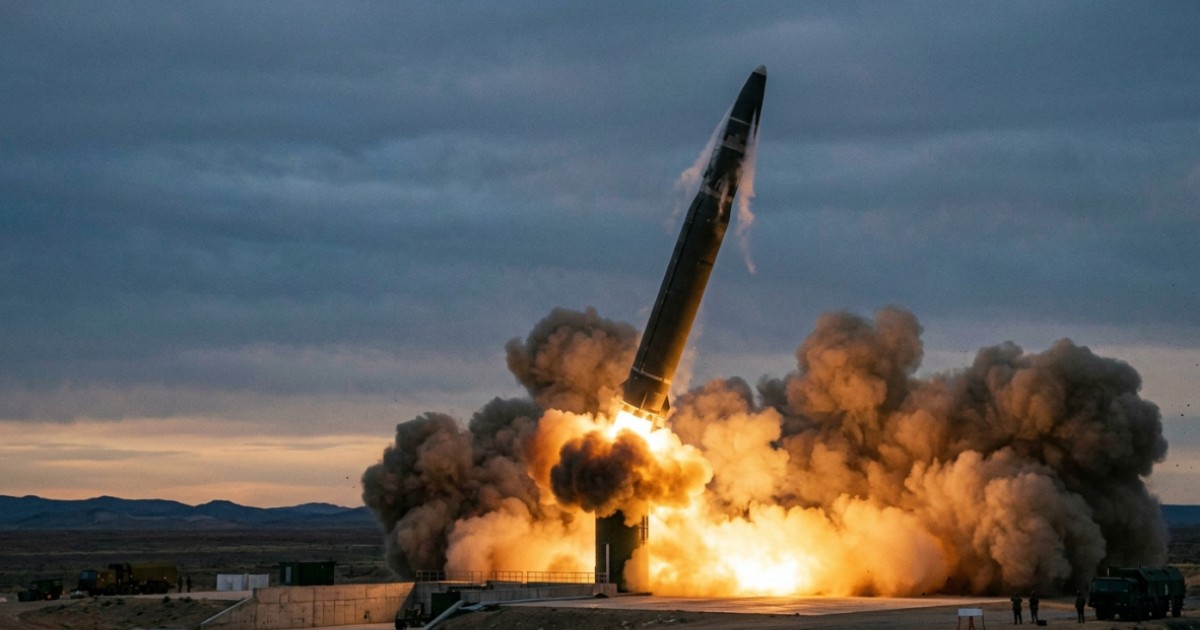
Global spending on nuclear weapons has reached an unprecedented peak, signaling a deepening commitment among world powers to expand their arsenals. According to the latest report from the International Campaign to Abolish Nuclear Weapons (ICAN), the nine nuclear-armed nations collectively spent $119 billion on their nuclear programs in 2025. This figure represents an increase of $16.8 billion compared to the previous year, highlighting a concerning trend of military prioritization at a time when global resources are strained by climate challenges and economic instability.
The data reveals that the United States remains the largest contributor to this surge. Washington spent an estimated $69.2 billion on its nuclear arsenal, an increase of $12.6 billion over the prior year. This single-country expenditure exceeds the combined total spending of all other nuclear-armed nations. China followed as the second-highest spender with approximately $13.5 billion, while the United Kingdom, Russia, and France spent $12.6 billion, $9.5 billion, and $7.7 billion respectively.
Other nations in the nuclear-armed group also maintained high levels of investment. India, Pakistan, Israel, and North Korea collectively allocated significant sums, with spending ranging from $656 million by Pyongyang to $2.8 billion by New Delhi. ICAN reports that these nine countries have spent a combined total of $471 billion over the past five years. Crucially, none of these nations appear to be considering a reduction in their stockpiles; instead, they are investing in long-term plans to retain and modernize their nuclear capabilities for decades to come.
In its summary accompanying the report, ICAN criticized the scale of these expenditures. The organization argued that this exorbitant spending occurs at a moment when countries should be prioritizing investments in the global commons, such as climate change adaptation and multilateral diplomacy. Instead, the focus has shifted toward financing the research, development, and production of weapons capable of mass destruction. ICAN noted that these financial choices reflect a preference for tools of extermination over the preservation of human life and global stability.
This data aligns with findings released just a day earlier by the Stockholm International Peace Research Institute (SIPRI). SIPRI warned that nuclear-armed states are increasingly sidelining their disarmament commitments, walking away from international agreements, and favoring the modernization of their arsenals. As diplomatic efforts to control nuclear proliferation lose momentum, the record-breaking financial figures of 2025 underscore a growing geopolitical drift toward renewed arms races, leaving global security in an increasingly precarious state.