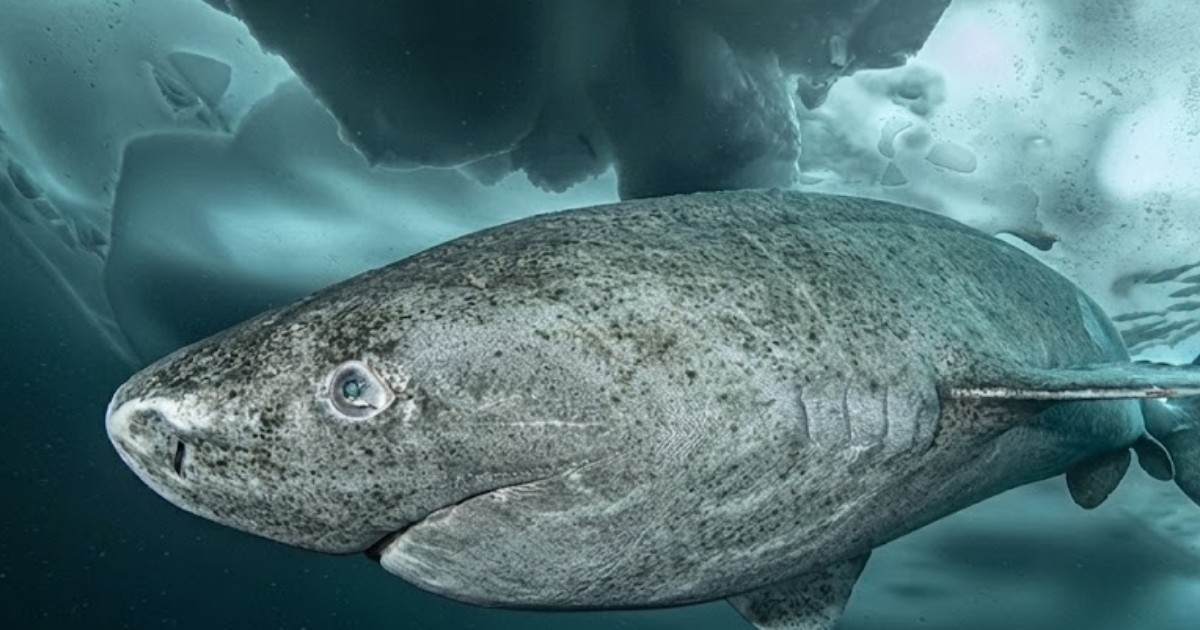
The remote and icy depths of the North Atlantic continue to guard many secrets, particularly regarding the elusive Greenland shark, a creature capable of living for centuries. Marine scientists and researchers recently received an unprecedented opportunity to study this mysterious species after a dead specimen washed ashore on the storm-battered coast of Ireland for the first time on record. BBC News reported that the unusual stranding occurred along the cloudy shoreline of County Sligo, drawing intense interest from conservationists and marine biologists seeking to understand the physiology and longevity of the planet`s longest-living vertebrate.
Measuring approximately three meters in length and weighing over two hundred kilograms, the grey-beige animal was estimated to be more than one hundred and fifty years old. Researchers noted that the shark would have been born during the Victorian era, long before the invention of the automobile or modern navigation systems. Yet, by the standards of its species, which can reach lifespans approaching four hundred years, the animal was considered relatively young. Marine specialists expressed sorrow that the creature perished just as it was reaching maturity, having missed the opportunity to contribute to the long-term population stability of the species.
Greenland sharks inhabit the freezing, dim waters of the Arctic and North Atlantic oceans, where they have evolved remarkable adaptations to survive extreme cold. High concentrations of specialized chemical compounds in their tissues act as a natural antifreeze, rendering their flesh toxic but enabling them to thrive in sub-zero temperatures. Traditionally viewed as slow-swimming scavengers that feed primarily on animal carcasses, recent studies indicate that these apex predators are also capable of ambushing agile prey such as seals in the dark waters of the far north using powerful suction feeding mechanisms.
Following the discovery, the National Museum of Ireland coordinated a meticulous recovery operation to transport the heavy carcass to a regional veterinary laboratory for a comprehensive necropsy. Protected by rigorous safety gear, a multidisciplinary team of scientists examined, measured, and weighed the specimen, harvesting critical biological samples for future analysis. Researchers carefully extracted the shark`s lenses, which will undergo radiocarbon dating to provide a definitive measurement of its exact age. Additionally, scientists examined the ocular structure, adding to recent findings that challenge long-held assumptions regarding the visual capabilities of these ancient deep-sea dwellers.
Despite their vast geographical distribution across northern waters, foundational aspects of Greenland shark biology remain shrouded in mystery. Marine conservation scientists point out that critical data regarding mating grounds, pupping frequency, and total population numbers are still largely unknown, complicating efforts to protect the species from industrial fishing bycatch and other environmental threats. The scientific examination of the Irish specimen represents a vital step forward in illuminating the hidden lives of these remarkable vertebrates, offering researchers invaluable data that could help safeguard one of the ocean`s most enduring and enigmatic inhabitants for generations to come.