The catastrophic depletion of wild Atlantic salmon populations across Scottish rivers has pushed the centuries-old profession of traditional angling guides toward complete extinction. Government data indicates that the total number of wild salmon caught in Scottish waters plummeted by 41 percent last year, dropping to a historic low of just 28,000 fish. This unprecedented Scotland wild salmon decline is severely impacting rural economies and dismantling a generational way of life linked directly to river conservation.
Measured over a standard five-year average, catch records show a devastating 68 percent drop compared to the preceding period.
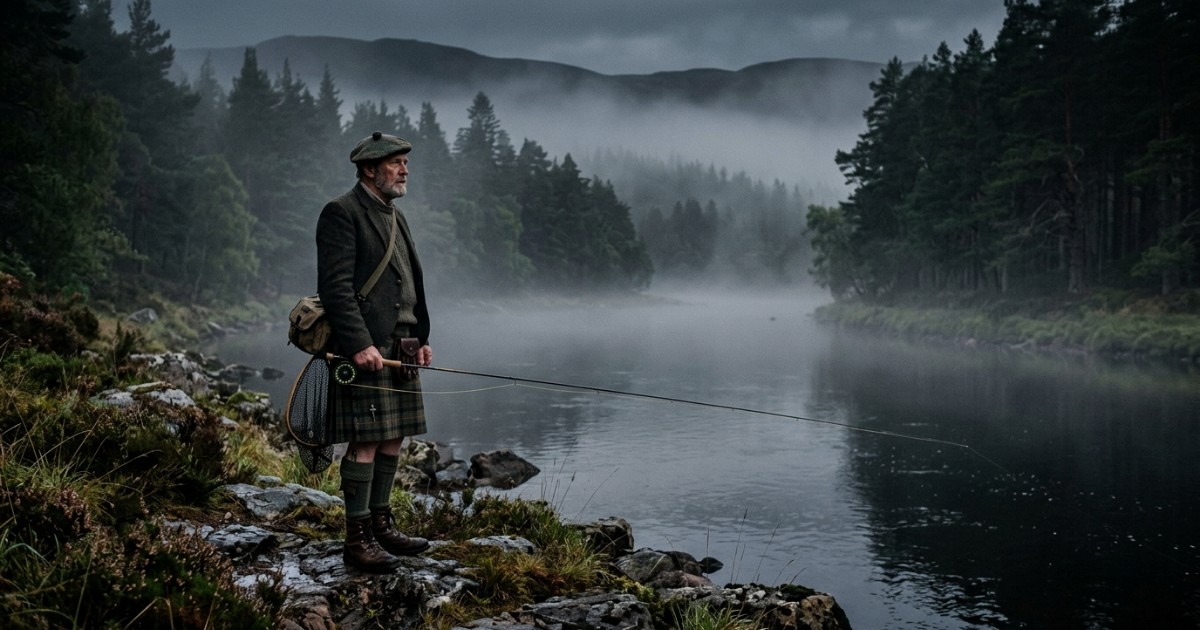
The severity of the ecological crisis prompted a stark warning from Sir David Attenborough, who stated that wild Atlantic salmon could disappear from British rivers entirely within the next two decades. This projection is particularly jarring for historic towns like Perth and Berwick-upon-Tweed, which originally developed and thrived on the abundance of local riverways. At the center of this disappearing angling culture is the "ghillie"—a Gaelic-derived term for specialized guides and river-keepers responsible for coaching fishermen and protecting the natural habitat. These positions, frequently passed down through families, require an intimate understanding of the river`s underwater topographies and seasonal shifts.
As fish stocks dry up, international tourists are canceling bookings, creating an immediate economic domino effect for local hotels and retail shops. Robert Harper, who recently retired after working 50 years as a ghillie on the River Dee, recalled that his beat yielded 400 salmon by March in 1978. In stark contrast, recent years have seen that identical stretch produce only a handful of fish by the end of May. Consequently, the landed estates that own these fishing rights are refusing to replace retiring guides due to vanishing revenues. On the River Dee alone, the roster of active ghillies has dropped from over 40 in 2014 to just 22.
Environmental analysts attribute the sharp collapse primarily to the expansion of industrial coastal salmon farming. Approximately 150,000 tons of fish are raised annually in open-sea cages around the Scottish coast to satisfy mass supermarket demand. These dense aquaculture facilities act as parasitic breeding grounds for sea lice and infectious diseases that easily migrate to wild populations, decimating migrating smolts. The commercial aquaculture industry currently contributes over 1 billion pounds to the Scottish economy and employs 2,500 people, overshadowing the 100-million-pound wild angling sector which supports the remaining 250 ghillies.
Despite the economic imbalance, conservationists argue that ghillies serve an indispensable purpose as the primary custodians of Scotland`s river systems. For decades, these local guides have aggressively fought against industrial pollution, illegal logging, and agricultural runoff to preserve water quality. However, the continuous drop in catches is currently deterring young recruits from entering the field, threatening to leave the waterways entirely undefended.
While veteran angling agents like Mungo Ingleby insist that temporary atmospheric changes can still yield a successful catch, the broader structural outlook remains grim. For the men who spent their lives managing these waters, the collapse represents the permanent silencing of a proud cultural legacy.