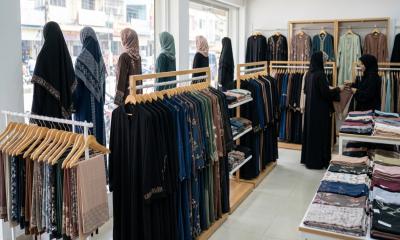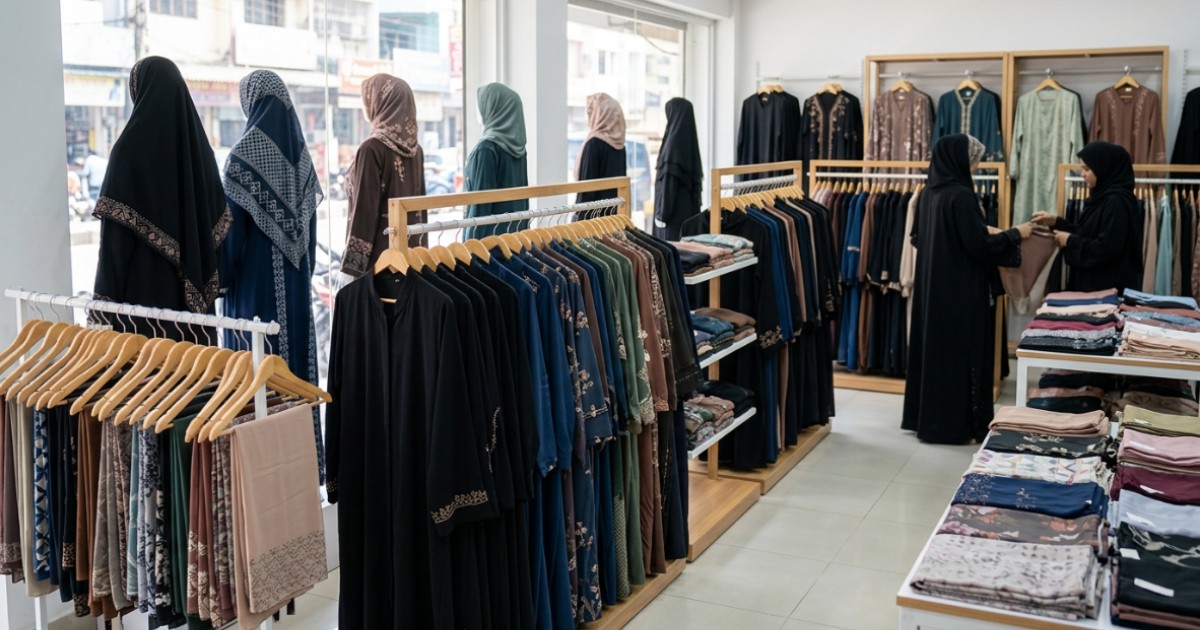
The primary objective of Hijaab in Islamic Sharia is to protect the modesty of women and to shield their beauty and body from the gaze of non-mahram men. In the modern era, the market is flooded with various types of designed, colorful, and fashionable burqas and hijabs. Understanding the permissibility of wearing and trading such garments requires a balanced Fiqh perspective. The fundamental principle of Hijaab in Islam is to cover the body and restrain one’s gaze. In Surah An-Nur, verse 31, Allah instructs believing women to guard their modesty and lower their gaze. Furthermore, Surah Al-Ahzab, verse 59, encourages women to draw their outer garments over themselves. Jurists maintain that any attire which appropriately covers the body and does not incite improper desires in others conforms to the requirements of Hijaab.
There is no specific color or design mandated in Islam. Therefore, wearing a designed or colorful burqa is not inherently Haram or prohibited. The core consideration is whether the garment properly covers the body and whether it constitutes Tabarruj, which refers to the display of one`s adornments in a way that attracts undue attention. If a garment accentuates the body`s silhouette or uses excessive embellishments that attract the gaze and create the possibility of Fitnah or temptation, it contradicts the main purpose of Hijaab. Narrations from the time of the Prophet Muhammad (peace be upon him), such as those found in Sahih Bukhari, describe how believing women used to cover themselves so thoroughly that they were indistinguishable when departing for home. This demonstrates that simplicity and modesty are highly valued in the attire of Hijaab.
Regarding business ethics, according to established Fiqh principles, accountability arises when an individual intentionally participates in a sin. As noted in the classical jurisprudence text Radd al-Muhtar, selling designed or colorful burqas and hijabs is permissible. A seller is not responsible for a buyer’s misuse of a product, as the burqa is fundamentally a lawful commodity that offers the opportunity for modest use. The moral weight of the act depends primarily on the intention and the manner of use by the wearer. A woman can choose to use these items to maintain her modesty. However, Fiqh advises caution for merchants regarding products that are predominantly associated with promoting Fitnah or immodesty.
It is recommended that merchants play a role in promoting modest burqas rather than those that are excessively ornate or body-hugging. In Islam, the standard for Hijaab is based on modesty, covering the body, and avoiding Fitnah. Wearing a designed burqa is permissible under the condition that it fulfills the requirements of modesty, and there is no religious prohibition against trading them, provided the intention is not to promote immodesty. A believing woman can select clothing that reflects her personality while remaining within the boundaries of Sharia. The clothing should serve as a shield for protection, not as a medium for exhibition. By combining consciousness of Allah with the guidelines of Sharia, Muslim women can find a balance that brings personal and societal tranquility.