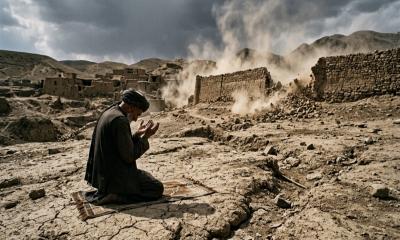
When something occurs according to the decree of Allah, it is known as the judgment of Taqdir (destiny). Expressing satisfaction with this judgment is referred to as Riza. Being content with the decree of Allah is an essential requirement of faith. This satisfaction means keeping the heart tranquil, maintaining a cheerful disposition, and avoiding mental anguish regarding the destiny determined by the Almighty, even when one personally dislikes the trial that has befallen them.
Believers must hold firm to the conviction that whatever Allah has ordained for their lives—whether good or bad, pleasant or unpleasant—should be accepted without complaint. One should accept these decrees with tranquility, fully believing that every joy, sorrow, illness, or hardship is an integral part of Allah’s predetermined destiny. Recognizing that Allah’s decisions are the most just and beneficial for our worldly life and afterlife is the core of this trust. Such belief liberates the human heart from the anxieties of the material world.
This principle is equally applicable to the matter of Rizq (sustenance). Allah allocates provisions for all His servants. When a person is content with the sustenance provided by Allah, they receive Barakah, or blessings, in their livelihood. Conversely, if one is dissatisfied with their portion, the blessings in their livelihood are withdrawn. The Prophet Muhammad (PBUH) said, Allah tests the servant through what He gives him. If the servant is satisfied with what Allah has ordained for him, Allah blesses him in it and increases it. If he is not satisfied, Allah does not grant him blessings in it (Musnad Ahmad, Hadith: 20279; Sahih al-Jami, Hadith: 1869).
When we express dissatisfaction with Allah’s decisions, we unintentionally disconnect ourselves from the source of blessings. Ingratitude narrows the human perspective and breeds a constant sense of deprivation. However, a person who relies upon Allah and remains content with their allocated sustenance finds a profound sense of satisfaction, which is the truest form of wealth.
Therefore, during difficult times, moments of scarcity, or when expected desires remain unfulfilled, one should avoid despair and instead place trust in Allah’s wisdom. It is the duty of the believer to express gratitude for what they have been given and to practice patience regarding what they have not. Through this patience and contentment, one discovers genuine peace, and such resilience promises infinite rewards in the hereafter. If we can cultivate this positive perspective toward Taqdir in our daily lives, we can overcome the anxieties and frustrations that plague our minds. Finding peace in accepting Allah’s plan is not just a sign of faith, but the most effective way to lead a life of purpose and tranquility.