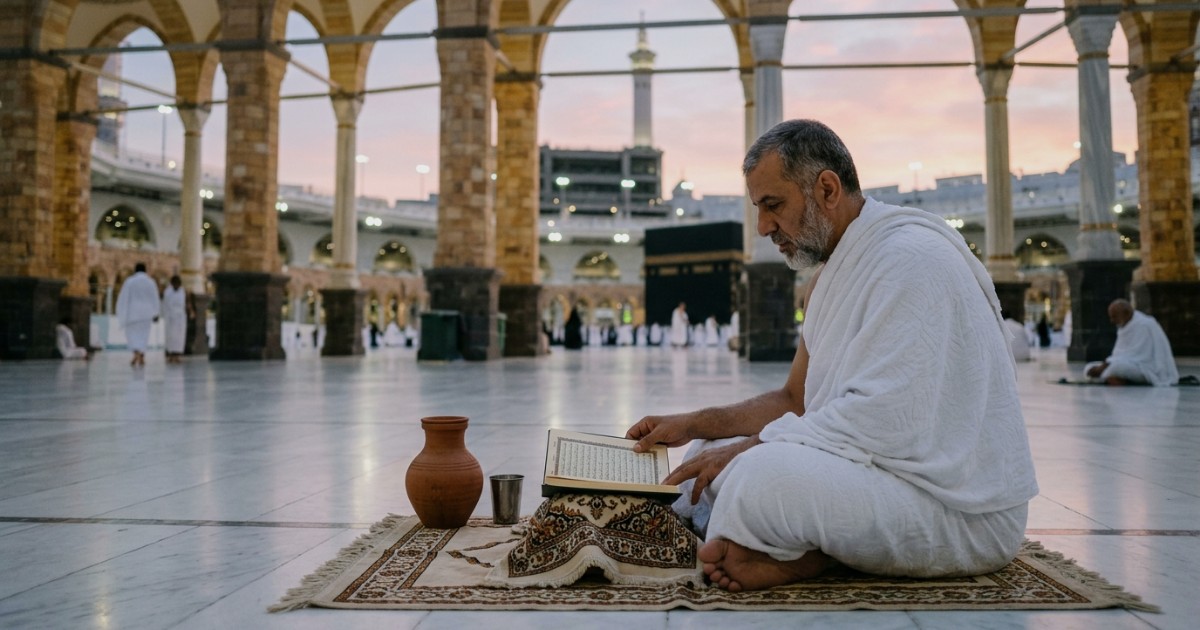
During the sacred pilgrimage of Hajj, entering the state of Ihram imposes strict spiritual and physical prohibitions that every pilgrim must meticulously observe until the required rituals are completed. Among these mandates, the most severe restriction is committing marital intercourse during Ihram. In the Holy Qur`an, Allah commands that Hajj is during well-known months, and whoever undertakes the pilgrimage therein must abstain from sexual relations, wickedness, and inappropriate arguments (Surah Al-Baqarah, 2:197). Islamic scholars and commentators explain that the term used in the scripture encompasses all forms of physical intimacy and related amorous conduct between spouses.
The consequences of violating this sacred boundary depend caught strictly on the specific timeline of the violation relative to the day of Arafah.
If a pilgrim engages in marital relations prior to the standing at the plains of Arafah on the ninth of Dhul Hijjah, mainstream Islamic jurists agree that the pilgrimage becomes legally invalidated. The classical scholar Ibn Qudamah noted in his treatise Al-Mughni that consensus exists among the learned community regarding the invalidation of Hajj if intercourse during Ihram occurs before Arafah (Al-Mughni, 3:329). Despite the invalidation of the journey, the individual cannot simply abandon the rituals midway but must continue performing all remaining rites alongside other pilgrims. Furthermore, the violator is required to offer a major expiatory sacrifice of a camel or a cow within the boundaries of Mecca and must repeat the entire pilgrimage during the following Islamic year. However, if the violation occurs after the stay at Arafah but before the initial shaving or clipping of the hair, the pilgrimage remains valid, though the action constitutes a major sin requiring the same livestock sacrifice (Badai as-Sanai, 2:185; Al-Majmu, 7:347).
In contrast, if a pilgrim commits the violation after the initial exit from Ihram—achieved on the tenth of Dhul Hijjah by pelting the pillars and cutting the hair—but prior to performing the final circumambulation of the Kaaba, the pilgrimage remains structurally sound. According to the Hanafi school of jurisprudence, this specific timeline requires a minor penalty consisting of the sacrifice of a sheep or a goat (Radd al-Muhtar, 2:550). Regarding excuses of forgetfulness or systemic ignorance of the law, jurisprudential views diverge significantly among classical legal traditions. The Hanafi legal school generally does not accept ignorance of Ihram prohibitions as a valid excuse to wave penalties, whereas the Shafi`i tradition offers exceptional concessions depending on the specific context of the error.
The rulings regarding the female spouse specify that if she participates willingly in intercourse during Ihram, she incurs the identical penalties of sacrifice and mandatory future repetition of the journey. If she is subjected to physical coercion, the consensus of jurists relieves her of spiritual sin and independent financial liability, though consulting a qualified mufti is necessary to evaluate the exact definition of coercion. The meat derived from these expiatory sacrifices cannot be consumed by the pilgrims themselves or their immediate families; it must be distributed entirely to the impoverished residents within the sacred boundaries of the Haram. Ultimately, Hajj serves as a profound test of spiritual submission, and maintaining the absolute sanctity of Ihram reflects a believer`s commitment to divine law.