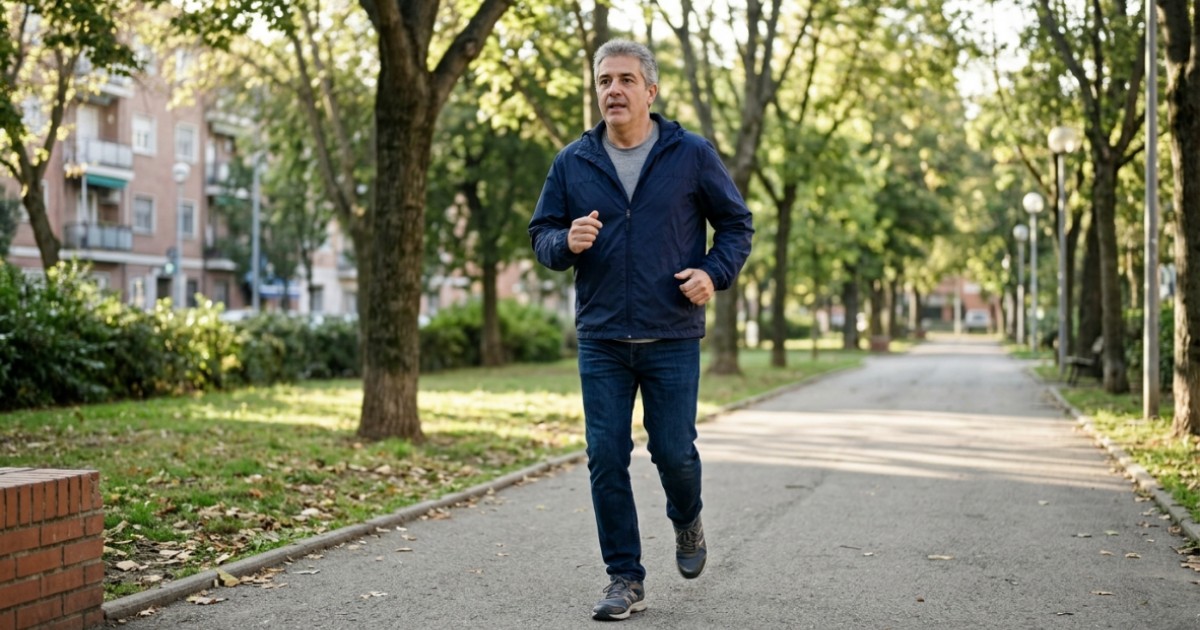
Intense and exhausting workouts are not the only way to achieve long-term health benefits. A massive analysis involving 150,000 adults across the UK, US, and Scandinavia shows that just five minutes of daily exercise can drastically reduce the risk of premature death. Researchers are increasingly focusing on how small bursts of physical activity impact overall longevity at a population level.
This minimal daily effort could prevent around one in ten premature deaths globally.
Ulf Ekelund, a professor at the Norwegian School of Sport and the lead author of the study, described the findings as surprising. He noted that such a small shift in daily habits having such a massive impact on mortality risk was completely unexpected. The World Health Organization currently recommends 150 minutes of moderate-intensity exercise per week. Many working adults simply cannot find the time to join a gym or commit to long sports sessions.
Incorporating tiny bits of movement into daily life offers a highly effective alternative for these individuals.
Nicole Logan, an assistant professor of kinesiology at the University of Rhode Island, emphasized that physical activity actively prevents high stress and burnout. Muscle strength, bone density, and overall physical function act as highly accurate predictors of later-life mortality. Cutting daily sitting time by just 30 minutes is directly linked to a seven percent reduction in early death across the population.
Physical inactivity remains one of the leading causes of chronic disease and early mortality worldwide.
One US study demonstrated that individuals in their 60s and 70s who combined aerobic workouts with muscle-strengthening activities lived significantly longer. Marie Murphy, a professor of exercise and health at Ulster University, told the BBC that short chunks of activity repeatedly stimulate the human metabolism. The metabolic system continues to work at a slightly elevated rate even after the physical movement stops and the body enters recovery.
Scientists and behavioral experts refer to this practical approach as exercise snacking.
Amanda Daley, a professor of behavioral medicine at Loughborough University, suggests that these micro-habits build meaningful physiological changes over time. Taking the stairs instead of an elevator or parking a car five minutes away from a destination are prime examples of this concept. She noted that participants in smaller studies found this method much easier to integrate into their routines than traditional workouts.
Consistency remains the absolute key to seeing real results.
Ekelund advises people to start slowly and gradually build up their activity levels based on personal capability. A separate step-count study revealed that taking between 2,517 and 2,735 steps per day reduces cardiovascular risk by 11 percent compared to stopping at 2,000 steps.