Korean cuisine is globally renowned for its unique flavor profiles, masterfully balancing earthy layers of spicy, sweet, fermented, and savory elements. The most popular global export of the culture, Korean barbecue, perfectly illustrates how these diverse essences work in harmony. While many diners worldwide are familiar with the ritual of making a ssam—bundling spicy meat, pickled vegetables, and rice inside a crisp lettuce leaf—this is merely one of countless unspoken rules that govern the Korean dining table.
Exploring the country’s street food stands and bustling markets reveals a sophisticated art form behind these pairings.
Though the combinations might seem subtle to a novice, these time-tested pairings are considered sacred by local food enthusiasts and are rarely violated. Whether you are navigating a noodle shop in Seoul or a local market, understanding these iconic pairings will not only improve your dining experience but also earn the respect of your Korean hosts. These are the unwritten rules of Korean gastronomy that you need to master.
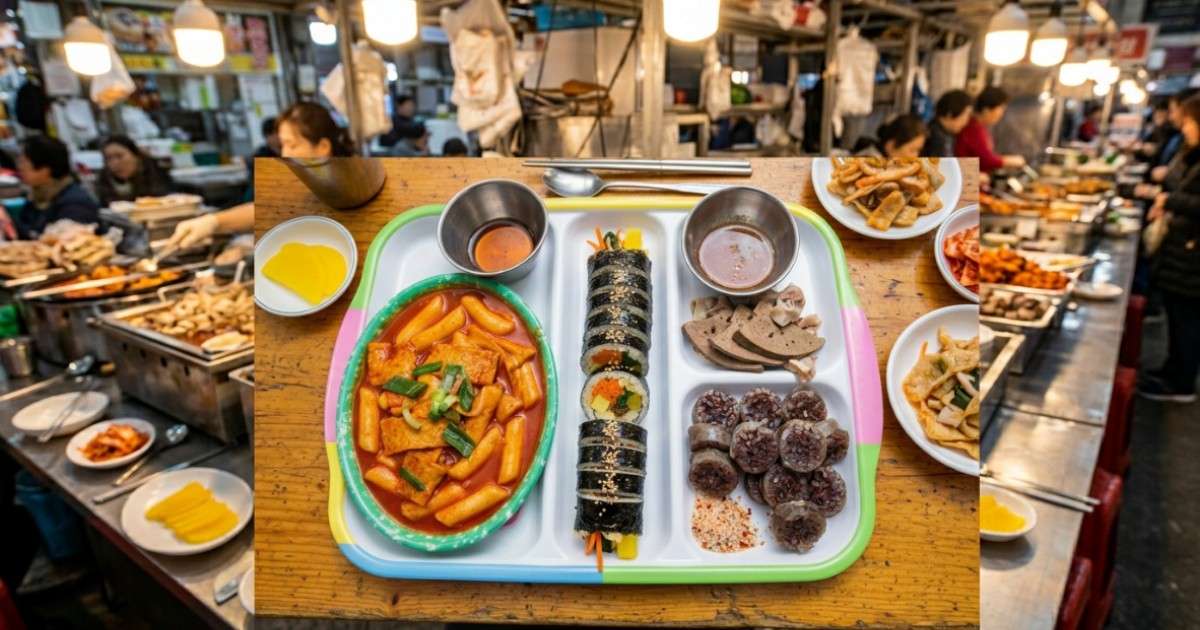
Tteokbokki and soondae form a legendary street food alliance.
Street food, known as bunshik, provides a popular and affordable way for locals to treat themselves. You will frequently find pocha—the ubiquitous street food stands—tucked away near schools, inside covered markets, or in casual restaurant settings. Chewy tteokbokki (cylindrical rice cakes simmered in a fiery, sweet gochujang sauce) serves as the undisputed staple of this category. While these cakes are cherished for their delightful texture, locals know they are significantly elevated when paired with crunchy items.
Fried dumplings or savory kimbap—rice, meat, and vegetables rolled in seaweed—pair perfectly with the spicy sauce.
However, soondae—a rich blood sausage stuffed with meat and glass noodles—remains the ultimate partner for tteokbokki. The delicacy is often served alongside steamed liver and lung, which soak up the spicy sauce and add complex textures to the savory-sweet collaboration. The balance of these flavors is so inherently compatible that it is nearly impossible to leave a single drop behind on your plate.
Then there is the national phenomenon of chimaek.
This combination is so deeply beloved that it has inspired its own shorthand: "chi" for chicken, and "maek" for maekjoo, the Korean word for beer. While the pairing existed informally for years, it exploded into a national pastime during the 2002 FIFA World Cup. In South Korea, fried chicken is almost never eaten alone; it is always served with a side of mu—tangy, pickled radish—to cleanse the palate between bites of oily, crispy batter.
The light, draft-poured lagers used in chimaek are specifically chosen to reset the palate for the next round of chicken.
Finally, consider the comforting tradition of jeon and makgeolli. Should you find yourself caught in a sudden rainstorm during your visit, the cultural protocol is to seek shelter in a cozy pub and order this pairing immediately. This savory pancake, made with scallions or seafood, is traditionally paired with makgeolli, a milky, lightly sweet rice wine. The combination is widely viewed as the essential comfort food for rainy weather.
Local culture dictates that this specific pairing creates the perfect atmosphere for relaxation.
Understanding these food rules allows travelers to step beyond the role of a tourist and immerse themselves in the genuine spirit of Korean dining. When you visit Korea, observing these traditions shows an appreciation for the depth and history of the local culture. Your Korean friends will certainly be impressed when you correctly pair your street food or order a traditional rainy-day meal like a seasoned veteran