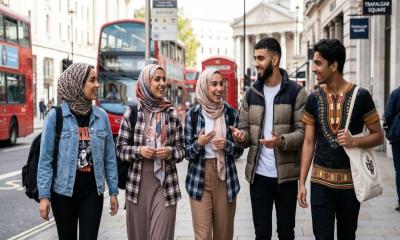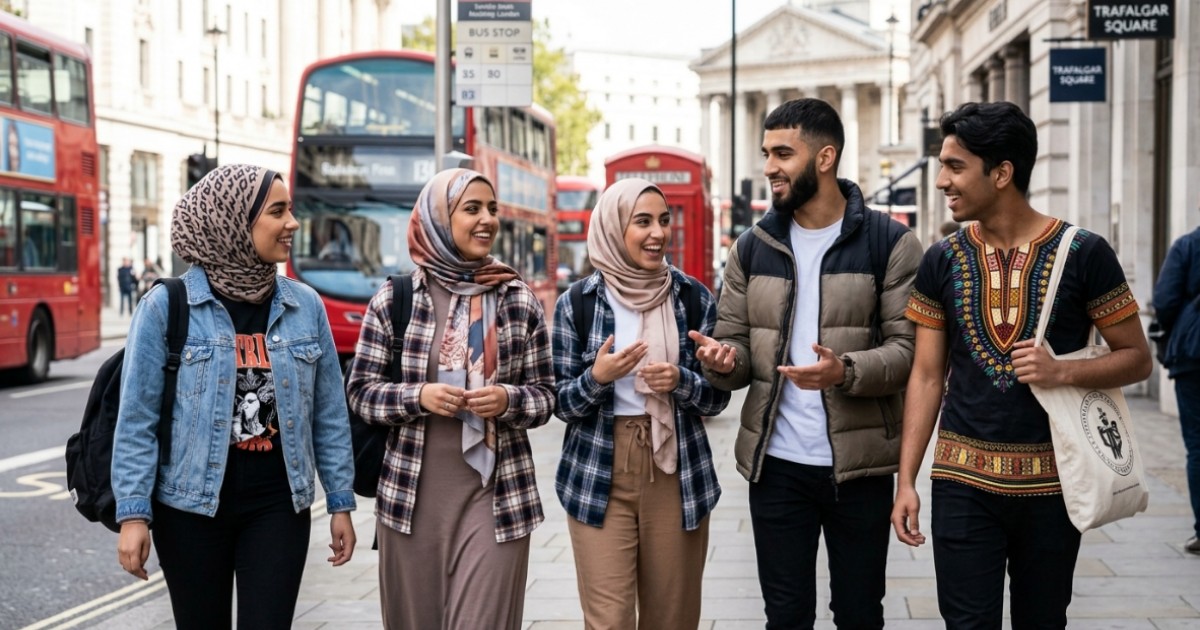
The future of political engagement in the United Kingdom is being reshaped by a rapidly maturing generation of young Muslim voters. A new report released by the Muslim Council of Britain (MCB), titled "British Muslims in Numbers," indicates that Muslims now constitute 6.5 percent of the population in England and Wales. The most striking finding is the median age of this group, which stands at just 27—thirteen years younger than the national average.
Nearly half of all British Muslims are now under the age of 25.
This demographic shift is expected to carry significant political weight, particularly as debates continue regarding lowering the national voting age to 16. If approved by Parliament, such a move could introduce approximately 150,000 new Muslim voters into the electorate. Miqdad Asaria, an associate professor at the London School of Economics, noted that this young, British-born generation is highly educated and increasingly influential. He argued that any politician who still views the community as "outsiders" is operating with a worldview that is decades out of date.
The report, which analyzes data from the 2001, 2011, and 2021 censuses, challenges the common political narrative that treats Muslim voters as a monolithic voting bloc. Asaria emphasized that the nearly four million Muslims in the UK are ethnically and politically diverse, ranging from Pakistani communities in Bradford to Somali groups in Cardiff and Arab professionals in London. This diversity means that their political views are as varied as any other large population group within the country.
Social media is playing a pivotal role in how this younger generation engages with public life. Mohammed Sinan Siyech, a lecturer in politics at the University of Wolverhampton, explained that the rise of the far-right and increasing Islamophobia has made young Muslims more politically aware. They are turning to alternative news sources and influencers to understand political issues, rather than relying on traditional media narratives. This increased awareness is translating into more direct participation in civic life.
Despite these signs of progress, the report also highlights persistent structural inequalities. About 10.3 percent of Muslim households are headed by lone parents with dependent children, a figure notably higher than the national average of 6.9 percent. Home ownership among Muslims also trails the national average significantly, sitting at 41.5 percent compared to 63 percent for the general population. Asaria attributed these disparities to structural disadvantages, such as employment discrimination and a lack of investment in areas with high Muslim concentrations.
Nevertheless, there are strong signs of social mobility within the community. Over the last two decades, the economic activity of Muslim women has increased by 37 percent. Educationally, the community is catching up rapidly; nearly a third of all Muslims now hold university degrees. Among the 16-24 age demographic, Muslims have even surpassed the national average for degree-level attainment. This educated and politically engaged youth is poised to play a transformative role in British society.