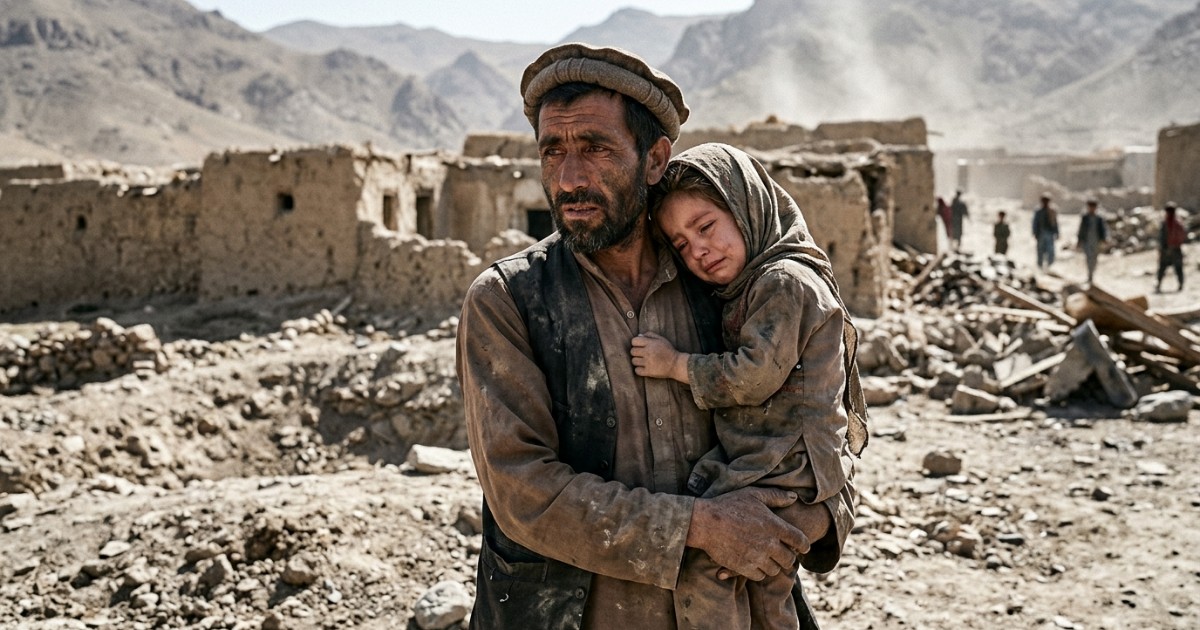
A deepening humanitarian catastrophe across Afghanistan is forcing impoverished families into absolute desperation as economic collapse and extreme funding cuts take hold. In several provinces, hundreds of unemployed men gather daily in public squares, desperately seeking manual labor that rarely materializes. The lack of stable income has left millions facing starvation, pushing some fathers to consider the unimaginable option of selling their young daughters to keep the rest of their children alive.
According to recent data from the United Nations, a staggering three in four people in Afghanistan cannot meet their basic survival needs.
The economic strain is particularly acute in the remote Ghor province, where severe drought has crippled the agricultural baseline of local communities. Laborers like forty-five-year-old Juma Khan report finding only a handful of working days over entire months, earning barely enough to purchase a fraction of a bag of flour. Khan shared that his children frequently go to sleep hungry for days at a time, leaving his family in constant terror of starvation. The structural collapse of healthcare and local markets has amplified the vulnerability of these rural settlements.
The desperation has led to catastrophic personal choices, with parents turning to relatives to arrange the sale of young children to pay off piling debts or sudden medical expenses. A local father, Saeed Ahmad, revealed that he had to sell his five-year-old daughter for approximately two thousand four hundred dollars to secure funds for her life-saving abdominal surgery. Under the arrangement, the child will remain with her family for five more years before being handed over permanently to the buyer. Another resident, Abdul Rashid Azimi, expressed identical grief, stating he is prepared to sell his twin daughters because he cannot provide them with even basic bread and water.
The crisis has been significantly exacerbated by a massive reduction in international aid, which previously served as a lifeline for millions of Afghans. Current figures indicate that foreign aid received this year has dropped by seventy percent compared to previous cycles, with major Western donors drastically rolling back their humanitarian contributions. The reduction has left local non-governmental organizations completely unequipped to deal with the widespread food insecurity. Furthermore, a persistent drought across more than half of the country has eliminated alternative agricultural means of subsistence.
The Taliban administration has consistently placed the blame for the current economic misery on the legacy of the previous foreign military presence. Deputy spokesman Hamdullah Fitrat asserted that the current governance inherited widespread poverty and structural unemployment caused by an artificial economy previously propped up by foreign funds. However, international diplomatic entities emphasize that the Taliban`s own policy restrictions, particularly those barring women from work and education, remain the primary reason global donors are withdrawing financial support. The domestic population continues to bear the brunt of this ongoing geopolitical deadlock.