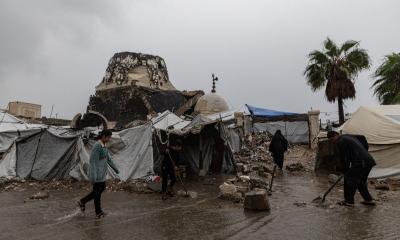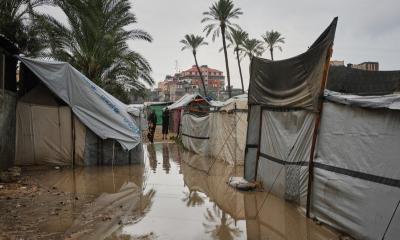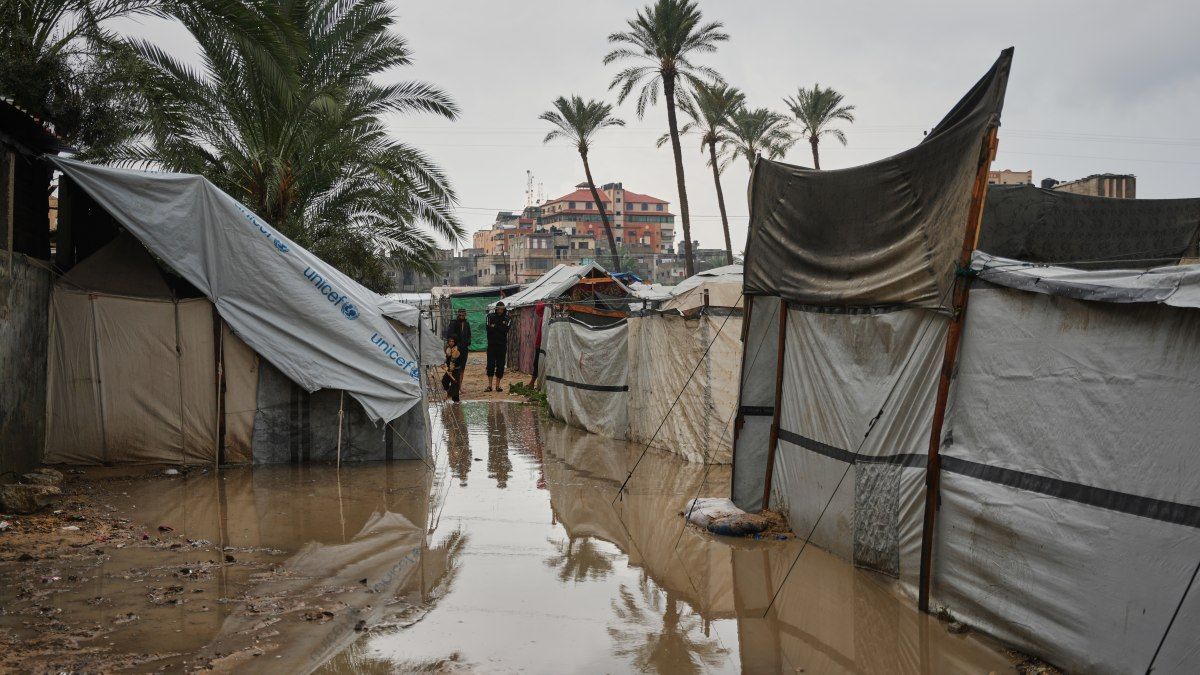
Heavy rainfall on Saturday flooded thousands of tents housing displaced families across the Gaza Strip. Gaza civil defence authorities stated that rescue crews handled roughly 1,500 distress calls within a ten-hour period following the downpour. Water levels at several shelter locations rose between 30 and 40 centimetres.
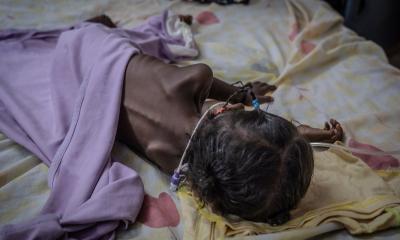
Civil Defence spokesperson Mahmoud Basal told reporters that the anticipated crisis had materialised. Several shelter centres suffered complete flooding, forcing all occupants out into the open. Basal warned that premature babies, elderly residents, and sick individuals faced immediate danger of death and illness.
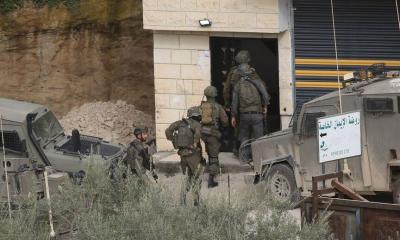
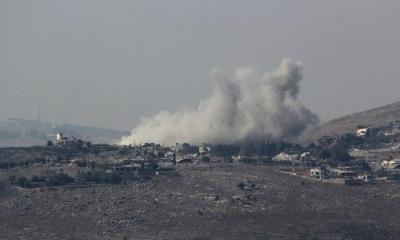
The severe storm also brought down structures previously damaged during the Israeli military offensive that began in October 2023. Rescue teams evacuated residents from a partially collapsed building in the central Nuseirat area. In northern Gaza, a separate wall collapse caused by heavy rain injured two people, according to the Wafa news agency.
Visual material from camps in Gaza City, Khan Younis, and Deir el-Balah depicted families wading through ankle-deep water. Mattresses and blankets were soaked, while children stood barefoot in pools containing mud and sewage. More than 28,000 widows were among those confronting the winter conditions alone with their children.
In al-Mawasi, a coastal region in southern Gaza sheltering over 900,000 displaced individuals, rain began on Friday night. Hundreds or thousands of tents were submerged overnight. More than 125,000 families residing along the coast faced higher risks of having their temporary shelters swept away by the sea.
Gaza emergency committees reported that over one million displaced people confront extreme winter hazards. The territory urgently requires approximately 200,000 tents alongside adequate heating supplies. Raed al-Dahshan, director of civil defence in Gaza governorate, stated that rescue crews lacked basic supplies upon reaching affected families. He said the civil defence possessed neither tarpaulins nor tents, limiting their role solely to saving lives.
Humanitarian organisations attributed the lack of supplies to Israeli restrictions on entering shelter materials. Mohammed Salha, director of the Palestinian NGO Network, reported that only 180 to 200 trucks entered Gaza daily. This volume fell significantly below the 600 trucks agreed under humanitarian protocols, with only about 40 carrying humanitarian aid.
Salha called for preventive action rather than delayed emergency responses, and said that 50,000 tents remained stranded on the Egyptian side of the border. He described international pressure on Israel to facilitate the entry of supplies as timid.