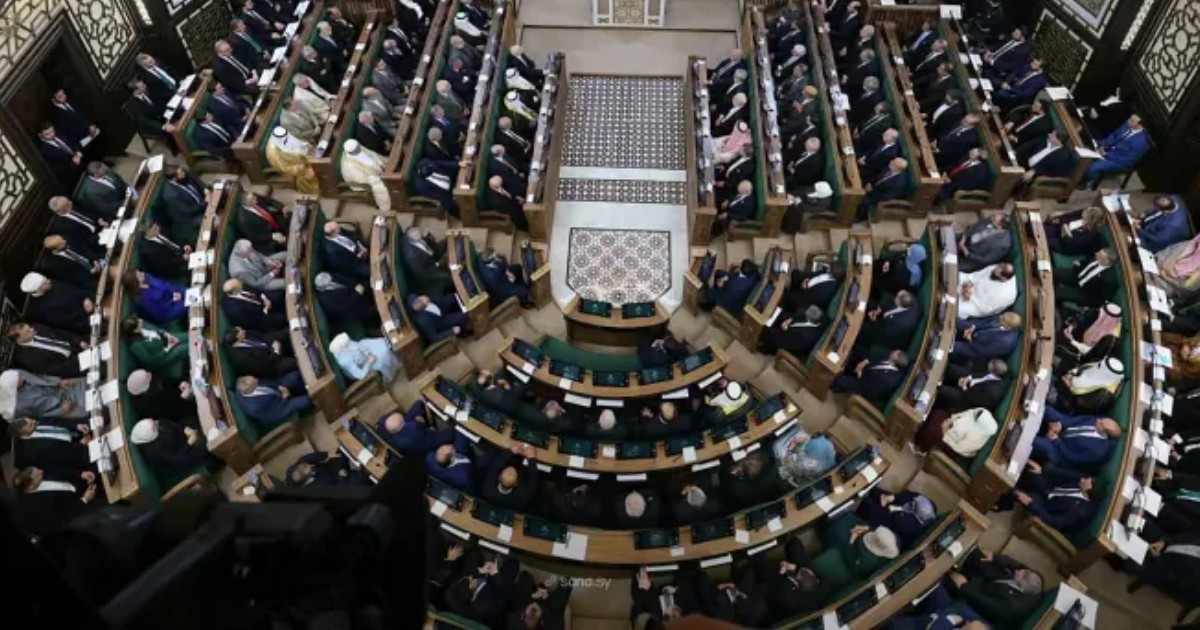
Syria`s newly appointed transitional parliament convened for its inaugural session in Damascus on Sunday following the ouster of Bashar al-Assad, Reuters, AFP, and Al Jazeera reported. Members of the newly formed People`s Assembly took their constitutional oaths more than 19 months after the longtime authoritarian ruler was toppled by rebel forces. The political transition is being led by Ahmed al-Sharaa, the former rebel commander who now serves as the president of the country. This session marks the first formal legislative meeting since the collapse of the previous administration.
President Ahmed al-Sharaa addressed the lawmakers during the opening session, urging them to place national interest above all other considerations. The 43-year-old leader called on the assembly to become a definitive model of institutional responsibility and professional competence. He emphasized that the council must serve as an open platform for truth, justice, and the rule of law. Al-Sharaa stated that Syria is currently writing a glorious new chapter in its history, which places a heavy responsibility on the government to rebuild both the nation and its citizens.
The primary responsibility of the new transitional parliament will be to draft a permanent constitution for Syria and lay the foundation for a future democratic system. This political evolution follows decades of oppressive rule under the al-Assad family, which culminated in a brutal 14-year civil war that claimed more than half a million lives. The current administration has pledged to guide the nation into a stable era, despite severe economic stagnation resulting from years of conflict and international isolation. The post-Assad period has also been complicated by persistent regional and sectarian tensions across various provinces.
The newly established legislative chamber comprises 210 seats designed to represent diverse geographic and professional backgrounds. Under the interim governing framework, two-thirds of these lawmakers were selected last year through regional electoral colleges rather than direct public voting. President al-Sharaa directly appointed the remaining 70 members of the assembly on July 1 to ensure representation for technical experts and minorities. Government officials defended this indirect selection method, arguing that widespread displacement and inaccurate population records made immediate nationwide general elections logistically impossible.
What remains unclear is whether the transitional legislature can exercise genuine legislative autonomy under the current presidential system. The temporary constitutional declaration introduced in 2025 grants the parliament limited oversight, and there is no legal requirement for the cabinet to win a formal vote of confidence. However, the assembly retains the authority to propose and approve new national legislation during its renewable 30-month term. Observers noted that female lawmakers make up approximately 10 percent of the chamber, representing a deliberate push for inclusivity amid ongoing institutional reforms.
Claudio Cordone, the United Nations deputy special envoy for Syria, described the inaugural parliamentary session as a key milestone in the country`s ongoing political transition. He stated that the international community would closely monitor the assembly`s legislative work and stands ready to provide necessary institutional support. Local analysts believe that stabilizing the fragile economy, improving collapsed public services, and attracting foreign direct investment remain the most critical priorities for the lawmakers. The successful commencement of the parliament represents a major structural shift as Syria attempts to navigate its complex post-war landscape.