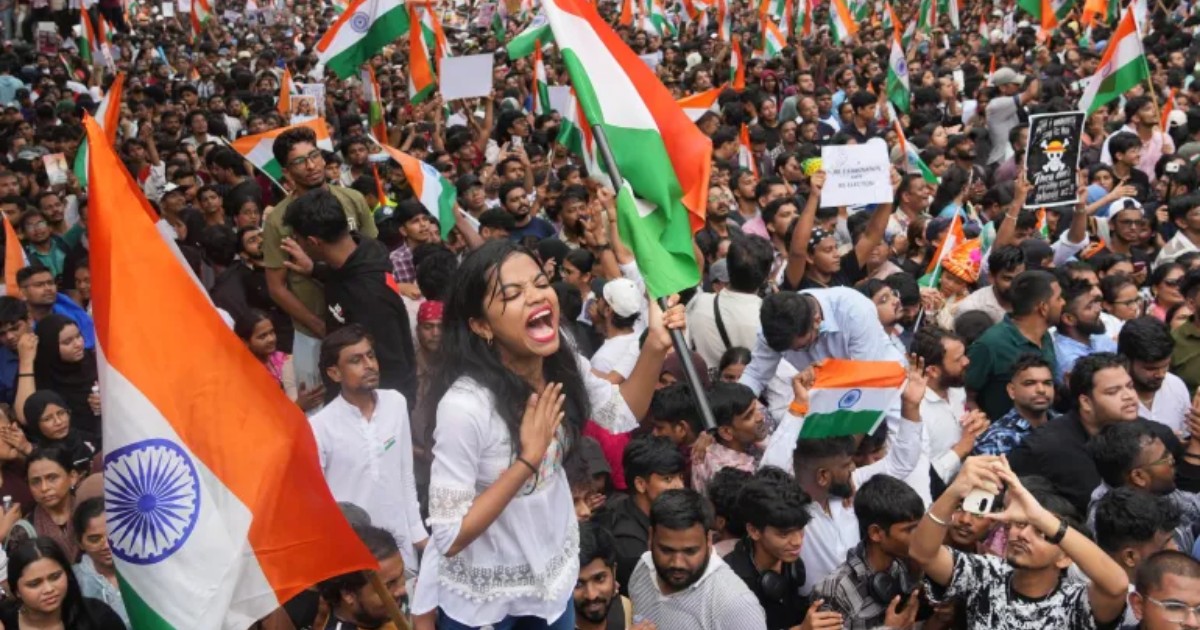
The Indian political landscape has been profoundly shaken by a wave of youth-led demonstrations known widely as the Cockroach movement. Representing one of the most significant challenges to Prime Minister Narendra Modi’s twelve-year administration, these protests have drawn massive crowds to New Delhi’s Jantar Mantar. According to reports from the Associated Press and Al Jazeera, the governing Bharatiya Janata Party has responded to the unprecedented unrest through a calculated combination of administrative crackdowns and targeted efforts to appease the younger demographic.
In several states governed by the ruling party, law enforcement agencies launched aggressive crackdowns, resulting in the arrest of hundreds of young individuals, including minors under the age of eighteen. Many of those detained faced severe legal charges related to civil disobedience and public unrest. However, the legal landscape shifted dramatically when the Supreme Court of India intervened, ordering the immediate release of all under-18 protesters arrested during demonstrations organized by the Cockroach Janta Party. These rallies erupted primarily over systemic examination paper leaks and urgent demands for comprehensive educational reforms.
Even prior to the apex court`s formal directive, authorities had begun releasing several detained minors following intense public backlash from opposition politicians and civil rights leaders. The heavy-handed initial response drew widespread domestic and international criticism, compelling the administration to adopt a more measured tactical approach. Beyond the immediate containment measures, the government has attempted to recalibrate its outreach to the country’s vast youth population. Officials have rolled out various promises regarding employment opportunities and administrative transparency in an effort to neutralize growing political friction.
The underlying grievances driving the movement extend far beyond administrative test failures. Decades of mounting economic anxiety, high youth unemployment, and institutional frustration have coalesced into a potent political force. Analysts note that the demonstrations reflect a deeper disillusionment with existing economic opportunities and governance models. What began as localized student anger over corrupt examination procedures quickly evolved into a nationwide mobilization, testing the resilience of the current political establishment.
What remains uncertain is whether the government’s dual strategy of punitive measures and political engagement will successfully quell the discontent. International observers point out that the youth movement has successfully punctured the aura of political invincibility surrounding the administration. While state apparatuses retain the capacity to enforce order, the ideological challenge posed by a newly politically active generation cannot be easily dismantled through traditional political maneuvering. As the dust settles from the recent confrontations, the long-term implications for India’s democratic norms and governance remain a subject of intense global scrutiny.