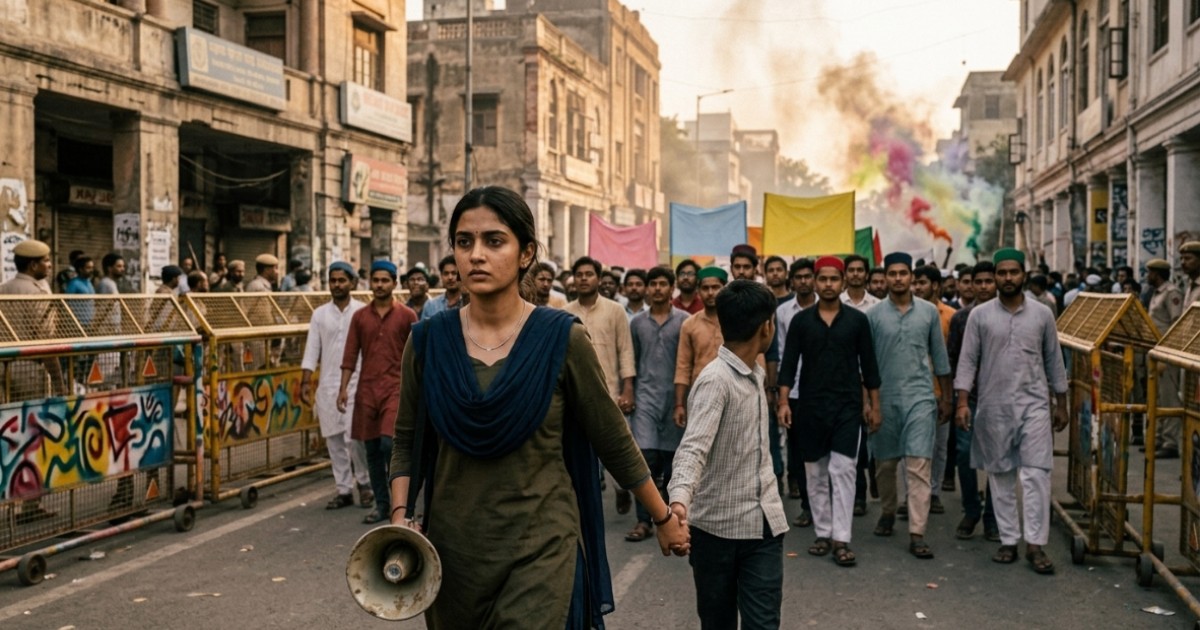
The political landscape of India has experienced an unprecedented shift as youth-led demonstrations challenge the established norms of governance. Prime Minister Narendra Modi’s administration, which has maintained dominant political control for over a decade, faces a unique form of dissent originating from the country’s younger demographic. According to reports from Al Jazeera and the Associated Press, these widespread protests extend far beyond localized grievances over examination paper leaks, reflecting a broader structural disillusionment among the younger generation. In a remarkable development, the daughter of a prominent ruling party politician has stepped forward to explain why she supports the movement.
Yashaswinee Raje Singh, whose father is affiliated with the governing Bharatiya Janata Party, spoke candidly with Al Jazeera regarding her decision to back the student-led demonstrations. The movement, spearheaded by the informally organized Cockroach Janta Party, has successfully galvanized Generation Z across multiple states, transforming generalized economic anxiety into a cohesive political force. For an individual embedded within the familial and social circles of the ruling establishment to publicly endorse such anti-establishment fervor highlights the deep internal fractures generated by the ongoing crisis.
The grievances fueling the protests are rooted in severe structural challenges, including systemic examination irregularities, high youth unemployment, and limited economic mobility. Millions of students and young professionals face a reality where their academic credentials fail to secure stable employment, leading to profound frustration with existing administrative priorities. While the government has attempted to implement a mix of punitive legal measures and superficial outreach efforts, these tactics have largely failed to pacify a demographic demanding genuine accountability and systemic reform.
Singh emphasized that the movement represents a fundamental awakening among young Indians who refuse to remain silent regarding their economic and civic futures. Despite heavy-handed initial crackdowns by state authorities and the arrest of numerous young demonstrators, the solidarity among protesters has only strengthened. The intervention of the apex court, which ordered the release of detained minors, provided further momentum to a mobilization that operates outside traditional political hierarchies, relying instead on digital connectivity and grassroots organizing.
Political analysts suggest that the emergence of dissenting voices from within the families of ruling party elites signals a significant erosion of traditional loyalties. As India`s massive youth demographic continues to demand structural reforms, political parties across the spectrum are forced to re-evaluate their engagement strategies. What remains to be seen is how the central government will adapt to an increasingly politically conscious generation that views traditional political promises with deep skepticism. The evolving dynamic between the state and its dissenting youth will likely shape the trajectory of Indian democracy for years to come.