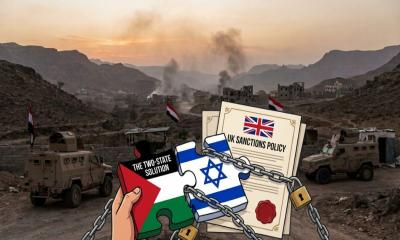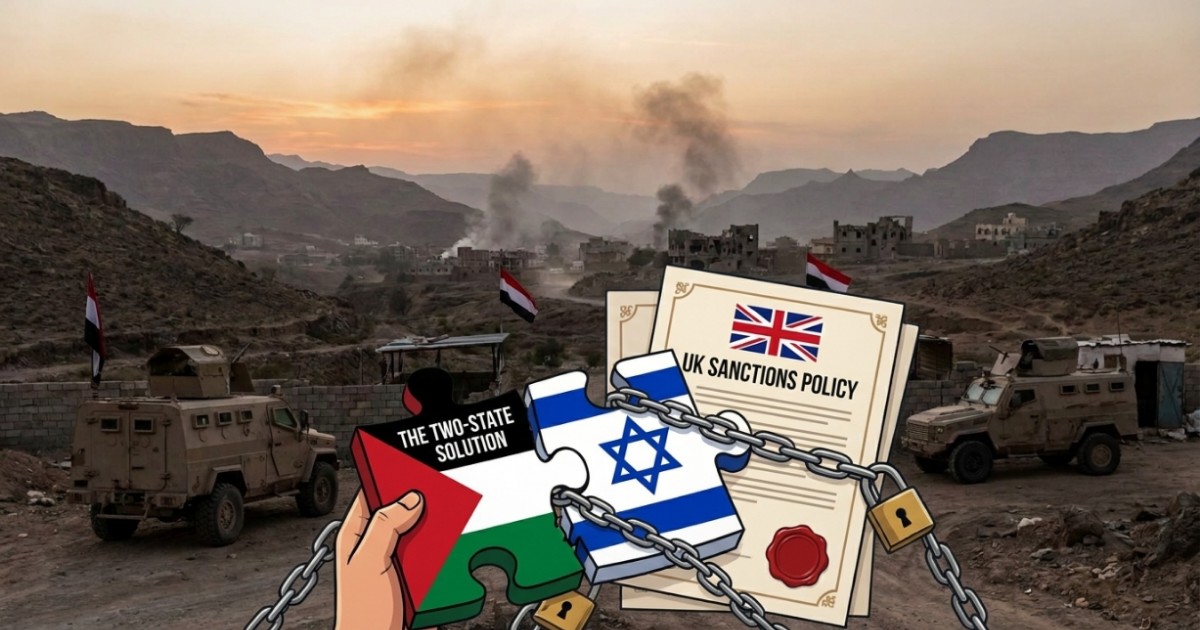
When British Foreign Secretary Ed Miliband announced forthcoming sanctions against illegal Israeli settlements in the occupied West Bank, it reignited a fierce global debate over the viability of a diplomatic framework that has dominated Middle East peace talks for decades. For years, the two-state solution has been touted by international diplomats as the sole viable pathway to resolving the Israeli-Palestinian conflict. However, with relentless settlement expansion eating away at contiguous Palestinian territory, critics and regional analysts increasingly argue that the framework is effectively dead on arrival, serving more as a diplomatic talking point than a realistic political objective.
The UK’s decision, supported or echoed by a dozen other nations pledging independent trade restrictions on settlement goods, marks a notable rhetorical shift. London described the measures as a necessary step to salvage prospects for Palestinian statehood against what it termed unlawful expansion and severe demographic engineering. Yet, beneath the diplomatic posturing lies a stark reality recognized by political scientists and Middle East experts: modest trade curbs implemented after decades of unchecked territorial fragmentation are fundamentally inadequate to reverse the entrenched facts on the ground.
Tahani Mustafa, a lecturer in international relations at King’s College London, captured this skepticism in remarks highlighting the profound limitations of the new Western measures. Pointing to three decades of breakneck settlement growth, Mustafa noted that Palestinian territory is currently held together only by fragile sinews, with territorial viability reduced to an absolute minimum. In her assessment, if any geographical basis for a sovereign Palestinian state remains, it is barely functional, requiring far more decisive, structural intervention from the international community rather than piecemeal economic penalties.
The core structural impediment to the two-state paradigm lies in the sheer scale of institutionalized control established by successive Israeli governments across the West Bank. Hundreds of thousands of settlers now reside in sprawling housing developments connected by exclusive infrastructure networks that carve up Palestinian population centers into isolated enclaves. This physical and administrative architecture makes the establishment of a sovereign, contiguous, and economically viable Palestinian state an increasingly distant geographic impossibility. Consequently, punitive trade measures targeting settlement-produced goods, while politically symbolic, do little to alter the strategic calculations of a political establishment committed to permanent territorial consolidation.
Furthermore, the broader geopolitical environment remains deeply fractured, characterized by shifting alliances and a lack of unified international enforcement mechanisms. While European nations express growing frustration with illegal settlement activities, major global powers remain divided on how to exert meaningful pressure to compel compliance with international law. As regional tensions escalate across multiple fronts, the debate over the two-state solution highlights a widening chasm between diplomatic rhetoric and the grim realities faced by communities living under prolonged occupation. Without a fundamental paradigm shift in international diplomacy, measures such as the UK’s settlement sanctions risk being remembered as too little, too late in the history of the conflict.