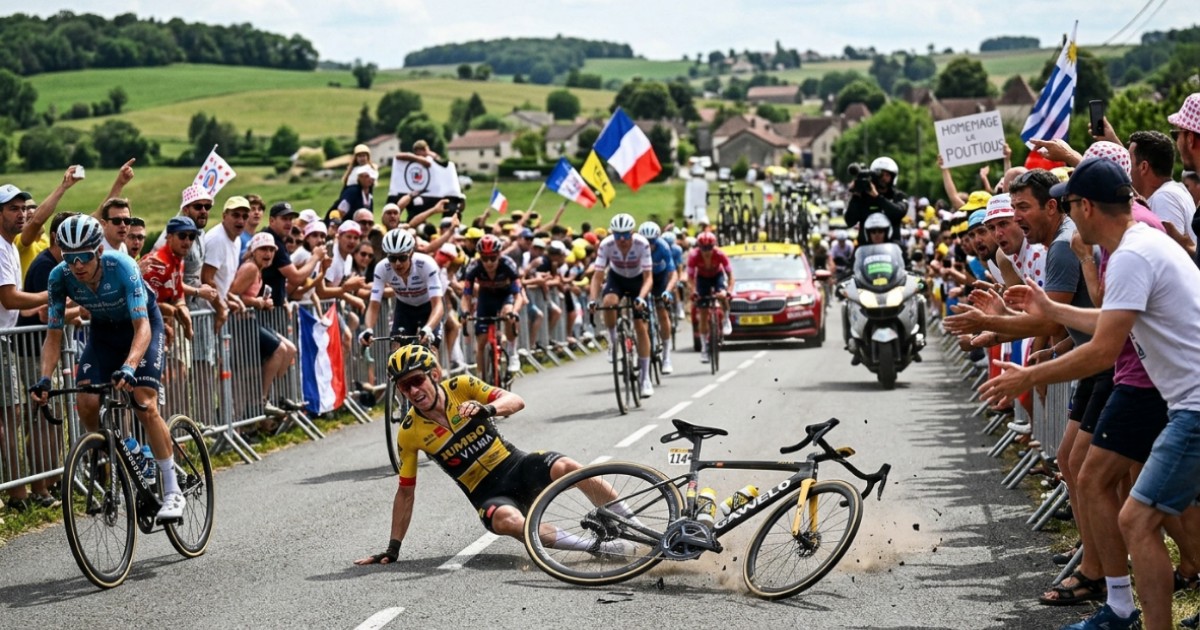
Crashes have punctuated the opening week of the Tour de France, with multiple incidents highlighting the persistent difficulties of managing concussions in elite cycling, Reuters and Al Jazeera reported on Tuesday. Out of the eight riders who have been forced to abandon the prestigious race since it commenced in Barcelona, Spain on July 4, three withdrew specifically due to concussions. The affected athletes include France`s Clement Berthet, Dutch rider Alex Molenaar, and Norway`s Torstein Traeen, who had briefly worn the leader`s yellow jersey.
All three riders shared a common trajectory where they crashed during the stage, managed to climb back onto their bikes to finish the race, and were only diagnosed with concussions later that evening. Berthet went down heavily during the opening team time trial, Molenaar crashed just five kilometers from the finish of stage five, and Traeen hit the deck on the descent of the Col du Tourmalet. International Cycling Union medical director Xavier Bigard expressed dissatisfaction with seeing riders resume racing only to be diagnosed with concussions hours later.
The governing body introduced a formal concussion protocol at the start of the 2021 season to prevent riders from continuing with severe head injuries. Under the current rules, the first person to reach a crashed rider must look for immediate signs of concussion such as nausea, disorientation, or impaired balance. If at least two signs are detected, the rider must be withdrawn immediately, though they are otherwise permitted to continue before undergoing a second evaluation from the official medical car during the race.
What remains unclear is the reliability of these rapid roadside assessments when the stakes are incredibly high for the athletes. Team doctors noted that a comprehensive concussion protocol usually requires at least ten to fifteen minutes of diverse testing, which is impossible to conduct on the side of a busy race track. Tour de France chief doctor Florence Pommerie emphasized that concussions are invisible and often rely on a complex combination of delayed indicators. The central problem continues to be the intense pressure on riders to save every second for the general classification, making education and safety enforcement an ongoing challenge for the sport.