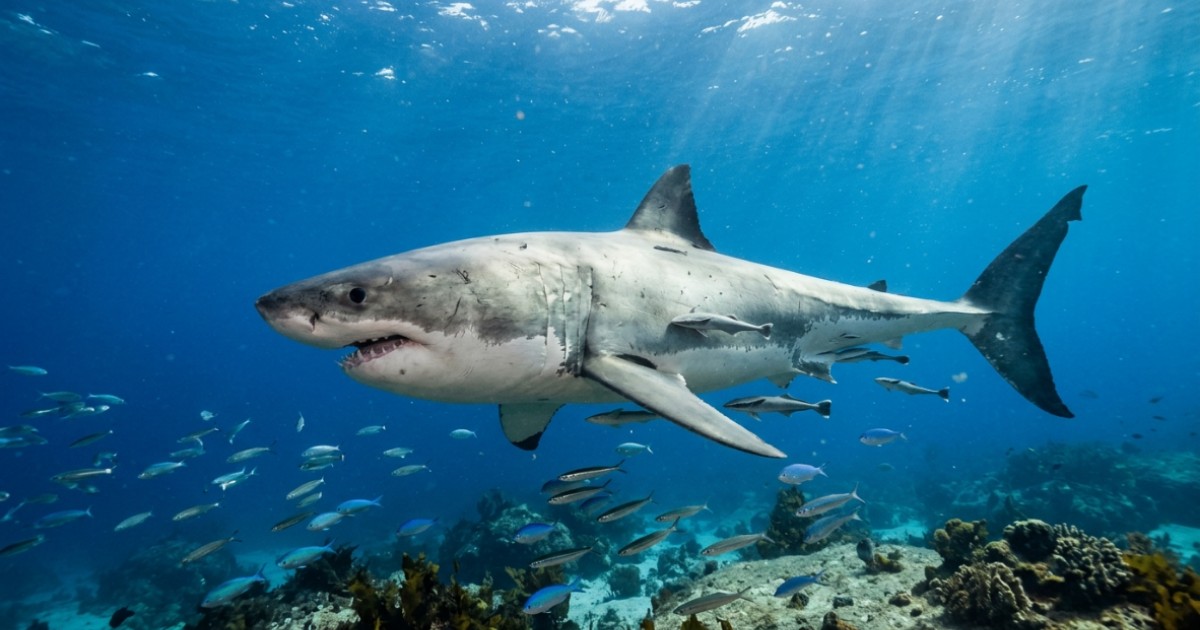
Sharks possess highly sophisticated intelligence, unique physical adaptations, and evolutionary histories that stretch back hundreds of millions of years, according to reports from BBC News and Reuters. Long stereotyped as mindless apex predators driven entirely by voracious hunger, recent marine biology studies indicate that these creatures are capable of remarkably complex cognitive tasks. The research proves that sharks can perform basic mathematical distinctions, recognize colorful geometric configurations, and even demonstrate preferential responses to specific genres of music. Fossil records confirmed that shark ancestors inhabited the oceans long before the appearance of terrestrial trees or the formation of Saturn`s rings.
In controlled behavioral experiments, young grey bamboo sharks demonstrated the ability to distinguish between different quantities, such as telling the difference between four and seven objects. Furthermore, researchers at Macquarie University in Sydney discovered that Port Jackson sharks could successfully associate jazz music with food rewards. The test subjects consistently swam to a designated feeding station when jazz was played, whereas they failed to form the same cognitive connection with classical music compositions. Researcher Culum Brown noted that the animals possess advanced learning retention, holding memory patterns regarding visual illusions and abstract geometric shapes for nearly an entire year.
What remains unclear is the exact evolutionary mechanism that allowed sharks to survive all five of the planet`s major mass extinction events, including the devastating Permian-Triassic extinction. Socially, sharks exhibit behaviors that contradict their reputation as solitary hunters, with grey reef sharks observed maintaining distinct social groups or friendships for up to four consecutive years. Two tracked great white sharks traveled a distance of 6,000 kilometers together without ever separating. Additionally, certain species like bull sharks and hammerheads nurture their embryos through an umbilical cord inside the uterus, resulting in visible belly buttons or umbilical scars on the pups for several weeks after their live birth.
Structurally, shark skin is composed of microscopic tooth-like scales called denticles, which flatten against the water current to drastically reduce aerodynamic drag and increase swimming velocity. Sharks also possess eight distinct senses, utilizing specialized fluid-filled lateral pores and head sensors known as ampullae of Lorenzini to detect minute changes in water pressure. This biological network allows them to sense the low-frequency electrical fields generated by the beating hearts and muscle contractions of hidden prey. With an evolutionary lineage dating back 450 million years, these resilient marine vertebrates remain critical components of global oceanic ecosystems.