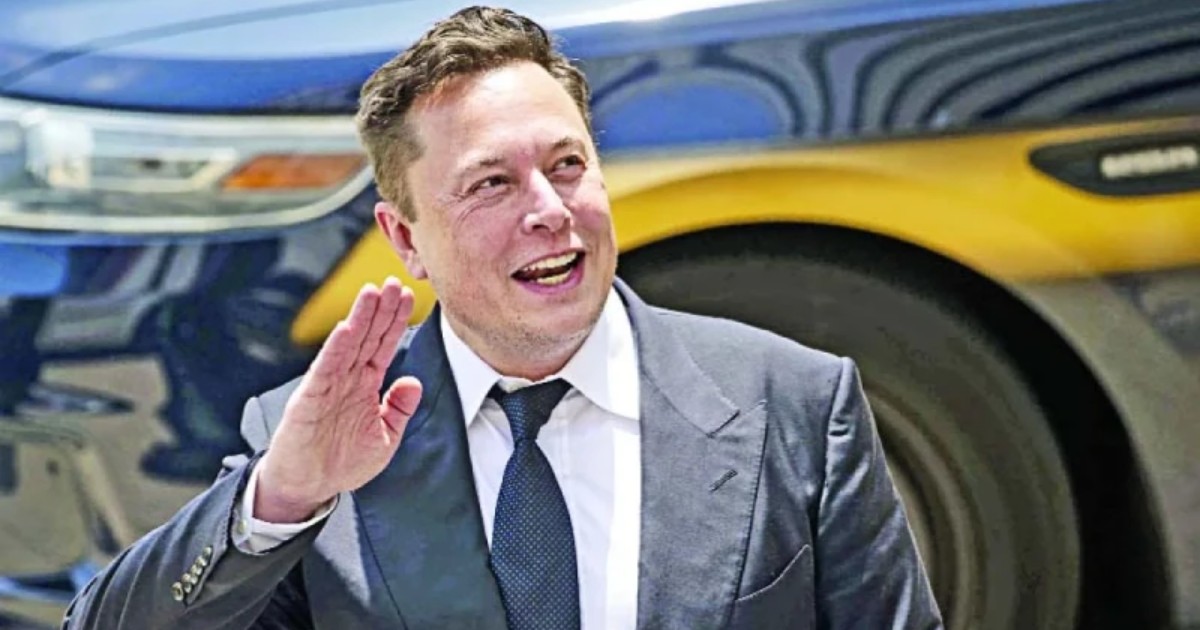
American technology entrepreneur Elon Musk became the world`s first trillionaire on Friday following the historic stock market debut of his rocket company SpaceX on the Nasdaq exchange, Reuters and BBC News reported. This blockbuster initial public offering cemented the status of the Tesla and SpaceX founder as the wealthiest individual in modern economic history. According to international wealth tracking indexes, Musk`s total net worth now stands at an estimated 1.11 trillion dollars. The aerospace, telecommunications, and artificial intelligence giant listed on the public market with a massive valuation of 2.1 trillion dollars, breaking records as the largest debut in corporate history. Driven by intense investor enthusiasm, the stock experienced a dramatic surge immediately after the opening bell.
Although SpaceX executives initially offered the common stock at a set price of 135 dollars per share, public trading commenced on the exchange at 150 dollars. Driven by intense investor demand for space technologies and ventures associated with Musk, the share price briefly peaked at 176.50 dollars during midday trading. The stock eventually closed its first day of trading on Friday afternoon at approximately 161 dollars per share. Prior to hitting the open market, the public listing successfully raised 75 billion dollars from global asset managers and institutional underwriters. Musk retains a 42 percent ownership stake in SpaceX, a position that grants him unilateral control over the corporation`s strategy and the deployment of its newly raised capital.
Financial disclosures indicate that Musk`s direct shares in SpaceX were valued at 767.1 billion dollars at the close of trading, supplemented by another 53.8 billion dollars held in options. His broader portfolio also comprises 168 billion dollars in Tesla equity alongside 116.4 billion dollars in separate Tesla stock options. This unprecedented consolidation of individual capital immediately reignited fierce global debates regarding wealth inequality and systemic economic imbalances. Musk`s personal fortune now surpasses the annual gross domestic product of sovereign nations such as Switzerland or Poland. This extraordinary economic leverage has positioned Musk as a highly powerful and polarizing entity within international geopolitics.
Democratic United States Senators Elizabeth Warren and Bernie Sanders led a chorus of progressive lawmakers condemning the milestone, describing it as a massive wake-up call for the American economy. They argued that the achievement underlines the immediate necessity for comprehensive national wealth taxes on ultra-wealthy individuals to safeguard democratic institutions. However, market analysts emphasize that Musk remains a trillionaire strictly on paper, given that his net worth is intrinsically linked to fluctuating equity valuations. Under existing regulatory frameworks, Musk is legally barred from liquidating any portion of his SpaceX stock for at least one calendar year. Conversely, the public listing has generated massive wealth for staff, converting more than 4,400 current and former employees into millionaires through stock-based compensation.
What remains unclear is whether the current multi-trillion-dollar valuation can be sustained over the next fiscal cycle given the broader macroeconomic headwinds facing the technology sector. Official financial filings indicate that SpaceX continues to operate at a net loss, spending more on advanced research and infrastructure than it currently generates. Due to massive outlays dedicated to artificial intelligence infrastructure, the corporation posted a cumulative net loss exceeding 9 billion dollars across 2025 and the first half of 2026. While the primary operational focus remains the manufacturing of reusable orbital rockets, the firm has diversified into satellite networks through Starlink and integrated his artificial intelligence venture, xAI, to plan for orbit-based data centers.
Long-term institutional investors continue to back the venture despite warnings from critics who describe the aggressive artificial intelligence buildout as a massive cash incinerator. Investment firms cite a projected three to ten-year horizon and the potential for a future corporate merger between Tesla and SpaceX as key factors driving their optimism. Musk previously noted that less than a fraction of a percent of his total wealth is held in liquid cash, reinforcing the volatile nature of his paper-based fortune. As the global financial system adapts to this new threshold of individual wealth, the performance of these interrelated technology stocks will remain under intense scrutiny by regulators and market participants alike