Some of the world’s largest and most powerful multi-national technology corporations are shifting away from traditional stark aesthetics toward soft, animated visual campaigns. Silicon Valley powerhouses, including Apple and Microsoft, have begun integrating friendly cartoon characters into their primary consumer product lines. Marketing intelligence professionals suggest this trend aims to humanize corporate architectures that general consumers frequently perceive as cold, impersonal, and distant.
Historical market data establishes that brand campaigns featuring distinctive mascots are thirty-seven percent more likely to expand market share.
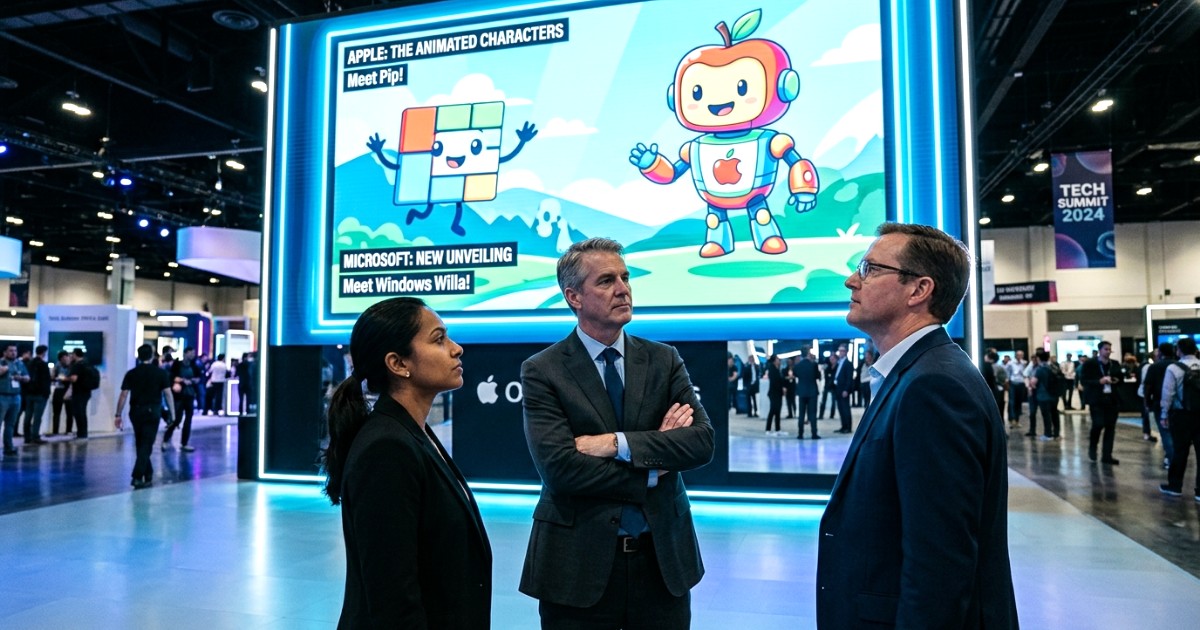
Apple recently inaugurated this visual pivot by integrating an oversized, blue-and-white animated avatar into its social media promotional clips for updated hardware offerings. Concurrently, Microsoft introduced a smiley-faced digital persona named "Mico" to accompany its advanced generative artificial intelligence assistant, Copilot. While company representatives prefer to classify the character as an optional visual identity rather than a standard mascot, they acknowledge its design is intended to make spoken voice interactions with machine algorithms feel more warm and natural. The tactical shift comes years after the tech enterprise completely retired its widely criticized legacy paperclip assistant.
Anthony Patterson, a professor of marketing at Lancaster University Management School, observed that these virtual creations provide an artificial corporate entity with an accessible face and distinct personality. The competitive landscape has pushed alternative digital providers to refresh their existing intellectual property portfolios. Google recently updated its mobile ecosystem operations by allowing users to customize its signature green robot emblem with personalized wardrobe and structural assets. Similarly, open-source web networks and online discussion forums have re-engineered their signature icons to exhibit highly expressive, emotional reactions during user interactions.
However, psychological research indicates that the sudden resurgence of anthropomorphic corporate assets aligns closely with an era of deep public skepticism toward tech monopolies. Behavioral authors note that general consumers have reached a crisis point regarding their operational trust in consumer-oriented digital interfaces. Introducing cuddly, wide-eyed cartoon characters serves as a tactical shield to deflect public criticism regarding data surveillance and corporate overreach. The designs deliberately manipulate innate human maternal instincts, which automatically respond favorably to characters featuring large heads and exaggerated ocular features.
The core ethical concern voiced by technology watchdogs involves the future deployment of automated intelligence within these friendly marketing shells. Giving conversational AI tools a highly customized, friendly cartoon face could allow enterprises to persuade individual users on a highly deceptive, one-to-one behavioral level. Although software firms emphasize that users retain the absolute autonomy to turn off these visual guides entirely, successful industry precedents like language-learning applications prove that audiences easily invest deep personal trust in corporate characters. As these animated tools become standard across modern computer setups, the boundary between consumer software and corporate persuasion will continue to blur.