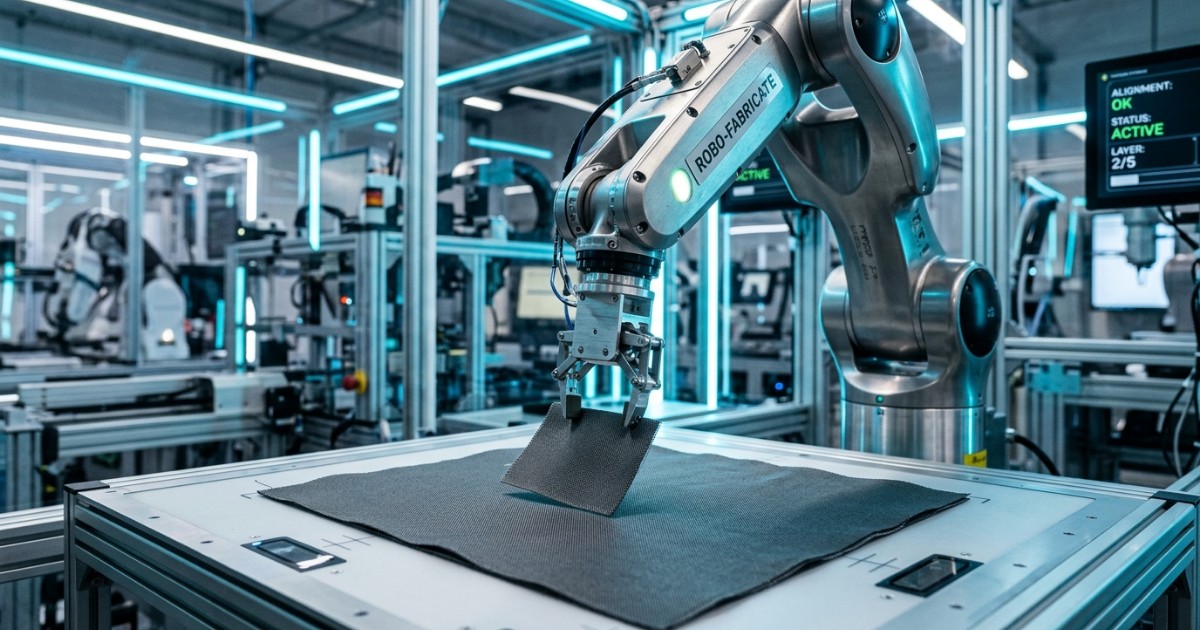
Industrial robots have successfully mastered the assembly of heavy automobiles, complex surgical operations, and cargo transport across global logistics hubs. However, providing a mechanical arm with a standard needle and thread has historically caused automation processes to completely unravel due to the flexible nature of woven textiles. This structural hurdle has kept the vast global apparel industry dependent on manual labor, but California-based robotics firm CreateMe is attempting to bypass traditional stitching altogether by utilizing specialized adhesives to bond fabrics.
The expansion of robotic clothing manufacturing could eventually displace millions of low-paid textile workers across developing nations.
Practically all apparel sold in Western markets is currently manufactured by hand in overseas factories where labor costs remain minimal. CreateMe Chief Executive Cam Myers explained that keeping multiple flexible textile components perfectly aligned under rapid motion remains a critical obstacle for automated sewing setups. To solve this, the firm’s proprietary design applies a robust thermoset adhesive along the fabric borders before stamping the layers together under precise pressure. The facility has already applied this method to the production of undergarments, with plans to expand toward mass t-shirt manufacturing in the coming months.
The automation of garment production represents a long-sought goal for Western industrial firms seeking to reshore manufacturing pipelines and minimize corporate carbon footprints. Bringing even ten percent of basic garment production back to domestic facilities could trigger a massive shift in supply chain logistics. Currently, only a tiny fraction of apparel sold in the United States or the United Kingdom is fabricated domestically. By shifting production closer to consumer hubs, brands hope to market items as entirely domestic goods using regional raw materials.
The proprietary adhesive used in this seamless bonding process is designed to withstand typical household washing and ironing temperatures without losing structural integrity. Because the resulting garments completely lack traditional stitched seams, they can be formed directly on physical molds that match the contours of the human form. Nevertheless, industry analysts point out that the main challenge remains the high variation in apparel fashion, where consumer preferences dictate a constant cycle of complex designs and color schemes that current robots cannot navigate. Other automation companies are concurrently developing third-generation sewing machines aimed at matching the low cost of foreign imports.
The immense financial stakes within the multi-billion-dollar global apparel market have caused technology developers to keep their operational blueprints strictly confidential. Meanwhile, international garment workers remain under compounding economic pressure due to previous pandemic-related facility closures and recent geopolitical blockades affecting synthetic material supplies. While automation advocates frequently argue that displacing repetitive manual roles will eventually nudge the labor force toward higher-paying technical careers, the immediate transition threatens to disrupt widespread manufacturing dependencies without providing immediate economic alternatives.