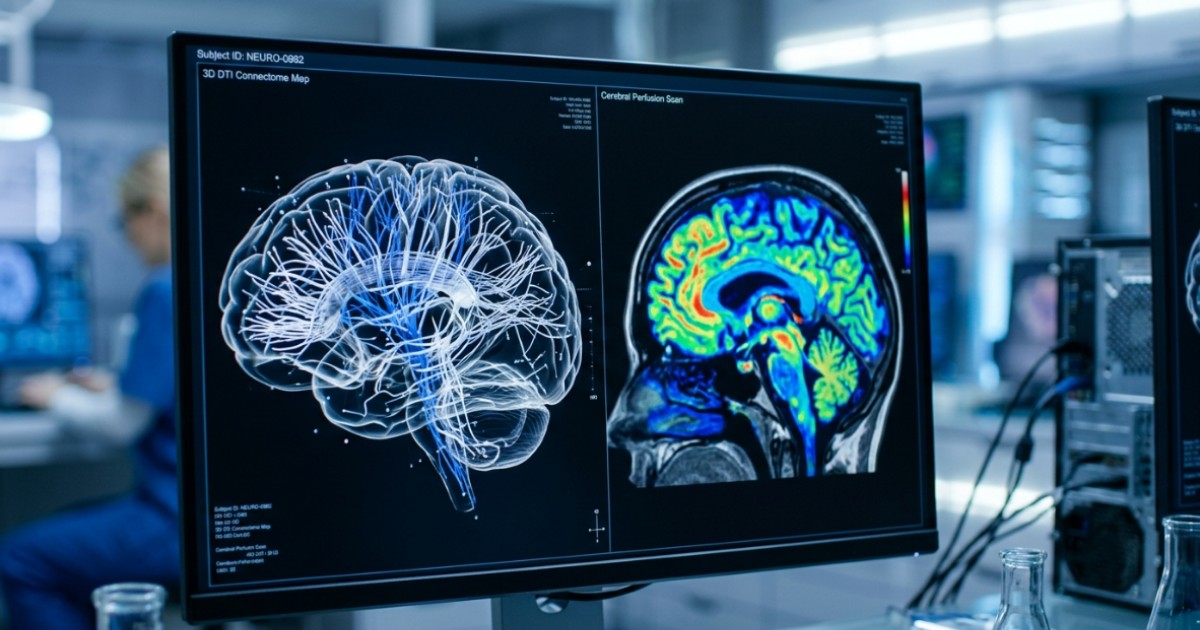
Prominent Cambridge University neuroscientist Hannah Critchlow has unveiled comprehensive scientific strategies for future-proofing your brain and maximizing organic human cognitive potential in the rapidly evolving era of artificial intelligence. In her highly acclaimed new publication, The 21st Century Brain, Critchlow explores overlooked emotional and biological skills necessary to navigate systemic modern technological shifts.
Historical archaeological records surprisingly indicate that human brain sizes have actually shrunk slightly over the past 10,000 years, confirming that modern grey matter shares an identical core structure with Stone Age ancestors.However, individuals can actively cultivate the necessary mental flexibility to solve modern problems.
The rapid explosion of automated deep-learning models has generated widespread public anxiety regarding professional survival across international industries. Critchlow explains that because modern software networks were directly modeled on organic neuroscience frameworks, humans can reverse-engineer this understanding to unlock their latent intellectual capacity.
While genetic factors dictate approximately 10 to 45 percent of an individual`s empathy and emotional intelligence scores, practicing basic self-compassion can fundamentally train neural pathways to exhibit higher collective empathy. Stanford University psychologist Jamil Zaki notes that regularly acknowledging individual emotional states actively ripples outward to improve wider societal and community relationships.
Fascinating biological clinical trials led by researcher Hilke Plassmann at INSEAD in France demonstrate that altruistic tendencies are directly mediated by the diversity of human gut microbiomes. Healthy adult volunteers who consumed prebiotics and probiotics for just seven weeks demonstrated a vastly diversified gut microbiome, resulting in significantly higher altruistic behaviors and financial sharing compared to a control placebo group.
Billions of internal neural cells within the stomach and heart transmit real-time chemical signals up to the brain`s decision-making insula via the vagus nerve. Furthermore, mind-wandering and daydreaming account for roughly 20 percent of a human`s day, serving as the primary catalyst for synthesizing innovative concepts.
Taking regular walks in natural environments actively accelerates the frequency of electrical alpha waves in the brain, inducing calm and highly creative analytical states. Historical inventors like Thomas Edison strategically exploited the fragmented, transitional hypnagogic phases of early sleep to capture highly unusual creative insights. Concurrently, consistent physical exercise directly stimulates neurogenesis, creating entirely new nerve cells and structural circuits that preserve cognitive agility as the human body ages.
This demanding internal intellectual gymnastics relies heavily on healthy cellular bioenergetics managed directly by the microscopic mitochondria inside human brain cells.
Multiplying these internal cellular power stations requires consistent physical movement, minimal processed sugar intake, and restorative sleep to successfully flush out dangerous metabolic toxic waste. Relying less on artificial software inputs while proactively maximizing internal bioenergetic potential represents the ultimate strategy for personal advancement in the 21st century.