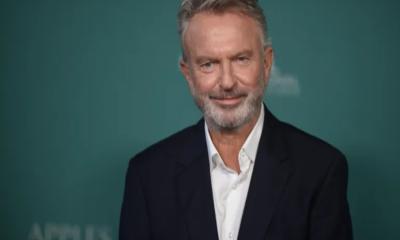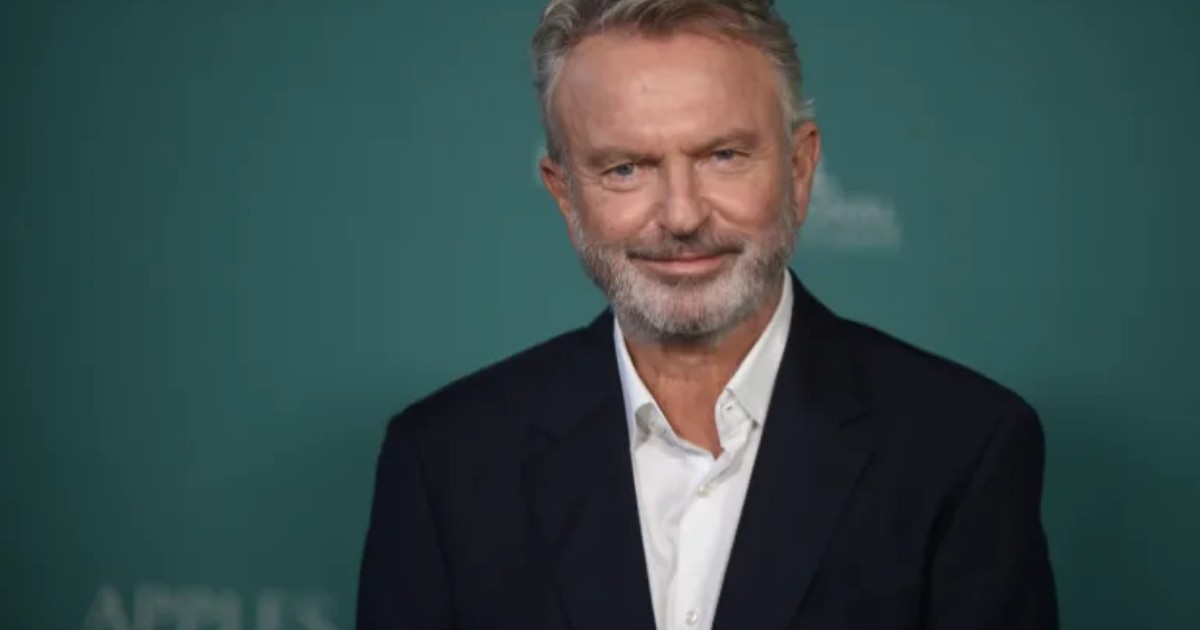
Sam Neill, the versatile New Zealand actor renowned for his performances in major films such as Jurassic Park and The Piano, has passed away at the age of 78. His family announced the death on Monday, stating that he passed away in Sydney under sudden and unexpected circumstances. The news has triggered an outpouring of tributes from the international film community, where Neill was deeply respected for a career that spanned more than five decades.
In 2023, Neill publicly shared his diagnosis of angioimmunoblastic T-cell lymphoma, a rare form of non-Hodgkin lymphoma. However, the family statement clarified that he remained cancer-free at the time of his death. No official cause of death was disclosed. Neill’s passing marks the end of a prolific career that saw him evolve from art-house cinema to global blockbuster fame, establishing himself as a fixture in modern acting.
Born Nigel John Dermot Neill in Northern Ireland in 1947, he moved to New Zealand with his family as a child. He adopted the nickname Sam during his youth, a moniker he claimed helped him navigate his environment with less scrutiny. His professional career gained traction in the late 1970s, coinciding with a surge of high-quality Australian and New Zealand cinema. He was part of a generation of talent that elevated regional filmmaking to global prominence alongside figures like Russell Crowe, Jane Campion, and Peter Weir.
Neill’s filmography is a testament to his range. He earned critical acclaim for his role as Alisdair Stewart in the 1993 drama The Piano and became a household name globally as Dr. Alan Grant in Steven Spielberg’s Jurassic Park. His work extended far beyond dinosaurs and period dramas, encompassing television series like the BBC’s Peaky Blinders and films such as The Hunt for Red October and John Carpenter’s In the Mouth of Madness. Colleagues often described him as modest, unassuming, and possessing a quiet intensity that defined his performances.
Tributes have flowed from across the political spectrum. New Zealand Prime Minister Christopher Luxon praised Neill as one of the country’s greatest cultural exports. He noted that Neill helped build the New Zealand film industry at a time when it barely existed, taking the nation`s stories to a global audience. Similarly, Australian Prime Minister Anthony Albanese reflected on Neill`s character, describing him as dry, thoughtful, and laconic. He lauded the way Neill handled his illness with dignity and humor, stating that he will be long remembered by audiences worldwide.
Away from the camera, Neill was known for his grounded lifestyle. When he was not on set, he spent his time managing vineyards in New Zealand’s picturesque Central Otago region, preferring the tranquility of his wine production to the limelight of celebrity culture. He remained a figure who shunned the traditional trappings of fame, focusing instead on his craft and his passions. As the film industry mourns his loss, he leaves behind a body of work that will continue to resonate with future generations of audiences and actors alike.