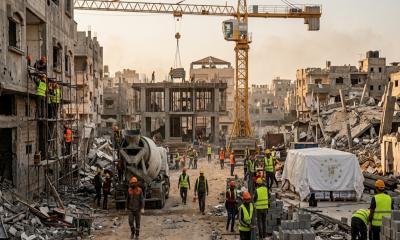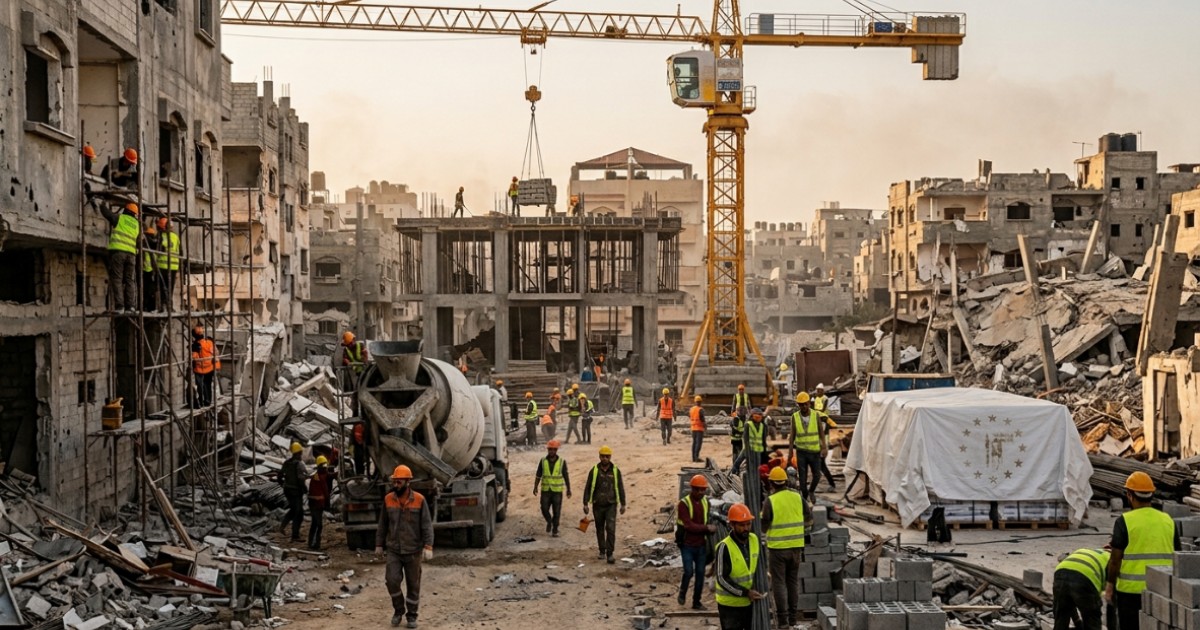
The European Commission has officially launched a $1 billion aid and reconstruction fund aimed at supporting the recovery of Gaza after more than two years of devastating conflict. Announced during a donor meeting in Brussels on Monday, the "Team Gaza Initiative" marks a significant, albeit criticized, step toward rebuilding the enclave. According to reports from AFP and Reuters, the funding is intended to address the most urgent humanitarian crises, such as restoring water and sanitation infrastructure, clearing debris, and re-establishing basic health services.
While European officials frame this initiative as a demonstration of their commitment to the Palestinian people, the sheer scale of the destruction in Gaza casts a long shadow over the announcement. Reports indicate that at least $71 billion is estimated to be required to facilitate Gaza`s recovery over the next decade. Given this massive shortfall, the $1 billion pledge is seen by many observers as critically insufficient to address the deep-seated humanitarian and infrastructural collapse caused by the ongoing war.
The initiative involves a broad coalition of partners, including Spain, France, Denmark, the United Kingdom, Germany, Norway, Finland, Italy, the Netherlands, Japan, Switzerland, Sweden, and Belgium. The World Bank and the European Investment Bank are also participating, with Australia and Canada expected to join the effort soon. Despite the impressive list of contributors, the European Commission has not provided a detailed breakdown regarding the specific financial contribution expected from each partner.
Dubravka Suica, the EU commissioner for the Mediterranean, stated ahead of the donor meeting that the objective is clear: to build hope, resilience, and a better future for the Palestinian population. She emphasized that the donors are keen to initiate "early recovery" projects, which focus on providing access to clean water, food systems, and energy. She stressed that demonstrating a willingness to act is a vital first step, even if the scale of the challenge remains daunting.
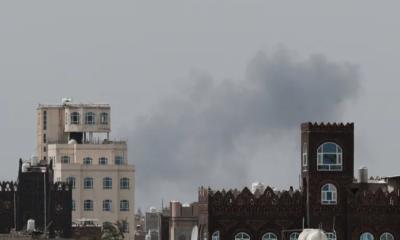
However, the practical application of this aid remains fraught with difficulty. Suica acknowledged that for the assistance to reach those who need it most, specific conditions on the ground must be met. Given that the war continues to rage, with ongoing Israeli attacks and dire humanitarian conditions, the logistical challenge of delivering such aid is substantial. Infrastructure—from hospitals to agricultural systems—remains decimated, and the threat of further violence hangs over any potential reconstruction effort.
Critics of the initiative argue that financial aid, while necessary, cannot serve as a substitute for a political solution. Without an end to the hostilities and a restoration of security, reconstruction efforts face the constant risk of further destruction. As the international community rallies to support Gaza’s recovery, the disparity between the $1 billion pledge and the $71 billion required highlights the immense complexity of the situation. For the people of Gaza, the aid is a welcome gesture, but it represents only a small fraction of what is required to restore their lives and their homeland.