US Secretary of State Marco Rubio met with Russian Foreign Minister Sergey Lavrov in Manila on Thursday during a Southeast Asian diplomatic summit, as intelligence reports surfaced linking Moscow to Iranian drone strikes on US intelligence targets, according to Reuters and Al Jazeera. While the official agenda focused primarily on the ongoing war in Ukraine, discussions unfolded under the shadow of allegations that Moscow has been aiding Tehran in locating sensitive American installations in the Gulf. US intelligence officials are currently investigating whether Russian satellite capabilities contributed to the precision of recent Iranian attacks on Central Intelligence Agency facilities in Saudi Arabia.
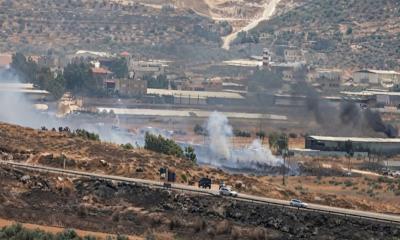
Reports regarding Iranian targeting of CIA assets first emerged shortly after the outbreak of conflict between Iranian forces and the US-Israeli coalition. On March 3, 2026, The Washington Post reported that a CIA station situated within the US Embassy compound in Riyadh had been hit by a drone strike. Days later, on March 6, CNN reported that Russian intelligence sources were actively assisting Tehran in tracking US military personnel and aircraft throughout the Gulf region. The investigation gained fresh momentum this week after Reuters revealed that the extraordinary accuracy of Iranian drone strikes against diplomatic and intelligence infrastructure prompted Washington to scrutinize Russian space-based surveillance data.
Military experts argue that Russian involvement offers a plausible explanation for the advanced precision demonstrated in Iran`s recent aerial operations. Nicole Grajewski, an assistant professor at the Centre for International Studies at Sciences Po in Paris, stated that Tehran lacks sufficient military-grade satellites necessary for real-time target acquisition over long distances. In contrast, Russia possesses extensive space-based surveillance systems that could easily fill Iran`s technological gaps under bilateral security arrangements. Experts suggest that access to high-resolution satellite imagery would significantly enhance the lethality and precision of Iran`s loitering munitions.
Analysts also note that Iran maintains a sophisticated human intelligence network across the Middle East that operates alongside any foreign satellite assistance. These ground-level intelligence channels often provide critical insights into Western military movements that technical sensors alone cannot capture. However, penetrating highly secure installations like the CIA station in Riyadh requires high-tier targeting data, leading US defense officials to suspect a blend of Iranian human intelligence and Russian satellite telemetry. This evolving intelligence cooperation marks a significant escalation in defense collaboration between Moscow and Tehran.
What remains unclear is how the United States will respond strategically if investigators confirm direct Russian involvement in attacks on American intelligence personnel. The deepening military partnership between Russia and Iran has transformed from basic arms transfers into complex intelligence sharing that directly threatens US assets in the Middle East. Although official statements following the Rubio-Lavrov meeting in Manila did not explicitly mention the probe, the controversy adds a volatile new dimension to diplomatic relations between Washington and Moscow.