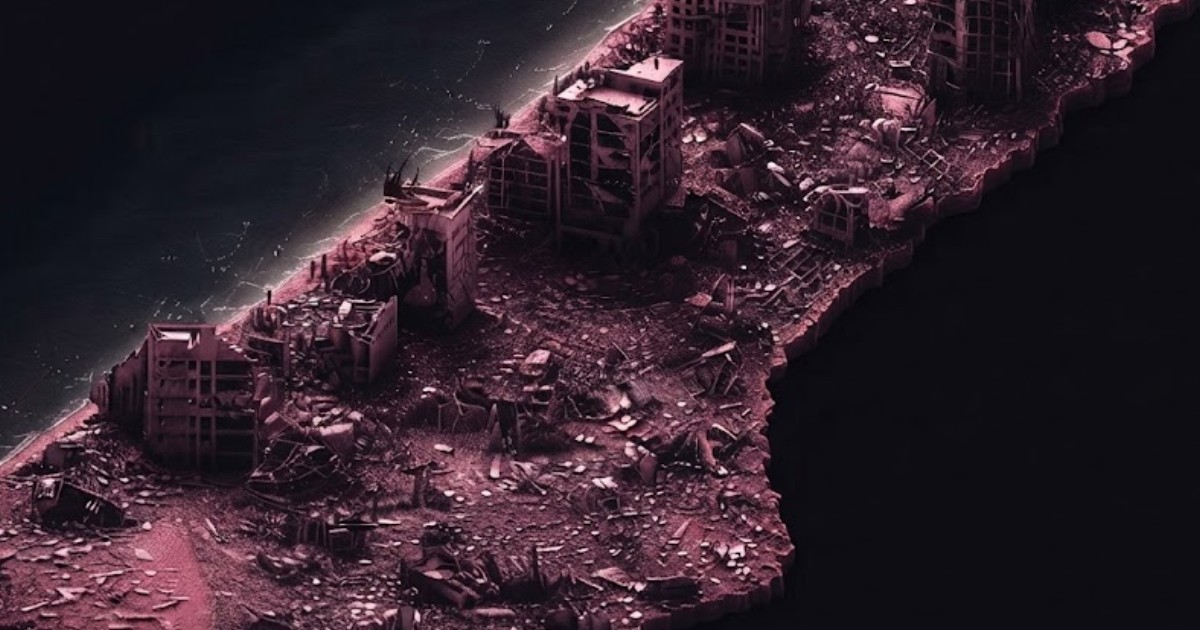
Rebuilding the Gaza Strip following more than two years of devastating military bombardment will require an estimated $71.4 billion, according to a joint report released on Thursday by Oxfam, the Palestine Economic Policy Research Institute (MAS), and the Palestine Trade Centre (PalTrade). The required figure is seven times the combined reconstruction costs following every major Israeli military offensive in Gaza over the past two decades. The findings draw upon the official UN-EU-World Bank Rapid Damage and Needs Assessment released earlier this year and confirmed by Al Jazeera, highlighting an unprecedented scale of physical and economic destruction.
The devastating conflict has killed at least 73,000 Palestinians, injured more than 173,000, and forcibly displaced 1.9 million people across the coastal enclave. According to the joint assessment, human development metrics in Gaza have been pushed back by 77 years, turning entire residential neighborhoods into desolate wasteland. Immediate recovery efforts during the first 18 months alone will demand $26.3 billion to restore essential basic services, repair destroyed water and sanitation networks, and restart collapsed economic activity.
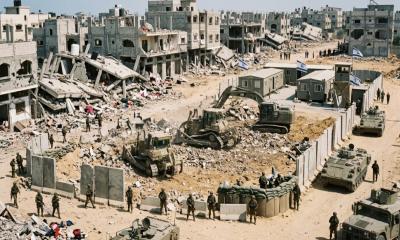
Physical damage to Gaza is staggering, with at least 371,888 housing units destroyed or severely damaged, accounting for half of the total physical destruction in the territory. Clearing the resulting 66 million tonnes of rubble—equivalent in weight to 11 Pyramids of Giza—remains a critical precondition before reconstruction can proceed. Experts warn that the debris contains hazardous materials, raw sewage, and unexploded munitions, while an estimated 8,000 to 11,000 bodies remain buried underneath the wreckage, requiring dignified recovery and identification.
Social and civic infrastructure across the enclave has been almost completely dismantled. Nearly 93 percent of school buildings and educational facilities have suffered severe damage, while more than 55 percent of hospitals remain entirely non-functional. Economic collapse has driven unemployment to 92 percent, with at least 58,600 households now headed solely by women due to the high casualty count among adult men. Oxfam International Executive Director Amitabh Behar noted that Gaza was never permitted to complete previous rebuilding efforts due to the ongoing blockade and repeated military strikes.
To address the humanitarian crisis, the report outlines a comprehensive five-year, four-phase recovery framework that insists on direct Palestinian leadership throughout the process. The proposed plan allocates $10 billion for emergency stabilization, $15 billion for early service restoration, $25 billion for medium-term infrastructure rebuilding, and $20 billion for long-term economic development. What remains unclear is whether international donors and foreign powers will grant Palestinians true decision-making autonomy or impose external administrative structures that risk entrenching political control over the enclave.
Palestinian researchers emphasize that reconstruction cannot be treated merely as a technical or humanitarian exercise devoid of political rights. Senior MAS researcher Misyef Jamil stated that any blueprint designed in foreign capitals without Palestinian agency would simply constitute another layer of territorial control. As international leaders prepare for upcoming donor summits, human rights advocates maintain that dismantling the blockade and transferring genuine governance power to local institutions represent the only viable path toward lasting stability in Gaza.