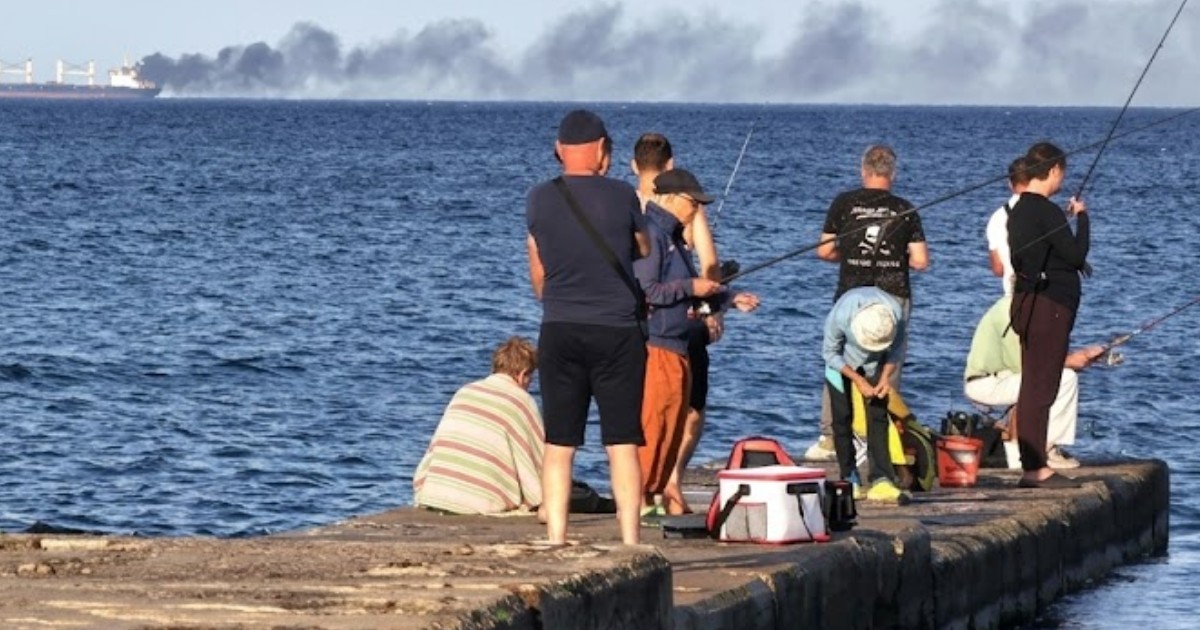
Russian missiles and drones are relentlessly hammering commercial ports in Ukraine`s Odesa region, crippling maritime trade routes and inflicting casualties among civilian dockworkers, BBC News reports. The aggressive campaign marks a significant escalation in Moscow`s efforts to sever Ukraine`s remaining economic links to the outside world.
The Black Sea coastline has become an increasingly dangerous zone for commercial shipping. According to Ukraine`s port administration, July witnessed 57 Russian attacks on civilian vessels. Of those incidents, 22 occurred out at sea, while another 67 strikes directly hit port infrastructure along the coast.
Workers on the ground face constant peril just doing their jobs. Svitlana Halchenko, a warehouse shift manager at one of Odesa`s main ports, survived a recent ballistic missile strike that killed her colleagues. She recounted to BBC News how her crane operator died just five meters away from her, while another driver was killed inside his cabin. Despite sustaining shrapnel wounds to her leg and back, Halchenko continues to work in a facility that has grown largely silent and empty.
The human toll is mounting alongside the widespread structural damage. Oleg Grygoriuk, Chairman of the Marine Transport Workers Union of Ukraine, noted the severe psychological strain on port employees. He explained that many military veterans working at the ports find the environment more terrifying than the actual front lines. A missile fired from Russian-occupied Crimea can reach Odesa in just a single minute, leaving workers entirely without enough time to descend from towering gantry cranes and reach secure underground shelters.
While international vessels have been targeted before, the current frequency and lethality are unprecedented. On July 19, a Turkish-owned cargo vessel named Golden Leo, carrying Ukrainian corn, was struck by three Russian missiles. The attack killed nine Indian and Syrian crew members, along with a Ukrainian pilot. The ship subsequently sank off the Odesa coast a week later. The global shipping journal Lloyd`s List suggests the Black Sea may now be the most dangerous shipping zone globally, marking July as the deadliest month for merchant seamen since the full-scale invasion began.
Economic ramifications are spreading rapidly across the region. Hundreds of meters of berths sit empty, and massive gantry cranes stand idle. Andrey Stavnitser, co-owner and CEO of a major port in the area, told BBC News that the entire supply chain is essentially on hold because shipowners are unwilling to risk the lives of their crews. Air raid sirens frequently halt operations, with some facilities forced to close for 15 out of 24 hours daily just to maintain basic safety protocols.
The escalation appears linked to broader regional strategies. Following the collapse of the United Nations-brokered Black Sea Grain Initiative in mid-2023, maritime safety guarantees vanished. Furthermore, local managers suggest Moscow`s systematic port strikes are direct retaliation for Ukraine`s own successful maritime operations. Using domestic drones, Ukrainian forces have struck roughly 200 Russian vessels, severely disrupting Moscow`s supply lines in the Sea of Azov and around occupied Crimea. What remains unclear is how long global supply chains can endure the standoff before the economic fallout becomes irreversible.