The prolonged conflict in Gaza, stretching nearly three years since the October 2023 attacks, has exposed a severe and unprecedented breakdown in the historical partnership between Israel`s political leadership and its military establishment, according to a detailed analysis published by Al Jazeera. For most of Israel’s turbulent history, serious disagreements between elected political leaders and the military command remained largely private. Arguments over strategic direction, timing, or operational risk were undeniably real, but they were expertly managed away from the public eye. Citizens consistently saw a country that, regardless of its internal political tensions, could present a highly coherent and unified face during times of war.
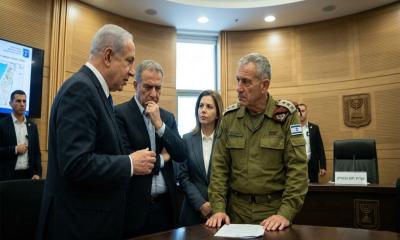
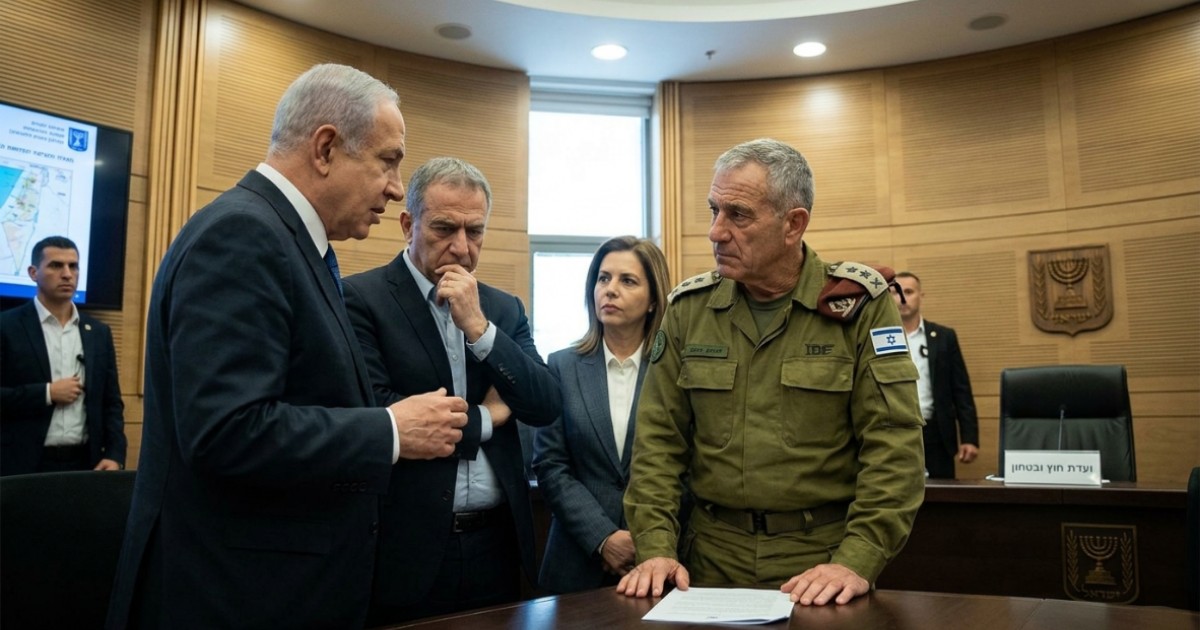
That quiet, disciplined arrangement has now severely frayed. With the military campaigns dragging into their third year, open clashes between government ministers and senior military officers have become an almost routine occurrence. The Israel political and military conflict was recently highlighted by a fierce public exchange between Defense Minister Israel Katz and Chief of Staff Eyal Zamir. The dispute erupted after Major-General Avi Bluth, the commander of Israeli forces in the occupied West Bank, sought to extend the detention of an extremist settler. Katz harshly criticized Bluth and abruptly announced on live television that the commander would be replaced. Zamir immediately pushed back in public, insisting that the general would remain in his post and that proper institutional procedures must be followed. What was once carefully contained behind closed doors now plays out in full view of the public.
This specific exchange, much like numerous others before it, is not the entirety of the real story. The actual issue is what these repeated public ruptures reveal about the internal stability of a nation that remains deeply embroiled in an open-ended war. The military campaign, which initially began with a loud demand for absolute national unity, has gradually redefined the foundational relationship between the politicians who set the national direction and the generals who must turn those directives into reality. The ongoing disagreement is no longer primarily about battlefield tactics or troop deployments. It has evolved into something much more fundamental, raising serious questions about who exactly has the right to define victory, who sets the ultimate aims of the war, and who gets to decide what is realistically possible to achieve on the ground.
This massive structural shift is bigger than a simple loss of institutional discipline or a temporary personal clash between ambitious men. Israel was never a state in which the armed forces merely carried out orders blindly. From the state’s earliest foundational years, the military was an active partner in shaping national security policy rather than a pure executive arm. Founding figures like David Ben-Gurion meticulously built the military as the central national institution. Later prominent leaders, including Yitzhak Rabin, Ehud Barak, Ariel Sharon, Benny Gantz, and Yoav Gallant, all rose directly from its senior ranks. The boundary between absolute political authority and professional military judgment was always highly porous. The army did not simply implement policy; it actively helped define the realistic limits of what the political establishment could safely demand.
For decades, that unique partnership rested on a vital, unspoken understanding. The military, utilizing its professional assessment of force capabilities, complex terrain, and strategic risk, often set the definitive ceiling of political ambition. Senior generals could, and frequently did, tell elected leaders exactly what was possible, what was entirely out of reach, and what would cost more blood and treasure than the public was prepared to pay. Politicians retained their formal constitutional authority, but they generally operated within a strict framework of military realism that heavily constrained excess. The military essentially protected the political system from its own dangerous overreach by firmly insisting on the boundaries of the achievable. That historic relationship has now completely inverted under the crushing weight of a long, grueling war.
Four distinct realities help explain precisely why this profound shift has occurred. The first reality is the crucial element of time. Short, decisive wars allow internal disagreements to remain strictly professional and focused. A war that stretches across multiple years inevitably turns almost every operational choice into a highly charged political one. Decisions regarding how many reservists to call up, when to push ground forces deeper into hostile territory, how to accurately weigh the lives of captives against broader strategic military aims, and exactly how long a society can sustain the massive economic and psychological burden of repeated troop mobilizations are no longer purely operational questions. They directly touch families, local communities, and the daily lives of hundreds of thousands of voting citizens. As the brutal fighting continues endlessly, the space for quiet, detached professional judgment has drastically narrowed.
The second reality is the glaring absence of a unified, shared definition of strategic success. Official government statements continuously speak of dismantling hostile military capacities, bringing all captives home safely, and permanently restoring security to shattered border communities. In harsh practice, however, these ambitious aims frequently pull against one another and are valued entirely differently by different powerful actors. Some factions emphasize establishing lasting territorial control or the total elimination of any residual security threats. Others place the immediate return of the captives first, while also warning against the dangers of an open-ended military occupation. When the very meaning of victory itself remains deeply unsettled, each side naturally begins to measure operational progress by its own distinct metrics. Soldiers and their commanding officers look for tangible results that can be physically sustained on the battlefield. Political leaders, meanwhile, desperately look for outcomes that can be easily explained to a weary, frustrated public and to their own volatile political bases.
The third reality is the sharp divergence of human incentives and personal stakes. Senior military officers live intimately with the degraded state of their fighting forces and with the grim consequences of decisions that send young people directly into harm’s way. Government ministers, on the other hand, live daily with intense coalition pressures, widespread public anger, and the looming threat of the next general election. When these highly divergent pressures inevitably collide, massive public disagreement becomes much more likely. The longer the exhausting war continues without a clear, jointly accepted, and achievable end, the more often those severe collisions occur out in the open.
The fourth, and perhaps most revealing reality, is the total reversal of who defines the possible. Previously, the professional army firmly told the political leadership what could realistically be achieved through the application of force. Today, ambitious political leaders increasingly dictate to the army what absolutely must be achieved, and they rapidly attack the military establishment when the professional answer is no. The military is no longer viewed as the trusted institution that sets the safe ceiling of national ambition. Instead, it is fully expected to make the politically desired outcome possible, regardless of reality, and it is heavily blamed when the hard limits of military force become painfully visible. This is not a minor adjustment in political tone; it is a complete structural inversion of the old, reliable civil-military partnership.
The ultimate result of this breakdown is a deeper, systemic uncertainty about ultimate authority. In a short, focused campaign, the question of who ultimately directs the war can easily remain unspoken. In a long, grinding war, however, it becomes completely unavoidable. It remains fiercely debated whether final responsibility rests with the prime minister, the security cabinet, the defense minister, or the military chief of staff. Different answers to this question consistently produce vastly different strategies, different tolerances for operational risk, and completely different timelines for eventually ending the fighting. When these critical answers are openly disputed in public, the coherence of strategic decision-making suffers massively, and so does the necessary clarity of what is being asked of the soldiers who must execute these confusing decisions.
What remains unclear is exactly how this widening institutional rift will be resolved in the long term. The practical effects of the divide are already being heavily felt across the country. Establishing shared objectives has become exponentially harder. Reaching an endgame that both the political and military leaders can comfortably accept becomes more difficult with each passing month. A single, durable national strategy grows less likely by the day. These are not merely problems of clashing personalities; they are the deep, structural problems of a complex system buckling under prolonged strain. A country that once safely relied on the military’s professional standing to define the realistic boundaries of its political ambition now finds its politicians aggressively demanding outcomes that the exhausted army is expected simply to deliver, while the soldiers, reservists, and their families continue to bear the massive human consequences.