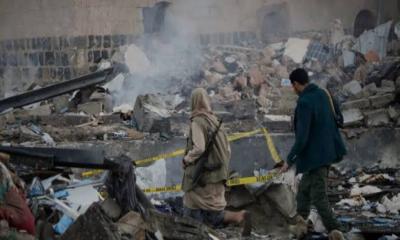
More than 3,400 people fleeing an intensified offensive in western Yemen have crossed the southern Red Sea into Djibouti over a 48-hour period, according to official statements from the Horn of Africa nation. The surge in arrivals followed territorial advances by Houthi forces, who seized the strategic port of Mocha and pushed southward toward the narrow maritime corridor separating the Arabian Peninsula from East Africa. With a domestic population under 1.2 million, authorities in Djibouti warned that their limited infrastructure is struggling to absorb the sudden influx.
The narrow sea passage has become an active humanitarian evacuation route.
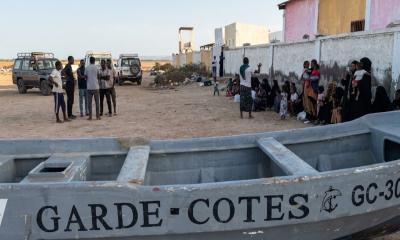
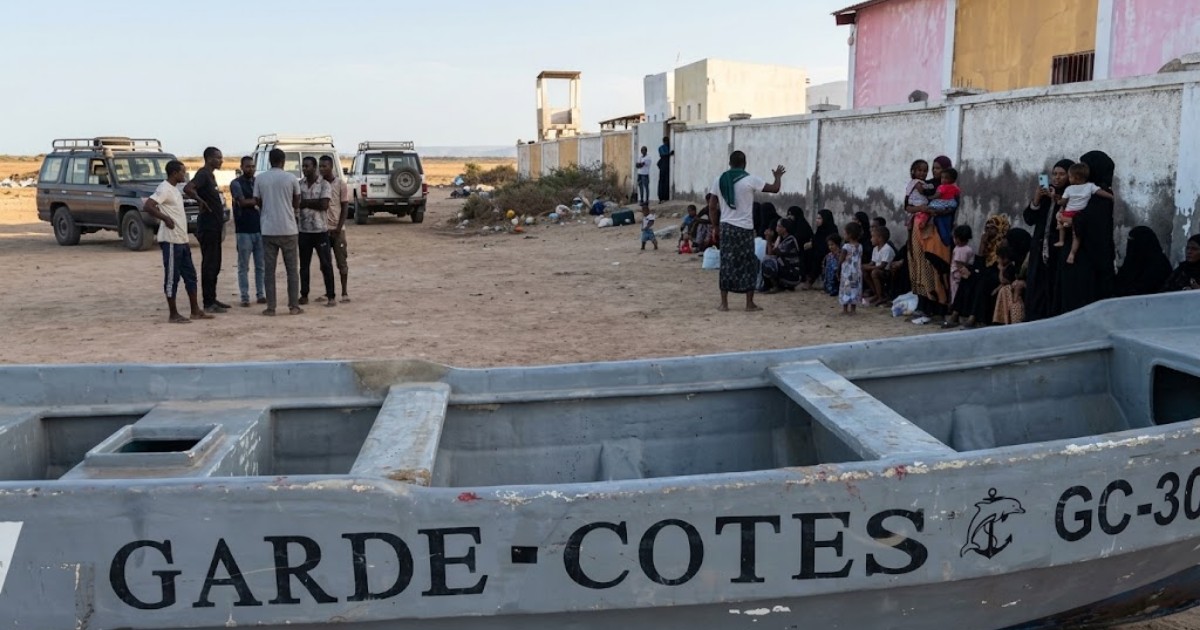
Displaced families arrived aboard a combination of traditional wooden fishing dhows and larger commercial craft landing along the northern coastal district of Obock. Alexandre Coissac, who directs the International Organization for Migration mission in Djibouti, confirmed that single transport boats have carried hundreds of people at once across the strait. On the opposite coast, severe fuel shortages have stranded additional groups attempting to secure passage. The United Nations Children’s Fund cautioned that children arriving on the beaches are suffering from acute dehydration and heat exhaustion following hours exposed on open waters.
The cross-border movement reflects rapid military displacement within Yemen itself. The International Organization for Migration reported that fighting emptied entire districts across Taiz and surrounding governorates, displacing more than 85,000 people during the first two weeks of September alone. Djiboutian Finance Minister Ilyas Dawaleh documented the progression publicly, stating that arrivals escalated from 500 people on September 11 to well over 2,000 within 48 hours, declaring the pace increasingly unsustainable for the state treasury. Prime Minister Abdoulkader Kamil Mohamed traveled directly to reception centers in Obock to coordinate emergency distributions alongside representatives from the World Food Programme and the United Nations High Commissioner for Refugees.
Emergency facilities are expanding along the desert coastline.
The Markazi refugee camp outside Obock has been reopened to shelter the displaced, while local residents have taken in hundreds of families into private homes. However, international humanitarian agencies operating in the Horn of Africa are confronting severe budget shortfalls following substantial foreign aid reductions from the United States and the United Kingdom. Beyond immediate relief logistics, the escalation carries direct strategic implications for global shipping routes. The adjacent Bab al-Mandeb strait handles roughly 12 percent of all seaborne trade globally, prompting world powers including the United States, China, France, Japan, and Italy to maintain permanent military bases within miles of each other across Djibouti.
Maritime monitoring has expanded across the Gulf of Aden as authorities anticipate further migration waves. Autonomous administrations in northern Somalia, including Puntland and Somaliland, have asked international agencies to help prepare ports in Bosaso and Berbera for incoming maritime traffic. Relief officials estimate that total arrivals across the strait could quickly surpass 10,000 people, leaving small regional economies to shoulder an expanding humanitarian crisis with diminishing foreign assistance.