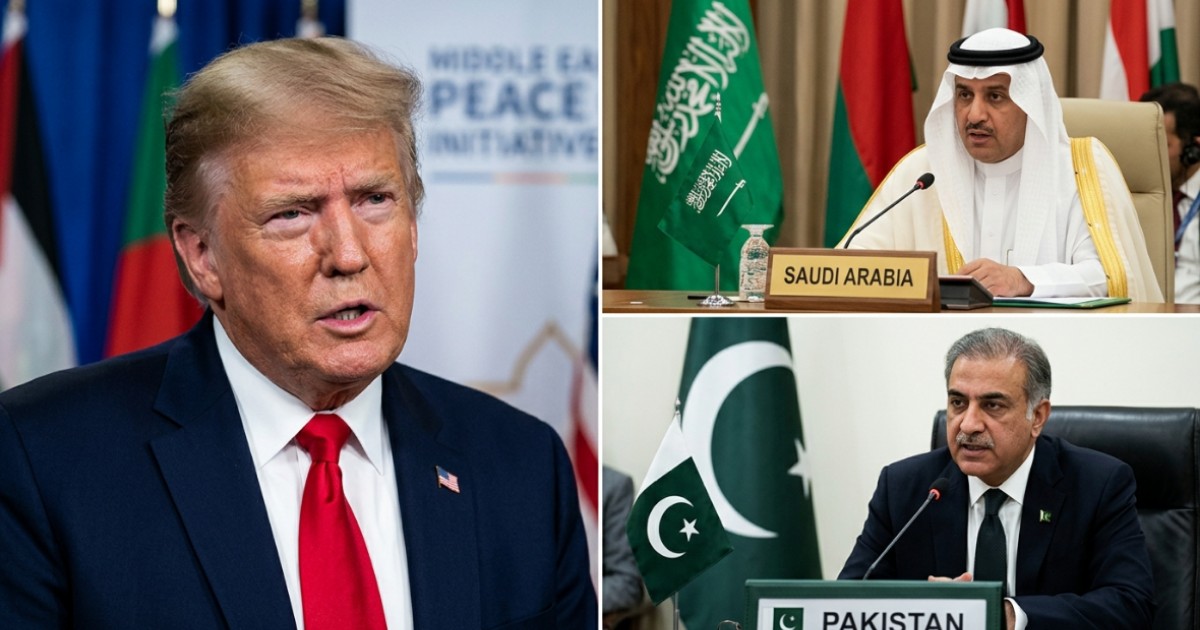
Saudi Arabia and Pakistan have officially rejected calls from United States President Donald Trump to normalize relations with Israel by joining the controversial Abraham Accords. Both nations have publicly ruled out entering any diplomatic pacts that disregard the historical struggle of the Palestinian people. The synchronized pushback from Riyadh and Islamabad comes amid renewed pressure from the current US administration, as confirmed by CNN and international diplomatic reports.Both governments remain fully anchored to their long-standing foreign policies.
According to a senior Saudi official, Riyadh has communicated its clear and final stance directly to Washington regarding the regional framework. The Kingdom maintains that no normal ties can be established with Tel Aviv unless a definitive and unalterable path toward an independent Palestinian state is secured first. Saudi Arabia`s Ministry of Foreign Affairs reiterated that regional stability cannot be purchased by abandoning the core rights of Palestinians.
The rejection coincides with President Trump`s broader geopolitical strategy to encourage a host of Muslim nations, including Qatar, Egypt, Jordan, and Turkey, into signing the normalization pacts as part of regional security talks. Following the Saudi declaration, Pakistani Defense Minister Khawaja Muhammad Asif formalized Islamabad`s position during a broadcast interview on Sama TV. He stated that Pakistan will never participate in an accordthat directly violates the fundamental ideology of its statehood.
Defense Minister Asif openly challenged the credibility of the Israeli government, questioning how any nation could build strategic partnerships with an administration that consistently breaks its official pledges. Pakistan has historically refused to recognize Israel as a sovereign state. This state policy is integrated into the nation`s passport control framework, making Pakistan one of the few global entities whose travel documents explicitly forbid journeys to Israel.
Diplomatic experts suggest that while the Trump administration is eager to expand the legacy of the 2020 Abraham Accords—which initially brought the United Arab Emirates, Bahrain, Morocco, and Sudan on board—bypassing the Palestinian issue remains a fatal flaw. Trump had previously voiced optimism that Saudi Arabia would eventually capitulate to the deal following a permanent ceasefire. However, the unified stance of these key Islamic powers shows that Washington`s regional strategy faces deep structural resistance.