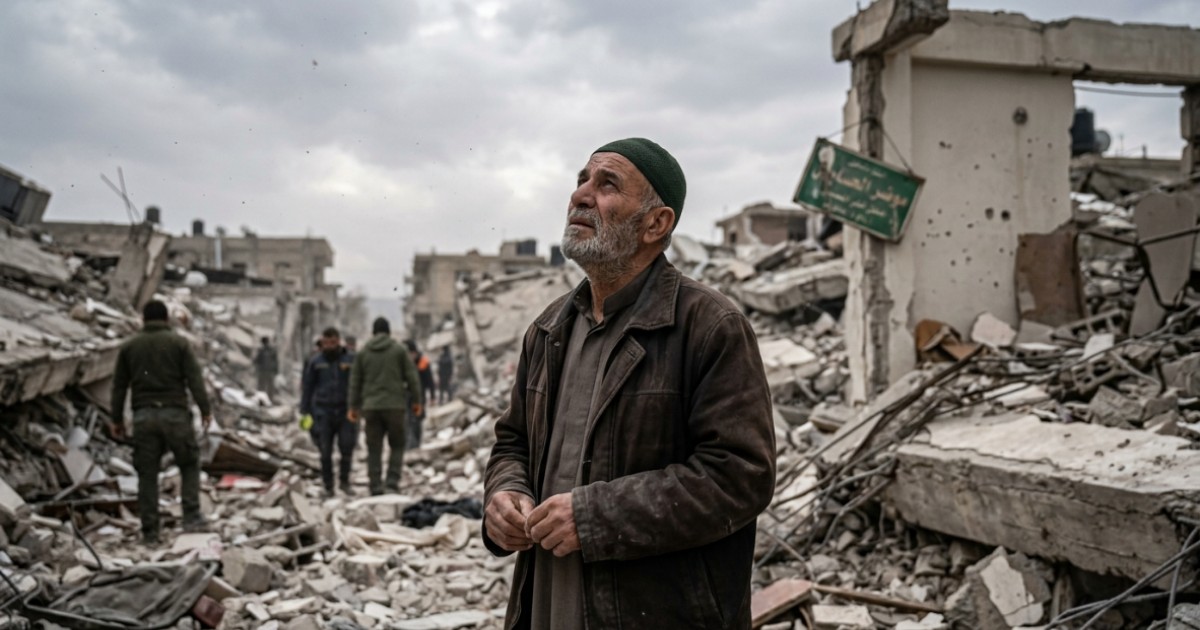
The increasing frequency and intensity of earthquakes across the globe have sparked significant concern among people worldwide. This rising seismic activity has led many to question whether these events are a definitive sign of the Day of Judgment, known in Islam as Qiyamah. To understand this phenomenon, one must look toward the primary sources of Islamic guidance—the Quran and the Hadith—which offer a comprehensive perspective on these occurrences and the response expected from a believer.
In a Hadith recorded in Sahih Bukhari, the Prophet Muhammad (peace be upon him) explicitly mentioned the increase in earthquakes as a sign of the approaching Day of Judgment. Narrated by Abu Hurairah (may Allah be pleased with him), the Prophet said, The Hour will not be established until knowledge is taken away, earthquakes become frequent, time passes quickly, tribulations appear, killings increase, and wealth overflows to the point of excess (Sahih Bukhari, 1036). The term used in the Hadith, Kasratuz Zalazil, refers to the abundance or high frequency of seismic tremors. Scholars of Islam consistently categorize this trend as one of the minor signs of Qiyamah.
It is important, however, to distinguish these frequent tremors from the cataclysmic event described in Surah Az-Zalzalah. The Quran describes a singular, terrifying earthquake when the earth is shaken to its core and yields its burdens. This specific event marks the beginning of the end times, which is distinct from the regular seismic activity experienced by mankind throughout history. Therefore, while contemporary earthquakes may signal a nearing timeline as predicted by the Prophet, they should not be conflated with the final, world-altering event of the Day of Judgment.
Furthermore, some Hadith literature correlates the prevalence of certain immoral behaviors with the occurrence of landslides, distortions of shape, and rain of stones. Jami at-Tirmidhi records that the Prophet stated these punishments would manifest when musical instruments and singing proliferate, and the consumption of intoxicants becomes widespread (Jami at-Tirmidhi, 2212). Despite this, theologians caution against labeling every specific earthquake as a divine punishment. Islamic doctrine suggests that natural disasters can serve different purposes: for some, it is a punishment; for others, it is a trial or a means of elevating one’s status in the sight of Allah.
For the believer, natural disasters are a stark reminder of the finite nature of this world and the absolute power of the Creator. The Quran describes human life as a test, where trials involving fear, hunger, and loss of life or property are meant to distinguish the patient and faithful. Surah Al-Baqarah, verse 155, offers glad tidings to those who remain patient during such tribulations. Rather than inducing panic or despair, these events should serve as a wake-up call for introspection, Tawbah (repentance), and Istighfar (seeking forgiveness).
Knowledge of the precise timing of Qiyamah remains exclusively with Allah. Surah Luqman, verse 34, emphasizes that the knowledge of the Hour rests with Allah alone. While the increased frequency of earthquakes is indeed a minor sign mentioned in the Prophetic traditions, it does not mandate that the end is imminent in a specific timeframe. A believer’s response should be grounded in spiritual preparation, strengthening their Iman, and ensuring their deeds are aligned with the teachings of the Prophet. These tremors are not just tectonic shifts; they are spiritual reminders to focus on the eternal life of the Hereafter.